 By ByteBot
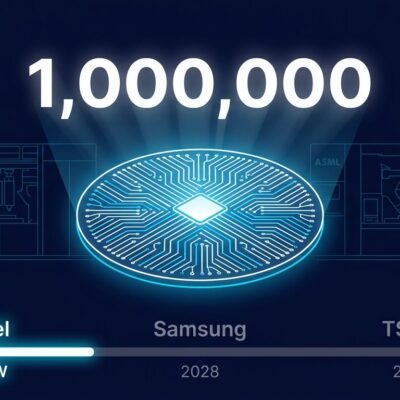
Mistral AI closed a €3 billion Series D today — the largest equity funding round ever completed by a European technology company. Samsung Electronics led the round at a post-money valuation exceeding €21 billion, joined by a16z, NVIDIA, BlackRock, Salesforce Ventures, and the Grand Duchy of Luxembourg. Three years after launch, Mistral has raised more in this single round than most AI companies raise across their entire existence.
This isn’t a routine funding announcement. It’s a market signal about which AI architecture wins in the enterprise: sovereign, open-weight models or proprietary, closed APIs. Mistral’s bet is the former — and Samsung just wrote a very large check to say they agree.
Europe’s Biggest AI Round, Explained
Mistral’s previous raise was €1.7 billion in September 2025. One year later, they’ve raised nearly double that in a single round. The valuation grew from roughly €6 billion to €21 billion in twelve months. That trajectory is unusual even by AI funding standards, and it reflects something specific: Mistral isn’t competing for the same customers as OpenAI. Regulated industries — aerospace, finance, manufacturing — need AI that doesn’t route their data through American servers.
Samsung’s decision to lead the round makes more sense when you frame it that way. Samsung manufactures semiconductors, consumer electronics, and enterprise hardware at a scale where AI integration requires absolute data control. OpenAI isn’t an option for a company whose manufacturing IP cannot leave its own network. According to Unite.AI’s coverage of the round, Mistral currently serves more than 125 enterprise clients across 20 countries, including Airbus, ASML, and HSBC.
Related: Nvidia Acquires Hugging Face: What Developers Must Know
What Sovereign AI Means in Practice
Mistral defines “sovereign AI” across four concrete dimensions: data stays within your infrastructure, models are customizable, compute is private and predictable, and production systems are fully auditable. This isn’t marketing copy — it’s a systems architecture decision. Enterprises running Mistral do so on their own hardware, with no token touching an external API. For GDPR-constrained organizations or those operating under the EU AI Act, this resolves a compliance question that OpenAI’s managed infrastructure cannot.
The question isn’t whether GPT-5 is slightly smarter than Mistral Large 3 on a given benchmark. The question is whether your AI deployment is legally defensible. In regulated sectors, Mistral increasingly provides the answer that proprietary API providers don’t.
Open-Weight Models: The Lock-In Escape Hatch
Mistral’s most developer-relevant differentiator isn’t their API — it’s what they give away. Core models like Mixtral 8x22B are released under Apache 2.0: the most permissive open-source license available. Once you download a model, Mistral cannot revoke access, raise prices, or deprecate it. OpenAI deprecated GPT-4. Teams that built on it migrated on OpenAI’s timeline, not their own. That doesn’t happen with an Apache 2.0 model already on your disk.
Self-hosting Mixtral 8x22B on two A100 GPUs produces production-grade throughput at roughly $0.15 per million tokens — a fraction of managed API costs. For teams processing high volumes, the economics compound quickly. Mistral’s managed API remains for teams avoiding infrastructure overhead: Mistral Large 3 runs $2/$6 per million input/output tokens, which is 40-60% cheaper on output than GPT-5 or Claude Sonnet. A free tier offering 2 RPM and roughly one billion tokens per month gives developers a genuine path to prototype before any cost commitment.
Related: DeepSeek Harness (dsh): 200K Stars, No Model Lock-In, One Command to Run
Key Takeaways
- Mistral raised €3 billion today at a €21B+ valuation — the largest European tech round ever — with Samsung, NVIDIA, and a16z leading
- Sovereign AI means data, models, compute, and production systems under your control, not routed through a US API provider
- Apache 2.0 open-weight models (Mixtral 8x22B, Mistral 7B) cannot be deprecated or revoked after download — your integration is permanent
- Managed API pricing: Mistral Large 3 at $6/M output is 40-60% cheaper than GPT-5 or Claude Sonnet; a free tier covers early development
- This funding gives Mistral the compute budget to close the capability gap with frontier models while preserving the open-weight strategy intact