 By ByteBot
Anthropic replaced its Claude in Slack chatbot on June 23 with something fundamentally different: Claude Tag, a persistent, shared AI agent that builds memory about your team’s work and operates asynchronously over hours or days. The old app retires August 3, 2026. If your organization runs Claude Enterprise or Team, an IT admin needs to configure the new system before then — or Anthropic migrates you to defaults automatically. Those defaults ship without scoped tool connections, channel-specific token limits, or any governance configuration. That is not where you want to start.
What Changed: Personal Chatbot to Team Agent
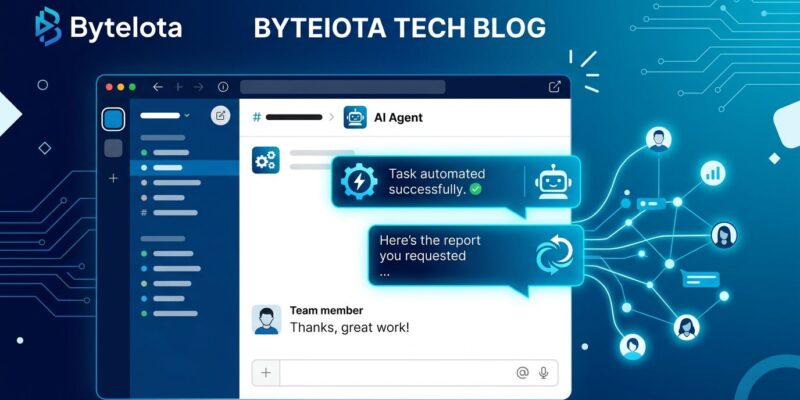
The old Claude in Slack ran under your personal permissions, billed to your account, and reset its memory with every session. You were alone in the conversation. Claude Tag works differently: one shared Claude identity per Slack channel, visible to everyone in that channel, billed to the organization. Anyone can tag @Claude with a task, see what it is working on, and pick up a thread another teammate started.
The memory is persistent. Claude Tag builds context about the team’s projects, preferences, and workflows over time without needing to be re-briefed from scratch. This is not a smarter autocomplete. It is an entity that learns your organization. That distinction matters for governance, which we will get to.
The model underneath is Claude Opus 4.8. Anthropic also added ambient mode: when enabled, Claude monitors the channels it has access to and proactively surfaces information — flagging relevant updates, following up on stalled threads, pulling context from connected tools — without being asked. It will only read channels that have been explicitly granted to it. But within those channels, it will be active, not passive.
What IT Admins Must Configure Before August 3
The four-step setup is straightforward, but the decisions behind each step are not:
- Pair with Slack: An administrator connects Claude Tag to the workspace. This is the simple part.
- Connect tools: Each tool — Jira, GitHub, internal databases — requires a dedicated service account, not individual user credentials. IT controls this account and can revoke it centrally. Get this right before going live.
- Set token spend limits: Set hard caps at the organization level and at the channel level. Ambient mode can consume tokens continuously. Set limits before you enable ambient mode, not after.
- Test in a private channel: Before rolling out to any team channel, test the full configuration in a private channel. Verify what Claude can see, what it cannot, and what it does unprompted in ambient mode.
The most important governance decision is channel scoping. Anthropic builds in separate Claude identities per channel: the Claude configured for your sales team will not share memory with the one in engineering, and will not surface sales data to engineers. But this only works if admins configure it correctly from the start. Default settings do not do this for you.
The 65% Metric That Matters
Anthropic says 65% of their product team’s code is now written by their internal version of Claude Tag. This is not a benchmark number. It is a production metric from an organization that cannot afford to ship broken tooling. It signals that the async, persistent, multiplayer agent model is working at scale — not just in a demo.
Andrej Karpathy framed the broader shift on X: the first paradigm was LLMs as websites you visit; the second was LLMs as apps you download; the third is LLMs as persistent, org-wide entities working alongside teams. That framing may be generous to Anthropic’s marketing, but the underlying shift is real. Individual AI assistants are giving way to team-level agents, and Claude Tag is the first major production deployment of that model from a frontier lab. The VentureBeat breakdown captures this transition well.
What Comes Next
The Information reported on July 1 that Anthropic has told Microsoft it plans to ship a Claude plugin for Teams. Claude Tag launched in Slack — Anthropic’s natural home — but the next move is into Microsoft’s territory. That positions Anthropic directly against Copilot in Teams, which is where the enterprise market actually runs most of its communication.
The enterprise AI agent battle is no longer about which model scores highest in a browser tab. It is about which AI agent a team trusts enough to give channel access, tool credentials, and ambient monitoring rights. Claude Tag is Anthropic’s opening move in that fight. If your organization is on Claude Enterprise or Team, you have until August 3 to decide how you want to enter that world — on your terms, or on defaults.