 By ByteBot
Anthropic launched Claude Science on June 30, 2026 — not a new model, but something more interesting: a desktop workbench that wires Claude Opus 4.8 into over 60 scientific databases and wraps the whole pipeline in a multi-agent system built to produce reproducible research outputs. It’s available in beta now for Pro, Max, Team, and Enterprise users on macOS and Linux. If you work anywhere near life sciences, bioinformatics, or drug discovery, this deserves more than a skim.
Not a Model. A Workflow.
This distinction matters. Claude Science does not ship a new AI model. It runs on Claude Opus 4.8, the same model already available to paying subscribers. Anthropic’s bet is entirely on orchestration: give researchers the right databases, the right agents, and a system that traces every output back to its source — and that’s more valuable than another benchmark improvement.
TechCrunch’s framing was direct: “Anthropic’s Claude Science bets on workflow, not a new model, to win over scientists.” That’s the correct read. In a market crowded with AI model releases claiming record benchmarks, positioning a product on reproducibility and workflow integration is a noticeably different move.
How It Works: Three Agents, One Pipeline
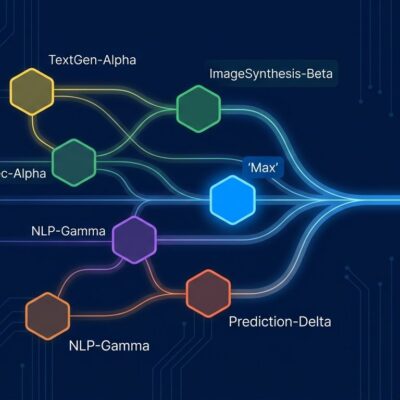
Under the hood, Claude Science runs a hierarchical multi-agent system:
- Coordinating agent — receives your plain-language research request, acts as project manager, breaks it into subtasks, and delegates
- Domain specialist agents — pre-configured for genomics, single-cell sequencing, proteomics, structural biology, and cheminformatics
- Reviewer agent — validates every citation and calculation before results reach you
This architecture matters beyond life science. Developers building production agentic applications are landing on this same pattern: a coordinator, specialized workers, and a validation layer. Claude Science is Anthropic eating their own cooking at production scale.
60+ Databases, Pre-Wired
The practical appeal is that researchers no longer write database integration code from scratch. Claude Science ships pre-configured connections to UniProt, PDB, Ensembl, Reactome, ClinVal, ChEMBL, and the Gene Expression Omnibus (GEO), among 60+ total. It also integrates with NVIDIA’s BioNeMo Agent Toolkit and supports protein structure prediction via Boltz-2 and OpenFold3.
For context: previously, a bioinformatician might spend a week writing scripts to pull from three of these databases before actual research could begin. That setup cost is what Claude Science is trying to eliminate.
Reproducibility as the Product
The most technically thoughtful part of Claude Science is how it handles output artifacts. Every figure it generates comes bundled with the exact code that produced it, environment specifications, a plain-language description of how it was created, and the full message history for that artifact.
This directly addresses scientific reproducibility — one of the field’s most persistent problems. When a peer reviewer asks “can you reproduce this figure?”, the answer is embedded in the artifact. The workbench runs locally on macOS or Linux, or over SSH and HPC login nodes, so it fits wherever your compute already lives.
Jeffrey Agar of Northeastern University put it plainly: “Claude became PhD-level in some areas of physics, chemistry, and biology.” Researcher Michael Pollastri added that if Claude Science automates information gathering, it “would increase the pace of our experimentation by orders of magnitude.” Strong claims — and they come with a caveat. AI drug discovery is still proving itself, and Anthropic’s 10x speedup figures deserve scrutiny before anyone treats them as settled fact.
Access and Pricing
Claude Science beta is available on Pro ($20/month), Max ($100–$200/month), Team ($30/user/month), and Enterprise plans. Team and Enterprise admins must enable it explicitly. macOS and Linux only for now — no Windows support confirmed. Usage counts against existing plan limits; there’s no separate API or new pricing tier.
It is not a replacement for Jupyter or R. Anthropic has been explicit: Claude Science is designed to complement existing tools. Think of it as an orchestration layer above your current stack, not a swap-in replacement.
The Grant Program: Apply by July 15
Anthropic is funding up to 50 projects through its AI for Science program. Each project can receive up to $30,000 in Claude credits, with Modal adding up to $2,000 in compute credits for select participants. Applications close July 15, 2026. Notifications go out July 31. Projects run September through December 2026.
If your team does any research-adjacent work — drug discovery, bioinformatics pipelines, genomics analysis — this is worth the application time.
The Bottom Line
Claude Science is the most interesting thing Anthropic shipped this week — which is saying something given that Claude Fable 5 and Claude Sonnet 5 also dropped simultaneously. Positioning a workflow product, not a model, as a flagship release signals that Anthropic sees vertical-specific tooling as the next competitive layer. The reproducibility architecture is genuinely novel. The 10x claims need time to validate. But the direction is right: researchers have been waiting for an AI tool that solves the boring 80% of research setup, not just the flashy parts.