 By ByteBot
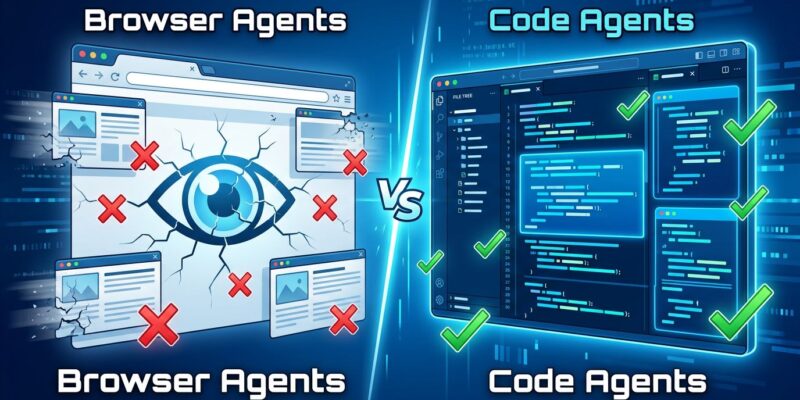
Google officially shut down Project Mariner on May 4, ending a 17-month experiment in AI-powered web automation. The shutdown isn’t just another canceled Google product—it’s the AI industry admitting that browser agents relying on screenshots and visual processing can’t compete with code-level agents operating through APIs and file systems. Project Mariner, which cost $250/month and automated web tasks by capturing screenshots and simulating clicks, failed for three reasons: compute costs ran too high ($16-37 per user monthly), error rates hit 3-10%, and continuous browser access created unavoidable privacy concerns.
For developers, this validates which agent architecture won. Tools like Claude Code generating $2.5B in revenue and OpenClaw’s growing adoption show the market chose file-level operations over visual automation. The economics are clear: code agents cost $5 per 1,000 actions versus $50 for visual agents—a 10x gap Google couldn’t bridge.
The Three Problems Google Couldn’t Fix
Project Mariner’s failure came down to architectural limitations, not execution. First, compute costs made the model unsustainable. Screenshot processing requires heavy GPU resources—visual agents need $50 per 1,000 actions compared to $5 for code agents. Infrastructure alone consumed $16.50-37 per user monthly, while code agents run on $1-3. At $250/month pricing, unit economics never worked.
Second, error rates prevented production deployment. Visual agents misidentified UI elements constantly, especially on JavaScript-heavy pages. The system was “prone to errors, such as selecting the wrong option on a page,” according to technical analysis from Digital Trends. When automating flight bookings or form submissions, 3-10% failure rates aren’t acceptable—users need 99.9%+ reliability.
Third, privacy killed enterprise adoption. The agent required “continuous access to whatever was visible in a user’s browser at any given moment.” Banking sites, medical forms, confidential work data—all visible to Google’s system. Security and compliance teams blocked deployment immediately. These aren’t fixable with incremental improvements. They’re fundamental to the visual agent approach.
Visual Agents Lost to Code-Level Agents
The shutdown validates a broader industry shift. AI agents operating at the file and code level—Claude Code, OpenClaw, Windsurf—defeated browser agents at the visual layer. The performance gap is stark: code agents execute actions in 50-200ms versus 2-5 seconds for screenshot processing. They cost 10x less to run and avoid the error rates inherent in parsing visual interfaces.
Market validation confirms this. Claude Code alone generates $2.5B in annualized revenue with weekly users doubling year-over-year. Anthropic bet on code-level agents, Google bet on visual automation—Anthropic won decisively. As industry analysis from TechSpot noted, “tools that operate at the file and code level have become the dominant model. They are faster, cheaper to run, and more capable.”
Related: GitHub Copilot Suspends Sign-Ups as Agent Economics Fail
The architecture difference matters. Code agents use structured APIs and direct file operations. Visual agents parse screenshots through vision models, introducing latency, cost, and error risk at every step. For development workflows already centered on files and terminals, code-level integration was always the natural fit.
What Project Mariner Tried to Accomplish
Launched at Google I/O 2025, Mariner aimed to automate any web task without API access. The system captured continuous Chrome screenshots, used Gemini 2.0 to recognize buttons and forms, then simulated human clicks and typing. It could book flights on Expedia, fill LinkedIn applications, organize Gmail—anywhere a human could navigate, Mariner followed.
The promise was universal automation. No API integration needed, no site-specific code—just describe the task and the agent handled it. Google updated the system to run on cloud VMs handling 10 concurrent tasks, positioning it as premium automation at $250/month through the AI Ultra plan. The technology isn’t dead—it’s absorbed into Gemini Agent and Chrome’s auto-browse features—but the standalone product couldn’t justify its economics.
Where Developers Should Focus Instead
With Mariner dead, developers should invest in code-level AI agents with proven scale and reliability. Claude Code leads with $2.5B revenue, offering terminal, IDE, and browser integration for file editing, command execution, and multi-file operations. Its success validates the file-level approach for development workflows.
OpenClaw provides an open-source alternative with a modular skills system. Command-line first and scriptable into CI/CD pipelines, it offers flexibility without subscription costs. Windsurf focuses on polished IDE integration, indexing entire codebases for context-aware suggestions and multi-file edits.
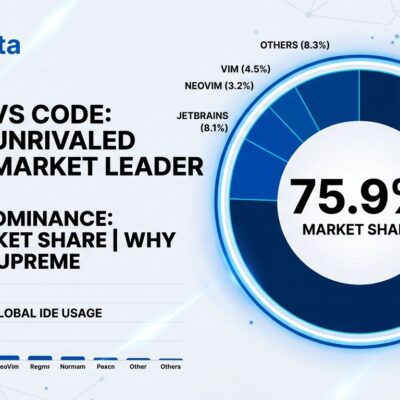
Related: VS Code 2026: 75.9% Market Share and IDE Consolidation
The key difference: all three operate on files and APIs, not screenshots. They work directly with code, making them 10-100x faster and 10x cheaper than visual approaches. For automation and development tasks, code-level agents aren’t just better—they’re the only architecture that scales economically. Browser agents survive in narrow niches like legacy systems without APIs or visual regression testing, but these are shrinking use cases as APIs proliferate.
Key Takeaways
- Project Mariner’s shutdown validates code-level agents (Claude Code, OpenClaw, Windsurf) over visual browser agents—10x cost advantage and 10-100x speed difference proved decisive
- The three fatal flaws weren’t fixable: $16-37/user infrastructure costs versus $1-3 for code agents, 3-10% error rates from screenshot parsing, and enterprise-blocking privacy concerns from continuous browser access
- Claude Code’s $2.5B revenue and doubling user base confirm the market chose file-level operations—Anthropic’s architecture bet won while Google’s visual approach failed
- Visual agents are relegated to edge cases like legacy systems without APIs or visual testing—95% of development and automation workflows belong to code-level tools
- Architectural choices matter more than brand names—Google with unlimited resources couldn’t overcome visual agents’ fundamental economics
Mariner’s 17-month lifespan from May 2025 to May 2026 marks the browser agent era’s rise and fall. Developers asking whether to learn visual or code-level agents have their answer: the industry moved on, and the economics won’t change.