 By ByteBot
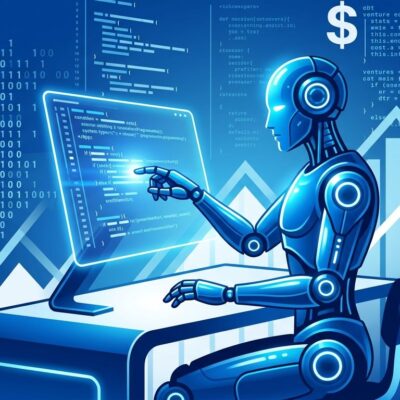
ByteDance just released UI-TARS-desktop, an open-source AI agent that controls your computer like a human – clicking buttons, filling forms, dragging windows. It’s trending #1 on GitHub with 33,000+ stars, and here’s the kicker: it outperforms GPT-4o and Claude on every GUI control benchmark. This isn’t another coding assistant. This is an AI that literally sees your screen and moves your mouse.
Beating the Frontier Models
UI-TARS consistently beats OpenAI’s GPT-4o, Anthropic’s Claude 3.5, and Google’s Gemini across 10+ GUI automation benchmarks. On VisualWebBench, UI-TARS-72B scored 82.8% compared to GPT-4o’s 78.5% and Claude’s 78.2%. On the OSWorld benchmark, UI-TARS achieved 24.6 with 50-step tasks, outperforming Claude’s 22.0. For Android automation, UI-TARS scored 46.6 versus GPT-4o’s 34.5.
This is the first open-source model to beat frontier commercial models at computer control. ByteDance, TikTok’s parent company, just leapfrogged the entire AI industry in autonomous desktop automation.
How It Actually Works
Unlike code-based automation tools like Selenium or traditional RPA platforms, UI-TARS uses vision-language models to see your screen and control your mouse and keyboard like a human would. The Seed-1.5-VL vision model analyzes screenshots, identifies UI elements, and generates precise coordinates for clicks and drags. No XPath selectors. No brittle scripts. Just “look and click.”
The system is available in 7B and 72B parameter versions, trained on 50 billion tokens. It runs locally on Windows and macOS, with support for remote browser automation. Installation is one command: npm install @agent-tars/cli@latest -g.
The key innovation: automation that adapts when UI changes. When developers move a button or redesign a form, UI-TARS doesn’t break. It sees the new layout and adjusts. This is the automation developers have wanted for 20 years – tools that work like humans, not robots following rigid scripts.
Three Killer Use Cases
Software testing teams are adopting UI-TARS to run test cases by visually controlling applications. When the UI changes, tests adapt automatically instead of requiring manual script updates. Teams report 50-70% reductions in QA engineering time spent maintaining test suites.
For legacy system automation, UI-TARS transfers data between old applications without requiring APIs. Need to read from Excel and fill enterprise system forms? The AI learns the interface like a new employee would, clicking through the workflow visually. No integration required.
Web automation gets more reliable. Multi-step forms, dynamic content, authentication flows – UI-TARS handles them by seeing the page, not parsing the DOM. It’s more resilient than Selenium because there are no selectors to break when developers refactor HTML.
The Open-Source Disruption
UI-TARS is free and open-source. Traditional RPA vendors like UiPath and Automation Anywhere charge $5,000 to $50,000 per year per bot. ByteDance just commoditized their entire value proposition. The $3 billion RPA market is facing its “Linux moment.”
This is part of ByteDance’s aggressive $23 billion AI investment strategy for 2026. They’re releasing multiple open-source models – UI-TARS, DeerFlow 2.0, Seed-OSS-36B – challenging DeepSeek, Alibaba, and US AI companies with freely available tools. The 500 stars per day UI-TARS is gaining on GitHub signals massive developer interest.
Security Concerns Are Real
An AI that controls your mouse and keyboard is powerful. It’s also dangerous. UI-TARS can navigate CAPTCHAs and authentication flows, which raises obvious misuse concerns. ByteDance acknowledges “extensive internal safety evaluations are underway.”
Security researchers warn about AI agent endpoint vulnerabilities in 2026. These agents execute directly on devices, reading local files, running terminal commands, and accessing clipboards. The attack surface is massive. Anthropic explicitly recommends running their Computer Use feature in virtual machines or containers with minimal privileges. The same advice applies here.
The benefits for testing and automation are real. So are the risks. Security vendors aren’t ready for widespread AI agent adoption, and enterprises deploying UI-TARS should run it in isolated environments with restricted permissions.
What This Means
ByteDance released the research paper and the full codebase on GitHub. The technical details are public. Competitors will follow. Expect Google, Microsoft, and others to release their own GUI automation agents in 2026.
The shift from AI assistants (answering questions) to AI agents (taking action) is accelerating. UI-TARS represents the current state of the art: open-source, vision-based computer control that outperforms proprietary alternatives.
For developers, this means better testing tools, cheaper automation, and new possibilities for legacy system integration. For security teams, it means new threat vectors and urgent need for AI agent monitoring. For the RPA industry, it means disruption.