Sonar’s 2026 State of Code Developer Survey reveals a critical behavioral paradox: 96% of developers don’t fully trust the functional accuracy of AI-generated code, yet only 48% actually verify it before committing. This 48-point “verification gap” creates what AWS CTO Werner Vogels calls “verification debt”—the time required to rebuild comprehension when reviewing AI-generated code you didn’t write yourself. With AI now accounting for 42% of all committed code and projected to hit 65% by 2027, this disconnect between stated concerns and actual practice poses systemic risks to code quality and security.
The 48-Point Verification Gap
The survey of 1,100+ developers reveals a stark disconnect: 96% don’t trust AI code accuracy, yet only 48% verify it before committing. However, this isn’t about developers being careless—it’s about a fundamental mismatch between AI’s generation speed and human verification capacity.
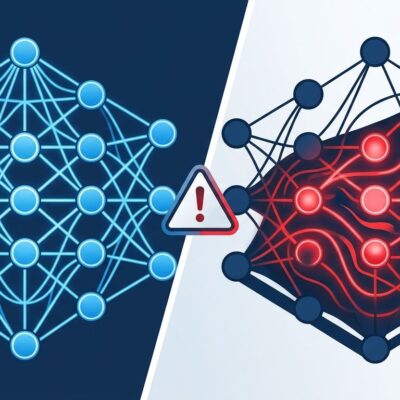
The problem intensifies because 61% of developers say AI code “looks correct but isn’t reliable.” Consequently, this creates false confidence that leads teams to skip thorough reviews. Unlike bugs from human code where developers understand context and can spot issues, AI code fails in subtle ways—hallucinated APIs, missing edge cases, security gaps—that escape visual inspection.
Meanwhile, adoption accelerates: 72% of developers who use AI do so daily. Therefore, the volume of potentially unreliable code entering production codebases is massive. This behavioral paradox—knowing the risk but systematically failing to act on it—creates what Sonar CEO Tariq Shaukat calls “a critical trust gap between output and deployment.”
Verification Debt: The New Technical Debt
Vogels coined “verification debt” to describe a verification burden unique to AI code. When you write code yourself, you understand the context, decisions, and edge cases. In contrast, when AI writes it, you must rebuild that comprehension from scratch. According to the survey, 38% of developers say this requires MORE effort than reviewing human code, compared to just 27% who find it easier.
This explains why developers skip verification despite the risk: it takes substantial effort. Furthermore, under deadline pressure, verification gets cut. The result? Verification debt accumulates, making future reviews even harder as the codebase becomes a black box of unverified AI output.
The numbers are stark: 95% of developers spend at least some effort reviewing, testing, and correcting AI output, with 59% rating that effort as “moderate” or “substantial.” Nevertheless, only 48% always complete this verification before committing code. The gap between effort required and effort invested is where production bugs slip through.
Work Shifted, Didn’t Disappear
Here’s the productivity paradox: despite 75% believing AI reduces unwanted toil, developers still spend 23-25% of their time on toil—unchanged from the pre-AI era. The work didn’t disappear; it simply relocated from writing boilerplate code to reviewing, testing, and correcting AI output.
The data dismantles the productivity narrative. While 88% report at least one negative impact of AI on technical debt, 40% say AI actually increased debt by generating unnecessary or duplicative code. Additionally, even more concerning: 53% attribute negative impacts specifically to AI creating code that “looked correct but was unreliable.”
This is a fundamental workflow problem, not a tooling limitation. Code generation is now effortless—verification capacity hasn’t scaled accordingly. As detailed by The New Stack, the verification bottleneck has become the constraint in software development. Engineering leaders who invested heavily in generation tools now face a different challenge: how to verify at the speed of generation.
Related: AI Productivity Paradox: 41% Code, 23.5% More Incidents
The Verification Bottleneck in Practice
When developers skip verification, specific failure patterns emerge consistently. First, hallucinated APIs top the list—AI fabricates libraries and packages that don’t actually exist. One analysis found multiple production incidents where AI suggested non-existent dependencies that passed initial review because they “looked plausible.”
Happy path bias is another common failure. AI assumes ideal scenarios and ignores edge cases like null values, invalid inputs, and boundary conditions. In fact, this leads to logic errors that surface only in production. One codebase audit discovered 11 different implementations of email validation, each subtly different, because AI doesn’t know existing utilities already exist.
Security gaps are particularly pernicious. AI regularly generates code that skips authorization checks, logs sensitive data, or uses string interpolation in database queries—creating SQL injection vulnerabilities. Moreover, these aren’t theoretical risks; they’re appearing in production codebases analyzed by Sonar’s platform across 750+ billion lines of code daily.
Automated Verification: The Path Forward
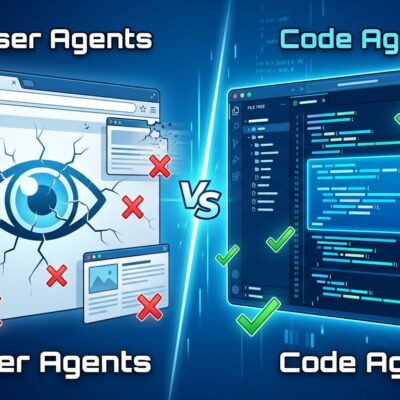
Industry leaders are shifting from “trust but verify” to automated verification gates. Tools like SonarQube now offer AI Code Assurance, which detects and applies structured analysis specifically for AI-generated code. The beta release of SonarQube Agentic Analysis in 2026 takes this further, bringing verification directly into the AI coding workflow so agents can verify their own work as code is created.
Successful teams are adopting a “two-pass” workflow: AI review runs in CI (taking roughly 90 seconds), flags obvious issues, developer fixes them, then human reviewers examine cleaner diffs for logic and architecture. Teams implementing this approach report release cycles accelerated by 30% while maintaining quality standards.
The tooling ecosystem is maturing rapidly. CodeQL and Semgrep detect fabricated APIs and injection vulnerabilities. Dependabot monitors for outdated or insecure dependencies in AI-suggested code. The key insight: manual review doesn’t scale when 42%—soon 65%—of code is AI-generated. Automated verification isn’t optional anymore; it’s the only viable path forward.
Key Takeaways
- 96% of developers distrust AI code accuracy, yet only 48% verify before committing—a dangerous 48-point gap between concern and action
- Verification debt is real: 38% say reviewing AI code requires MORE effort than human code, yet time pressure forces teams to skip verification
- The productivity paradox: developers still spend 23-25% of time on toil (unchanged from pre-AI), but the work shifted from writing to reviewing and correcting AI output
- Common failures include hallucinated APIs, happy path bias (missing edge cases), duplicate logic, and security gaps—all appearing in production code
- Automated verification is essential: tools like SonarQube AI Code Assurance, CodeQL, and Dependabot are becoming critical infrastructure, not nice-to-haves
The verification bottleneck won’t resolve itself. As AI code volume rises toward 65% of all commits, teams that build automated verification workflows will maintain code quality. Those that rely on manual review will drown in verification debt. The future isn’t “code faster with AI”—it’s “verify at the speed of generation.”