 By ByteBot
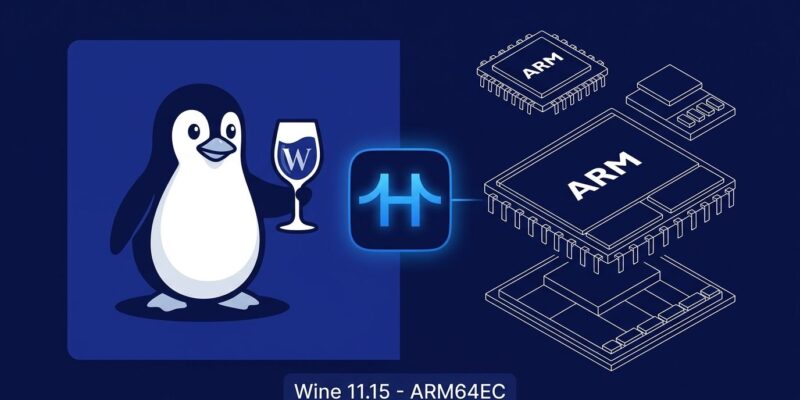
Wine 11.15 shipped August 8 and the headline feature is ARM64EC support in MinGW mode. The timing matters: Snapdragon X Elite and Dimensity-based ARM laptops have finally reached real desktop market volumes, and Asahi Linux on Apple Silicon is a daily driver for a growing number of developers. ARM Linux is no longer a curiosity. Wine’s ARM64EC support confirms it.
What ARM64EC Actually Changes
ARM64EC is Microsoft’s hybrid ABI for Windows on ARM. It lets native ARM64 code and x64 emulated code coexist in the same process — ARM64EC portions run at full native speed, and only the x64 parts require emulation. Before this, Wine on an ARM64 Linux host had to translate everything through x86-64 instruction-level emulation, which carries real overhead. Microsoft’s ARM64EC specification describes the hybrid model in detail.
With Wine 11.15, Windows applications compiled as ARM64EC — including .NET apps and many corporate tools — can run their native portions at ARM hardware speed on an ARM64 Linux host. The practical result: you no longer need to spin up an x86-64 VM just to run a single Windows utility on your ARM Linux machine. The MinGW toolchain now supports building Wine itself for ARM64EC targets, which opens the door for developers cross-compiling Windows software on ARM Linux.
Wayland Color Rendering Fixed
Two Wayland bugs are closed in this release. The more visually obvious one: Wine’s Wayland EGL code was applying sRGB color conversion twice, producing washed-out, desaturated visuals. That double-conversion is gone. The second fix corrects a content offset affecting 4:3 aspect ratio apps running fullscreen on Wayland.
Wayland is the default display protocol on Fedora, Ubuntu GNOME, and KDE Plasma 6. If you have been running Windows applications through Wine on a Wayland session and wondering why colors look slightly wrong, this is why. Upgrade.
Bug #4811: Twenty Years Old and Finally Dead
WineHQ bug #4811 was filed in March 2006. Wine was at version 0.9. Internet Explorer 6 was current. The bug — incorrect behavior in the MSXML3 XMLDOMDocument interface — broke XML-processing Windows applications in ways that were annoying enough to report but apparently not catastrophic enough to prioritize. It survived three complete rewrites of surrounding code, outlasted two Wine stable branches, and made it to its twentieth birthday.
Wine 11.15 killed it. Twenty years is a long time for a bug to stay open, and a longer time to wait for your Windows XML app to work correctly.
Enterprise: NTLM Without a Domain Controller
Wine 11.15 implements local NTLM authentication, removing the requirement for a domain controller to be present when running Windows applications that use NTLM auth flows. NTLM is still pervasive in corporate Windows environments. Developers or IT admins trying to run enterprise Windows tools on Linux workstations have historically needed network domain infrastructure just to authenticate. That constraint is now gone for local NTLM use cases.
Other Changes
The BCrypt cryptographic backend continues its migration from TomCrypt to SymCrypt, with TLS 1.1, TLS 1.2, and HKDF key derivation added in this release. WindowsCodecs gains three new alpha-channel pixel format conversions — 32bppBGRA, 64bppPRGBA, and 128bppRGBAFloat — which should eliminate format mismatch errors in high bit-depth imaging applications. A total of 41 bug fixes are included across various games and applications. Full details are in the WineHQ release notes.
Development Build Notice
Wine 11.15 is a development release. If you run Windows games or applications and prioritize stability over new features, the current stable branch remains the safer choice. Development builds add features continuously; the next stable release (Wine 12.0) will consolidate everything. If you are specifically running Wine on an ARM64 Linux host, or you have been hitting Wayland color issues, 11.15 is worth grabbing now.