 By
Theo Browne ran full send 32 times. Twenty-seven pull requests merged without him reopening a single thread. He pulled the stat from his own request logs, confirmed none of those 27 caused a problem, and then open-sourced the nine agent skills behind it. That project is tstack â and it has been sitting at #5 on GitHub Trending every day since it dropped on October 24.
Nine Files, One Complete PR Pipeline
tstack is nine MIT-licensed markdown files you copy into ~/.claude/skills/ or ~/.codex/skills/. No npm package. No CLI to install. Each file is a behavior contract your AI agent reads and follows. The three skills most developers will reach for first:
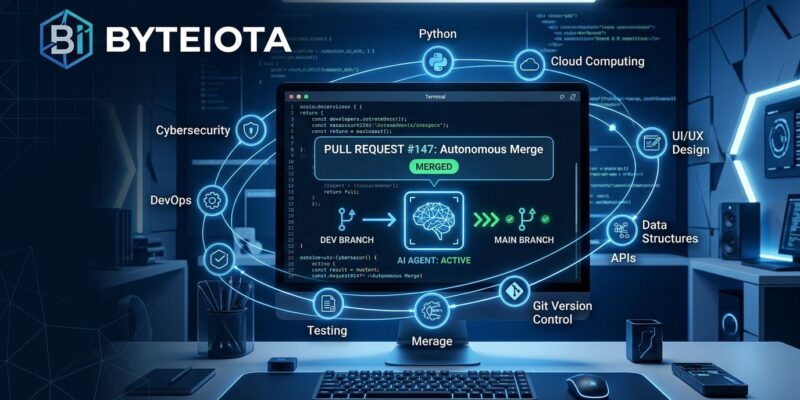
- full-send â takes a code change all the way to a merged PR with nobody watching. The agent proves the change, runs cross-model review, files the PR, babysits CI, and merges when all gates pass.
- full-stop â identical pipeline, but the agent stops before the final merge and hands you the button. Same automation, human still approves.
- council â assembles three reviewers from different providers â Claude Opus, GPT Sol, Gemini Pro â each scoring your diff on a 0-10 scale and iterating until they converge on agreement.
The other six skills round out the system: sol-loop for iterative single-model review, file-pr for problem-first PR descriptions, takeover for inheriting a half-finished PR, babysit-pr for CI monitoring, modernize for rebasing stale branches, and leaving-pr-comments which formats what the agent posts on your behalf.
Install in Three Lines
git clone https://github.com/t3dotgg/tstack
cp -R tstack/skills/* ~/.claude/skills/   # Claude Code
cp -R tstack/skills/* ~/.codex/skills/    # Codex
Verify GitHub CLI with gh auth status. The babysit-pr watcher needs Python 3. Install all nine together â the skills call each other, and missing dependencies will break the pipeline mid-run.
This Is Not "Yolo Merge"
The obvious concern with full-send is that an AI agent merging its own PRs sounds like a disaster waiting to happen. Read the actual skill spec and the picture changes. full-send will not merge until five conditions are simultaneously true: proof must cover every change in the diff, required checks must be green, review bots must have finished with every finding resolved or explicitly dismissed in writing, no human review can still be requesting changes, and the branch must be up to date and mergeable. Admin bypass is explicitly forbidden. Force-push is only permitted with --force-with-lease.
That is a stricter merge protocol than most developers apply manually.
Start with full-stop
The tstack documentation is direct about this: new users should start with full-stop, not full-send. You still get the automated proof, multi-model review, and CI monitoring â you keep your hand on the merge trigger while you calibrate trust in your specific repository. Theo himself took time to get comfortable with autonomous merge. The 27/32 stat represents a practiced workflow, not a first-day default.
There is a real failure mode worth naming: a 900-line agent-generated PR that gets rubber-stamped because reviewing it properly would take longer than writing it. full-stop does not eliminate that risk, but it keeps the decision point in human hands. full-send encodes Theo’s trust level â your threshold may reasonably be different.
Why This Dropped Now
The GitHub Octoverse 2026 report, published this week, found that AI agents now open 40 percent of pull requests. The volume problem is real. tstack is an answer to the follow-on question: once agents are generating that many PRs, who reviews and merges them all?
Browne’s answer is to encode the review and merge process itself as agent-readable instructions. The README puts it plainly: “The agent skills I use every day, cleaned up so anyone can use them.” These are starting points â he explicitly says to edit them and store customizations in your CLAUDE.md or AGENTS.md so they survive updates.
tstack is not the only skills pack in circulation. Alpha Signal noted that Superpowers covers TDD discipline and ECC ships 71 agents with 311 skills. What makes tstack different is scope: nine files, focused entirely on the PR lifecycle, auditable in an afternoon. Fork it, read every line, and decide what you trust before you enable autonomous merge.
The project is at github.com/t3dotgg/tstack. A detailed install and usage guide is available if you want a deeper walkthrough of each skill before committing. The MIT license means you can always inspect exactly what made those 27 merges happen â and decide whether your workflow is ready for the same.