 By ByteBot
SonicWall’s SMA1000 secure remote access appliances have two actively exploited zero-days that chain together to grant root-level access from a single unauthenticated HTTP request. CVE-2026-83548 (CVSS 10.0) and CVE-2026-83549 were disclosed September 1 via SNWLID-2026-0016 and added to CISA’s Known Exploited Vulnerabilities catalog the next day. Federal agencies had 72 hours to patch. As of September 7, Shadowserver tracks more than 400 internet-exposed SMA1000 appliances. This is the platform’s third exploited zero-day chain in 2026 alone.
How the Attack Chain Works
The attack abuses an architectural flaw, not just a coding bug. The SMA1000 divides its public-facing WorkPlace interface from the internal Appliance Management Console (AMC) — a separation intended as a security boundary. CVE-2026-83548 collapses that boundary.
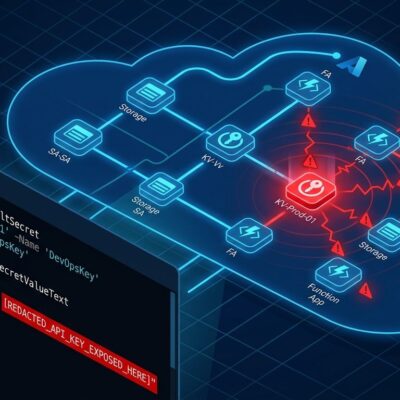
The vulnerability lives in the /wsproxy WebSocket-proxy endpoint in WorkPlace. By spoofing specific User-Agent headers and URL parameters, an attacker causes the appliance to act as a forward proxy, routing the crafted request to internal services as if it originated from localhost. That includes the AMC, which is normally unreachable from the internet.
CVE-2026-83549 is an OS command injection in the AMC. Under normal conditions, exploiting it requires administrative authentication. But reached through the SSRF proxy in CVE-2026-83548, the AMC treats the request as local — authentication is bypassed. The result is root-level command execution on the appliance, no credentials required. Affected models: SMA1000 6210, 7210, and 8200v. Rapid7’s ETR confirms active exploitation in the wild.
Patch Now — Specific Versions
SonicWall released hotfixes on September 1. There are two branches:
- SMA1000 on the 12.4.x branch: upgrade to 12.4.3-03526
- SMA1000 on the 12.5.x branch: upgrade to 12.5.0-02952
While patching, restrict external access to the WorkPlace interface at the network perimeter. This removes the SSRF entry point before the hotfix is applied. If your appliance has been internet-facing without that restriction, run a compromise review before and after patching — not just after. Check /wsproxy access logs for external source IPs with loopback destination parameters, which is the forensic fingerprint of CVE-2026-83548 exploitation.
Patching Doesn’t Undo July’s Breach
The September zero-days are the second chain to hit the SMA1000 in seven weeks. In July 2026, SonicWall patched CVE-2026-15409 (CVSS 10.0) and CVE-2026-15410 — the same SSRF-to-command-injection pattern, different CVE numbers. Researchers confirmed attackers (tracked as UTA0533) began exploiting it June 22, three weeks before the July 14 disclosure. During that window, they extracted TOTP seeds from compromised devices.
A TOTP seed is not a password. Rotating user passwords does not invalidate a stolen seed. An attacker who captured your organization’s TOTP seeds in June can still generate valid MFA codes today, after all September patches are applied. Bleeping Computer notes that if your SMA1000 was exposed between June 22 and July 14, patching alone is not remediation. TOTP configuration needs to be rebuilt from scratch on a clean appliance — not just password resets.
The Pattern Is the Problem
Three exploited zero-day chains on the same product line in under a year points to something architectural. The WorkPlace-to-AMC boundary keeps producing SSRF paths that reach internal-only services. SonicWall patches the individual vulnerability and ships a new hotfix, but the underlying design — a public interface that can proxy requests toward an internal management console — has generated two CVSS-10.0 SSRF vulnerabilities in seven weeks. That is not a bug pattern. That is an architecture pattern.
For organizations using the SMA1000: patch immediately, review /wsproxy logs, and if you were exposed in June or July, treat your MFA as broken and rebuild it. The device marketed as your remote access security layer is now the most reliable initial access path into the enterprise networks it protects. At some point, that stops being a patch problem and becomes a product decision.