 By
By AI coding agents can generate a working prototype in under an hour. The backend it actually needs to run in production? That’s still a multi-week slog through auth configuration, database setup, access policies, and compliance wiring. Microsoft shipped Rayfin at Build 2026 to close that gap — an open-source SDK and CLI that takes a backend from zero to a governed, Fabric-hosted deployment in three terminal commands.
What Rayfin Is
Rayfin is a managed backend-as-a-service that runs on top of Microsoft Fabric. You describe your backend in code — data models, APIs, authentication methods, storage, access policies — using the Rayfin SDK. One CLI command deploys the whole thing. You get a database, auth, storage, a schema-driven GraphQL API, and OneLake data integration out of the box. App data lands in OneLake automatically, no ETL pipeline required, which means it’s immediately queryable by Power BI, notebooks, and other data agents in your Fabric tenant.
The SDK is open-source and available on GitHub. The CLI is an npm package. No proprietary tooling, no vendor console to click through.
Three Commands to a Production Backend
The getting started story is aggressively simple:
npm create @microsoft/rayfin@latest my-app --workspace my-fabric-workspace
cd my-app
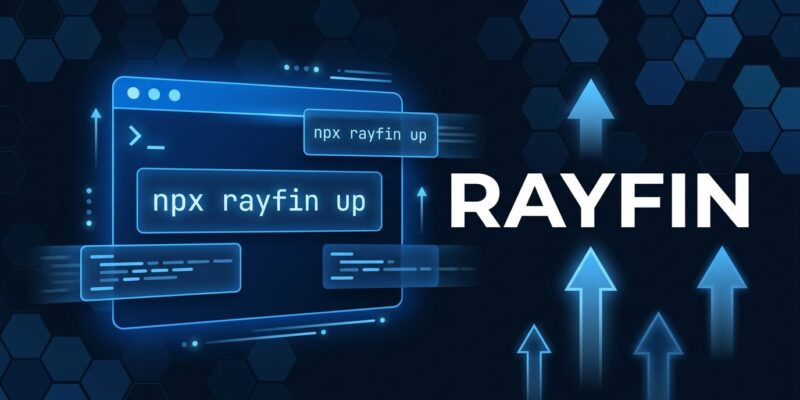
npx rayfin up
The first command scaffolds a project from a template. The third command provisions your database, configures auth, sets up access policies, and deploys the backend to Fabric. For teams already living in Fabric workspaces, this is a meaningful reduction in friction. The full CLI reference covers dry-run deployments, workspace switching, database dialect selection, and environment file generation for Vite and Next.js.
Adding Rayfin to an existing project is one extra command:
npx rayfin init . --template-name react-vite --dialect mssqlBuilt for the Replit-to-Production Workflow
Microsoft didn’t launch Rayfin alone. It partnered with Replit specifically for the deployment path — targeting developers using AI coding agents to build apps fast, then hitting the wall when it’s time to ship a real backend.
The workflow: build in Replit using natural language or AI assistance, deploy to Fabric with Rayfin. Your app, its data, and its services all live in your own Fabric tenant under your identity and governance controls — not Replit’s infrastructure. For enterprise teams, that distinction matters. The official announcement frames it as closing “the gap between vibe coding and enterprise production.”
Who This Is Actually For
Rayfin is explicitly competing with Supabase and Neon — the default Postgres backends that agentic coding tools reach for today. The differentiation pitch is governance: instead of every agent and app creating its own database silo, Rayfin routes everything through one Fabric tenant. One unified data layer, one set of compliance controls, one place for analytics.
That pitch lands hardest for enterprise teams already invested in Microsoft Fabric. If your organization runs on Fabric, Rayfin removes weeks of backend setup and ensures every AI-powered app you build stays inside your governance boundary by default.
For developers outside the Microsoft ecosystem, the calculus is different. Rayfin requires Microsoft Fabric, which means Azure. Your data gets stored in Delta-Parquet format in OneLake — Fabric’s open formats mitigate some lock-in, but you’re still tied to Azure infrastructure. Supabase remains the more portable option for teams not already on Fabric.
Current Limitations
Rayfin shipped in preview at Build 2026. Pricing hasn’t been disclosed. The Fabric dependency is unavoidable — this is not a standalone service. Service principal authentication is documented in the CLI but listed as not currently supported. Standard preview caveats, but worth noting before building anything critical on it.
Get Started
Install the CLI with npm i @microsoft/rayfin-cli and start with a free Fabric trial — no credit card required. Community-maintained project templates live at awesome-rayfin on GitHub and cover common app patterns. If you’re already using Replit for AI-assisted development, the Fabric deploy path is integrated.
The prototype-to-production problem for AI apps is real, and Rayfin is the most direct answer Microsoft has shipped to date. Whether it becomes the default for enterprise teams depends on how fast they clear preview and whether the Fabric dependency reads as an asset or a constraint in your organization.