 By ByteBot
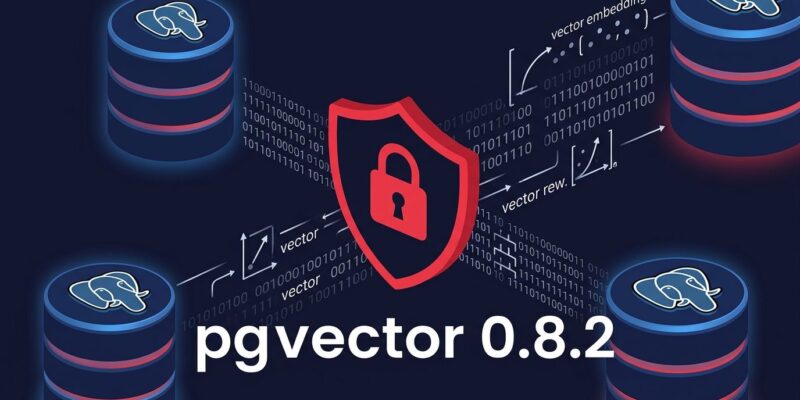
pgvector 0.8.2 patches a CVSS 8.1 buffer overflow that lets any authenticated database user with CREATE INDEX permissions leak data from unrelated tables — or crash your Postgres server entirely. If you’re running HNSW indexes, you’re exposed. The fix takes two commands. Most developers only run one.
What Broke
CVE-2026-3172 is a buffer overflow caused by integer wraparound in pgvector’s parallel HNSW index build path. When multiple workers build an HNSW index simultaneously, the memory bookkeeping overflows, opening an out-of-bounds read window. That window can pull data from entirely unrelated database relations — tables that have nothing to do with your vectors.
Every version from 0.6.0 through 0.8.1 is affected. The CVSS score is 8.1 (High). It’s not remote code execution, but cross-relation data leakage in a production Postgres instance — especially a multi-tenant one — is serious. The attack only requires an authenticated user with the ability to CREATE or REINDEX an HNSW index. That’s a low bar in most deployments.
Are You Actually Exposed?
Three conditions need to be true simultaneously: you’re running pgvector 0.6.0–0.8.1, you have HNSW indexes (not IVFFlat), and max_parallel_maintenance_workers is above zero. The last condition is true by default in most Postgres configurations. Check your exposure with these queries:
-- What version are you on?
SELECT extversion FROM pg_extension WHERE extname = 'vector';

-- Do you have HNSW indexes?
SELECT schemaname, tablename, indexname
FROM pg_indexes
WHERE indexdef LIKE '%hnsw%';

-- Is parallel building enabled?
SHOW max_parallel_maintenance_workers;
If the version query returns anything below 0.8.2 and you have HNSW indexes, patch immediately.
The Fix: Two Steps, Not One
Here’s where most developers go wrong. Upgrading the OS-level extension package is only half the job. You also need to update the extension inside every database that uses it. Skip Step 2 and the in-database version stays on the vulnerable code even though the server binary is patched.
Step 1 — Update the binary on the server:
# Debian / Ubuntu
sudo apt-get update && sudo apt-get install postgresql-16-pgvector

# Adjust the package name for your PostgreSQL major version (17, 18, etc.)
If you built from source, pull the v0.8.2 tag and reinstall:
cd pgvector && git fetch && git checkout v0.8.2
make && sudo make install
Docker users: update your image to pgvector/pgvector:0.8.2-pg16 (swap the pg version as needed).
Step 2 — Update the extension inside each database:
-- Run this in every database that has pgvector installed
ALTER EXTENSION vector UPDATE;

-- Confirm it worked
SELECT extversion FROM pg_extension WHERE extname = 'vector';
-- Expected: 0.8.2
This step must be run separately in each database. A single Postgres instance can host dozens of databases, each with its own extension version. Don’t skip any of them.
If You Can’t Patch Right Now
The workaround is to disable parallel HNSW builds entirely. This removes the vulnerable code path without upgrading:
-- Session level
SET max_parallel_maintenance_workers = 0;

-- Or set it globally in postgresql.conf, then reload
-- max_parallel_maintenance_workers = 0
SELECT pg_reload_conf();
HNSW index builds will be single-threaded and slower, but your data is safe. Use this as a bridge until your next maintenance window, not a permanent solution.
If You’re on a Managed Platform
Supabase, Neon, AWS RDS, and Google Cloud SQL all include pgvector, and all of them update on their own schedules. Don’t assume you’re patched. Run the version check query in your managed database’s SQL editor right now. If you’re below 0.8.2, open a support ticket or check if the platform exposes a manual extension update mechanism.
Supabase and Neon users can typically run ALTER EXTENSION vector UPDATE; directly from the SQL editor — check your dashboard permissions. RDS users need to go through the standard RDS extension update process, which may require a minor version maintenance event.
The Bigger Picture
pgvector is now the default vector store for RAG pipelines. Teams that would have spun up a separate Pinecone or Weaviate instance in 2024 are running pgvector in Postgres instead, handling 10–50M production vector workloads. That consolidation is smart engineering — but it makes the extension a high-value attack surface. This is the second notable security patch for the vector stack in 2026. The first, the Spring AI Vector Store RCE in June, hit Java teams. This one hits everyone running Postgres.
The official release announcement has the full changelog. The fix is in. Patch it. The two commands take under five minutes.