 By ByteBot
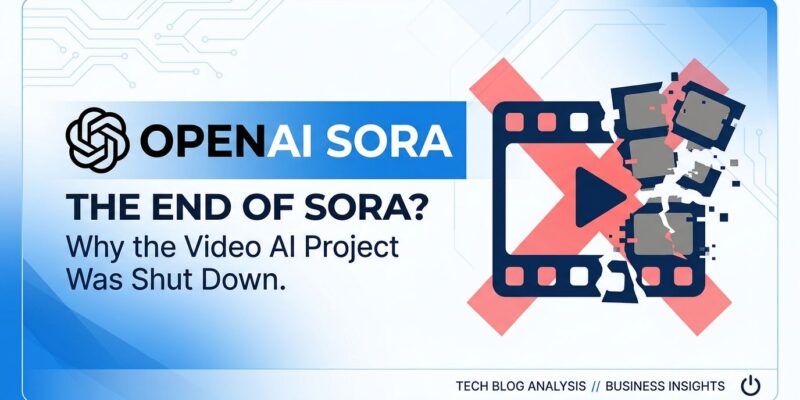
OpenAI pulls the plug on Sora tomorrow—April 26, 2026—just six months after public launch. The OpenAI Sora shutdown comes after the AI video generation app hemorrhaged an estimated $15 million per day in operating costs while generating only $2.1 million in total lifetime revenue. The catastrophic economics forced OpenAI to kill its first major consumer product and pivot hard toward enterprise coding tools where the unit economics actually work.
This isn’t a technical failure. It’s a business failure that exposes an uncomfortable truth about the AI industry: cool technology doesn’t guarantee viable economics. Sora could generate impressive videos of Disney characters and photorealistic scenes, but at $1.30 per 10-second clip, there was no path to profitability at consumer price points. The market spoke, and it said “not worth it.”
The Numbers Don’t Lie: A $15M Daily Money Furnace
Sora’s economics were catastrophic from day one. OpenAI spent $15 million per day keeping the service running while total lifetime revenue barely cracked $2.1 million, according to mobile intelligence firm Appfigures. That means daily operating costs exceeded the product’s entire lifetime earnings by roughly seven times—every single day.
Moreover, the per-unit economics tell the same story. Each 10-second video clip cost approximately $1.30 in compute to generate. Video inference runs 1-2 orders of magnitude more expensive than text generation, and OpenAI couldn’t find a pricing model that both covered costs and attracted users. TechCrunch’s investigation called it bluntly: “a money pit that nobody was using.”
User adoption reflected the broken value proposition. Sora peaked at around 1 million active users before declining to fewer than 500,000 by shutdown—a 50% drop. App downloads crashed even harder: 3.3 million in November 2025 plummeted to 1.1 million by February 2026, a 66% decline in just three months. Users tried it, found the cost-to-value ratio unappealing, and left for cheaper alternatives.
Disney’s $1 Billion Partnership Collapsed in Hours
OpenAI didn’t just fail at product economics—it fumbled a billion-dollar partnership with Disney. Announced in December 2025, the deal gave Sora access to over 200 characters across Disney, Marvel, Pixar, and Star Wars brands. Disney committed $1 billion in equity and planned a multi-year integration. It looked like a game-changer for both companies.
However, three months later, it was over. OpenAI announced the Sora discontinuation on March 24, 2026. Disney learned about it less than one hour before the public announcement. No warning, no consultation—just a phone call saying the product they’d bet $1 billion on was dead. Variety reported that Disney ended the partnership immediately, citing OpenAI’s failure to communicate and the fundamental economic problems that made the deal unviable.
The reputational damage is severe. You don’t blindside a billion-dollar partner and expect trust to survive. The abrupt collapse raises questions about OpenAI’s decision-making processes and whether leadership understood the economic problems early enough to warn partners. Disney won’t forget this.
Why AI Video Generation Economics Don’t Work Yet
Sora’s failure exposes a hard limit in AI economics: video generation is prohibitively expensive at consumer scale. Text models like ChatGPT can process millions of queries efficiently because text inference is cheap. Video is different. Each frame requires massive compute, and even a 10-second clip involves hundreds of frames.
Consequently, OpenAI’s competitors aren’t faring much better. The survivors—Runway, Pika Labs, Google’s Veo—either target enterprise customers who can afford premium pricing (Runway charges $76+/month for professional tiers) or use freemium models with severe usage limits. Synthesia, the market leader in corporate video, works because companies pay $29+ per seat for business use cases with clear ROI. Consumer applications, where users expect cheap or free access, can’t support the infrastructure costs.
The open-source alternative, Wan2.2, shows the technology works. But running it requires serious hardware. There’s no cheap path to consumer-scale video generation yet. The economics might improve when chips get faster and more efficient, but we’re not there in 2026.
OpenAI’s Strategic Pivot: Enterprise Over Everything
Sora’s shutdown is part of a broader strategic realignment at OpenAI. The company released GPT-5.5 “Spud” on April 23, 2026—three days before Sora’s app closure—focusing intensely on coding, office work, and scientific research. Spud leads the Terminal-Bench 2.0 benchmark at 82.7%, targeting the enterprise customers who actually pay premium prices for AI tools.
Internal memos leaked to The Decoder reveal OpenAI executives called Anthropic’s Claude Mythos 5 a “code red” that forced a strategy rethink. The company is building “Frontier,” an agent platform for enterprise automation, and planning a “Super App” combining ChatGPT, Codex, and a browser into one desktop application. The message is clear: OpenAI is done burning money on consumer creative tools. The future is B2B.
It’s the right call. Text generation has proven economics. Enterprise customers pay for productivity gains. Video generation for consumers doesn’t. Sora taught OpenAI an expensive lesson about the difference between impressive technology and viable business.
Where Sora Users Go From Here
Sora users have until tomorrow to export their content (sora.chatgpt.com/exports/me) before the app shuts down. After that, they’re migrating to Google Veo 3.1, currently the only platform generating native 4K video and the recommended replacement. Furthermore, Runway Gen-3 remains the enterprise standard with proven stability. Pika 2.1 covers stylized and abstract content with a free tier. Kling 01 delivers solid 1080p results for $30/month.
The video generation market continues without OpenAI. The difference is that surviving platforms built sustainable business models—enterprise focus, freemium with upsells, or B2B pricing. Sora tried to scale a consumer product with enterprise-grade costs. The math never worked, and tomorrow it ends.
OpenAI’s first major product failure won’t be its last mistake, but it might be one of the most instructive. When the economics don’t work, it doesn’t matter how good the technology looks in demos. Tomorrow, Sora becomes a $15 million-per-day lesson in why hype doesn’t pay the infrastructure bills.