 By ByteBot
OpenAI held DevDay on September 29th and launched more than 20 products. Most recaps listed all of them. This one covers the four that will change how you build — and one you can safely ignore for now.
Sol’s Cached Pricing Changes the Agentic Cost Equation
GPT-6.1 Sol is getting coverage as a cheaper Astra alternative. That’s true but it’s not the real story. The real story is the cached input price: $0.10 per million tokens.
If you’re running any agentic loop — system prompts, tool definitions, conversation history that gets reused — you’re caching most of your context. At $0.10/1M cached tokens, that’s a 95% reduction from Astra’s cached pricing. The math on building multi-step agents just changed. Workloads that were borderline viable are now clearly affordable.
The quality holds up. Sol approaches Astra on coding and computer use at one-fifth the base cost ($2 input, $10 output per million tokens). The model ID is gpt-6-1-sol — a drop-in replacement requiring no SDK changes.
Stop Using a Full LLM for Classification
The Decisions API entered limited preview at DevDay and it solves a problem most developers have but haven’t named. Right now, a significant portion of API calls in agentic systems use a full generative model to do something like: classify this support ticket into category A, B, or C. That’s expensive, slow, and structurally wrong — you’re using a sledgehammer when you need a classifier.
Decisions API uses the smaller Luna model. You define the question and the fixed answer options. It enforces the response within those options and returns in sub-second. No hallucinated output formats, no JSON parsing gymnastics, no validation layer needed.
This is the most underrated announcement from DevDay. Simon Willison noted it as OpenAI’s direct competitive response to the recently launched Jev product. Request preview access now — it’s the right tool for routing and classification, and it was quietly missing from OpenAI’s API until now.
Dots: Watch It, Don’t Build For It Yet
Dots are persistent agents — they have their own cloud computer, browser, identity, and they keep working while your computer is off. They connect to 4,000+ apps. On paper it’s impressive.
In practice: the first Dot failed to respond during the live DevDay demo. The presenter recovered with “I guess Dot’s having a slow morning,” which became the most quoted line of the event. Early testers and Hacker News (629 comments, substantial skepticism) reported that tasks taking Dots 20–30 minutes completed in 5–6 minutes on Claude Sonnet 5.5. The headline voice call feature didn’t work on day one.
Dots is interesting infrastructure. Persistent context plus app integrations plus background execution solves a real problem. But “interesting” is not the same as “ready to replace your current agentic workflows.” Give it a quarter, then reevaluate.
Codex Security Cloud Is the Announcement Nobody Covered
While everyone argued about Dots, OpenAI quietly shipped Codex Security Cloud. It reads your repository, builds a threat model from your architecture and dependency graph, hunts for vulnerabilities, verifies each one in a sandbox, and prepares a fix. The reported validation success rate is 99% — near-zero false positives.
The honest comparison with GitHub Copilot’s CodeQL-based Autofix: CodeQL is cheaper per scan and deterministic. Codex Security Cloud reasons about how your code fits together architecturally. Hands-on reviews suggest you want both — CodeQL for deterministic coverage, Codex Security for deep architectural reasoning. OpenAI’s own figure is 92% recall on test repos. Pair tools, don’t rely on one.
It’s available as a plugin on all Codex plans. Run it on your repo this week before your security team adds it to an onboarding checklist and you’re doing it reactively.
Plugin Extensions Are Worth Five Minutes of Your Time
ChatGPT now supports plugin extensions with sidebar destinations, interactive panels, and MCP Events — external triggers that wake agents up automatically. The developer ecosystem is still forming, but ChatGPT’s user base is 400 million. If your product lives in a developer or knowledge-worker workflow, there is a distribution channel here worth a brief evaluation. The official DevDay developer resources thread has the submission details.
The Bigger Picture
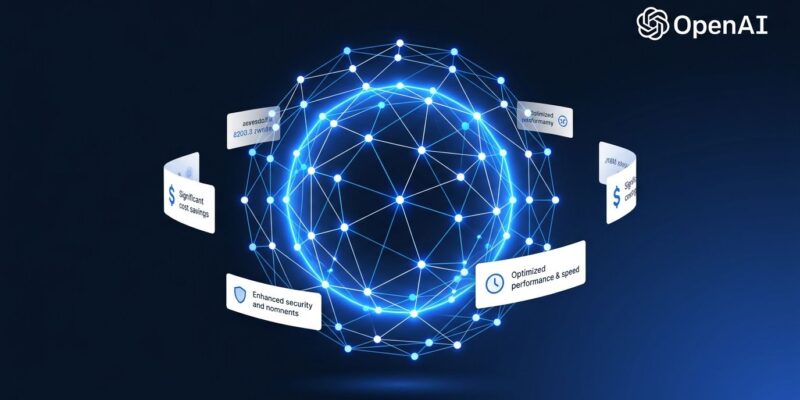
DevDay’s throughline is that OpenAI is betting on persistent agents as the primary interface — not single model calls. Dots, Space, ChatGPT Sites, MCP Events, Agents API computer use — these aren’t separate products. They’re a single architectural shift toward agents that hold state, use tools, operate software, and collaborate across workflows.
You don’t have to rebuild everything today. But Sol’s pricing means you can afford more agent steps, Decisions API means you can route cheaper, and Codex Security Cloud means vulnerability review doesn’t have to be a manual sprint. Those three changes you can make this week. The full InfoQ DevDay recap has the complete technical details if you want to go deeper.