 By
By You probably already own a local AI cluster. NVIDIA just gave you the router. At IFA 2026 on September 3, NVIDIA unveiled PAIR (Personal AI Router) — a free, open-source tool that discovers every compatible GPU on your home network and distributes inference requests across them. In their IFA demo, a five-subagent task that took 18 minutes on a single RTX Spark laptop finished in 8 minutes 48 seconds spread across three machines. Zero code changes to existing Ollama or LM Studio setups required.
What PAIR Does (and Doesn’t)
Before you get excited about running a 70B model across two GPUs: that’s not what PAIR does. PAIR is a parallel workload distributor, not a model parallelism tool. It does not pool VRAM. Two machines with 16GB each do not become a single 32GB GPU through PAIR.
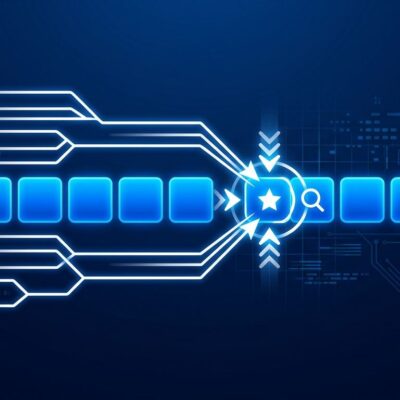
What PAIR actually does: when your agent fires off multiple inference requests simultaneously, PAIR routes each whole request to a different available machine on your network. Node 1 handles subagent A’s call, Node 2 handles subagent B’s call, and so on. The parallelism comes from parallel agents — not from splitting a single model across silicon.
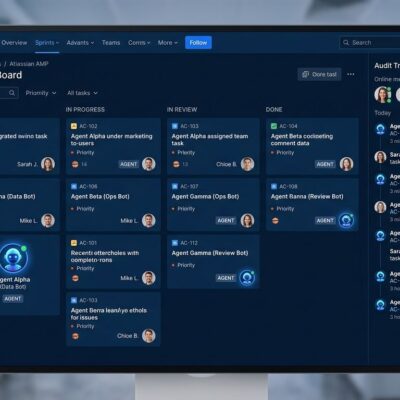
This distinction matters. If you’re running a single chatbot with one model call at a time, PAIR does nothing for you. If you’re running agentic coding pipelines, research workflows, or any multi-agent setup that fans out into parallel LLM calls — PAIR turns all your idle home hardware into live capacity.
Drop-In Integration
PAIR intercepts Ollama and LM Studio API calls at the proxy layer. Your agents never know they’re talking to a cluster. The only change is pointing your agent’s base URL at the PAIR endpoint instead of your local Ollama port. The API interface is identical — no refactoring, no adapter layers.
NVIDIA built PAIR to work inside the ecosystem developers already use rather than forcing a proprietary runtime. That decision is already paying off: community pull requests are adding Anthropic-style API support and a llama.cpp backend. The open-source approach is building momentum fast. See the NVIDIA Technical Blog for full architecture details.
Supported Hardware and Setup
PAIR supports NVIDIA GeForce RTX 20-series and newer, RTX PRO workstation GPUs (Turing architecture forward), DGX Spark, and Apple M4 or newer silicon. Operating systems: Windows 11, Ubuntu 14.04+, and macOS Tahoe. Minimum 8GB RAM and 20GB storage per node.
- Install PAIR on each participating machine from the official download page
- Pair devices on the same local network using a six-digit PIN
- Ensure each node runs Ollama or LM Studio with required models downloaded
- Point your agent’s base URL at the PAIR endpoint (same interface as Ollama)
- PAIR handles discovery and routing automatically from there
The Security Caveat
PAIR uses mDNS for device discovery, which means hostname, hardware inventory, and GPU utilization are readable by anything on the same subnet. The six-digit pairing PIN is not a high-entropy credential — NVIDIA’s own documentation calls it a “temporary trust mechanism.” Once paired, inter-node traffic uses mTLS, so data in flight is encrypted.
For a home lab or trusted office network: this is fine. For a corporate shared network: VLAN isolation is the right move before deploying PAIR. The privacy story is strong — prompts stay on your hardware — but the initial pairing model has limitations worth knowing before you push this to a shared environment. The NVIDIA PAIR architecture docs cover the full security model.
Why This Matters Now
Local AI inference has matured fast in 2026. Quantization means capable open-weight models run on single consumer GPUs. Cloud API costs for individual developers run $50–$200 per month, scaling to $6,000–$24,000 annually for teams. An RTX 5090 at $1,999 MSRP breaks even in under four months at heavy utilization. The economics increasingly favor local — and the bottleneck for complex agentic work isn’t model size anymore, it’s parallel capacity.
PAIR directly addresses that bottleneck. It’s in beta, so expect rough edges. But the architecture is sound, the open-source community is already extending it, and the use case — multi-agent workflows running fully local — is exactly where the developer community is heading. Check out the PAIR getting-started playbook for a step-by-step walkthrough.
The compute is already sitting there. PAIR is the routing layer that makes it useful.