 By ByteBot
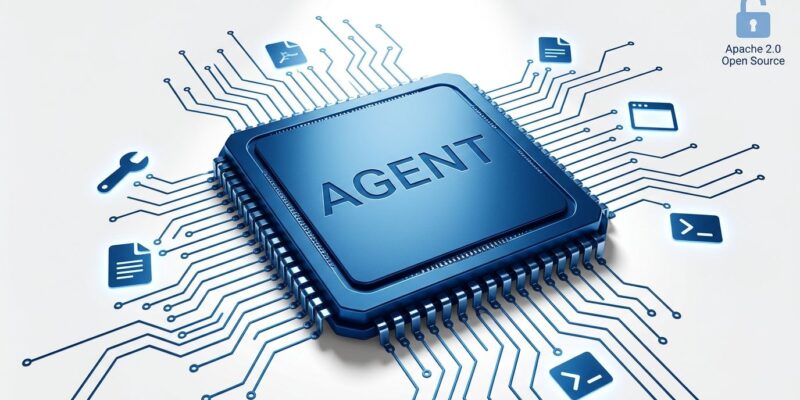
Meta just open-sourced Muse Glimmer — a 30-billion-parameter model built specifically for autonomous agent workflows, and it runs entirely on your own hardware. Apache 2.0 license. Available on Hugging Face and Ollama right now. This is not a general-purpose chat model with “agentic features” taped on afterward. It was distilled from Meta’s larger Muse Spark system with one goal: tool calling, multi-step task execution, and failure recovery at the local inference layer.
One Command Away
The fastest path to running Muse Glimmer is Ollama:
ollama run muse-glimmerQuantized to Q4, the model sits at roughly 20 GB — designed to fit on a 24GB GPU with room left for the KV cache. RTX 3090, RTX 4090, and Mac M-series chips all qualify. GGUF builds are live on Hugging Face under meta-models/Muse-Glimmer-30B-GGUF for llama.cpp users. Apple Silicon MLX support, LM Studio, vLLM, SGLang, Unsloth, Fireworks AI, and OpenRouter integrations are landing over the coming days.
If you have been waiting for a locally-runnable model actually designed for agent scaffolding — not hobbled into it — this is the one to test first.
Engineered for Agents, Not Retrofitted
Most open models get agent capabilities as an afterthought — fine-tuned on a tool-use dataset and shipped with a “function calling supported” badge. Muse Glimmer went through a distinct pipeline: logit distillation from Muse Spark, followed by long-context agent-heavy mid-training, supervised fine-tuning on multi-step task data, on-policy distillation, and reinforcement learning across coding, reasoning, and agent benchmarks.
The architecture reflects the intent: a 28B causal text decoder paired with a 1.8B ViT-G/14 vision encoder, a 131,072-token context window, grouped-query attention with a sliding window optimized for long sessions, and multimodal input handling up to 4,096 visual tokens per image. Over 100 languages supported. An LLM-as-a-judge evaluation mode included for self-assessment in multi-turn pipelines.
The agentic benchmark numbers are competitive for a 30B local model: MCP Atlas at 75.5, DeepSearch QA at 74.6, SWE-Bench Pro at 51.2. Where it does not lead: GDPval-AA v2 Elo sits at 953, below the 1,000 human baseline and behind Qwen3.6-27B on general reasoning (1,141 Elo). Hacker News flagged it plainly: “it’s a cocky bastard in tone, but it’s quite good, and its thinking traces are relatively terse.” That is an honest trade-off. Agentic task execution is Muse Glimmer’s lane. Complex open-ended reasoning remains Qwen3.6-27B territory.
Apache 2.0 Is the Bigger Story
The license matters more than it should have to. Meta’s prior open model releases shipped with the Llama license — commercially awkward, enterprise-unfriendly, and riddled with edge-case restrictions that legal teams consistently flagged. Apache 2.0 has none of that. Commercial use, fine-tuning, redistribution, modification — all permitted with no strings beyond attributing the license itself.
This is a strategic signal, not a legal formality. Meta is positioning itself as the open-source anchor for the agentic layer — the local tier where Cloudflare’s Sandboxes and AWS Bedrock AgentCore don’t reach. Apache 2.0 removes every friction point a legal team would otherwise flag. For teams already nervous about AI vendor lock-in, that matters. Meta’s official announcement frames this as a deliberate open-source commitment.
The Case for Running Agents Locally
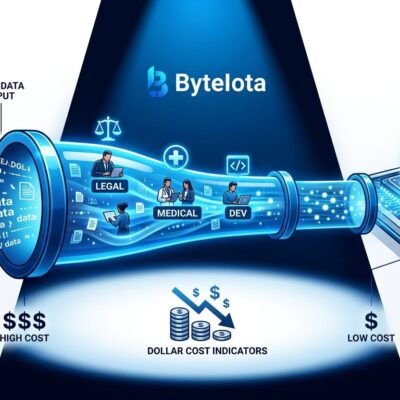
Local inference has a real argument in 2026, and it is primarily financial and legal — not ideological. The cost math: once you cross roughly 5 million tokens per day, a $700 used RTX 3090 pays for itself in under seven months versus cloud API spend. An always-on agent that loops continuously can hit that threshold faster than expected.
For regulated industries — healthcare under HIPAA, defense contracting, financial services under SOC 2 — the argument is compliance, not cost. Those environments often cannot send prompts to third-party inference APIs at all. Local inference is not an optimization there; it is the requirement. Latency adds a third factor: sub-100ms local inference versus 200–800ms API round trips makes a measurable difference in real-time agentic loops. Artificial Analysis benchmarks confirm Muse Glimmer’s throughput advantage on consumer hardware.
The emerging 2026 pattern is hybrid: frontier cloud models for complex reasoning steps, and Muse Glimmer for the execution layer — the high-frequency, lower-complexity tool calls that make up the bulk of agent runtime and most of the API cost.
Who Should Run This Now
If you have a 24GB GPU or an M-series Mac, run it today via Ollama and benchmark it against your actual agent workload. If you are building locally-hosted agent infrastructure for a regulated industry, this is the most commercially permissive option at this capability tier. If you need strong open-ended reasoning for general-purpose applications, Qwen3.6-27B remains sharper.
Muse Glimmer is not a GPT-5 challenger. It is a local execution engine for the agentic tier of your stack — and on that specific, increasingly important brief, it is the best open-weight option available today. The weights are on Hugging Face. The barrier to testing it is one Ollama command.