 By
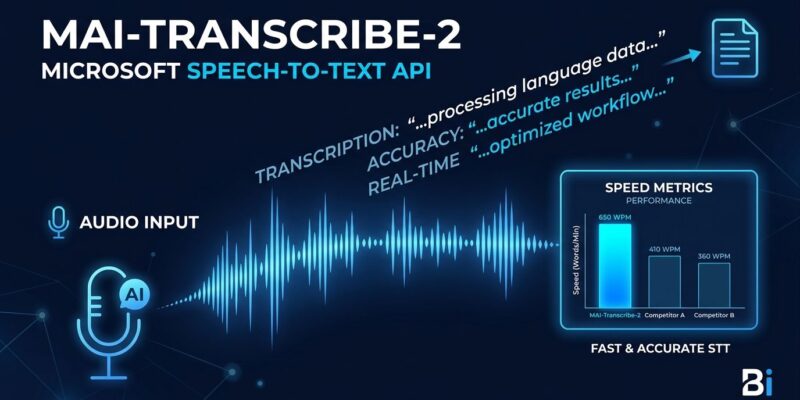
By Microsoft AI shipped MAI-Transcribe-2 on September 3, and it lands with a number that should get your attention: $0.10 per hour. That is a 72% price cut from its predecessor, and it comes bundled with the top spot on the FLEURS benchmark across 60 languages and speeds 10x faster than OpenAI’s GPT-Transcribe. If you run any kind of transcription pipeline, this changes the math.
The Price Cut Developers Actually Care About
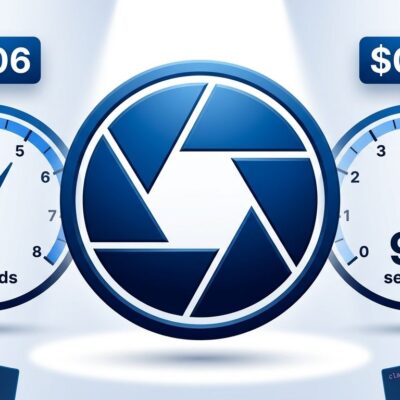
MAI-Transcribe-1 launched at $0.36 per hour. The new model drops that to $0.10 through December 31, 2026. Run 100,000 hours of call center audio in a year and you go from a $36,000 line item to $10,000 — $26,000 back in your budget from a single API change. ElevenLabs Scribe v2 runs $0.22 to $0.48 per hour. AssemblyAI starts around $0.37. MAI-Transcribe-2 undercuts both. Deepgram Nova-3 at $0.26 per hour batch is still competitive for streaming workloads, but lacks the multilingual breadth Microsoft is offering here. The caveat: $0.10 is a promotional rate. Microsoft has not disclosed what the price becomes in January 2027.
What the Benchmarks Actually Say
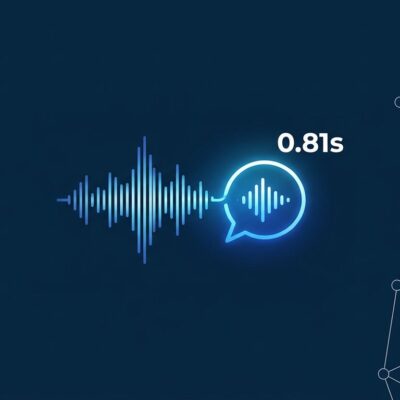
MAI-Transcribe-2 ranks first on FLEURS with a 5.2% average word error rate across all 60 tested languages. On Artificial Analysis, it sits second for accuracy overall but defines the accuracy-speed Pareto frontier — no competitor matches its combination of quality and throughput. It processes an hour of audio in roughly 10 seconds. Against the field: 10x faster than GPT-Transcribe, 7x faster than Scribe v2, 5x faster than Gemini 3.5 Transcribe. One honest note: Microsoft does not claim to beat Alibaba on accuracy. The 5.2% FLEURS average also masks per-language variance — low-resource languages may look quite different from the headline number.
Features That Matter for Production
Beyond the benchmark story, the feature set is solid. Speaker diarization identifies and labels each speaker with timestamps. Word-level timestamps give you per-word offset and duration, which matters for search, navigation, and transcript editing. Two transcription styles let you choose between verbatim output — fillers and false starts preserved — or a clean, readable version with filler words stripped. Keyword biasing accepts a domain-specific phrase list so the model stops mishearing your product names or medical abbreviations. Code switching handles mixed-language speech such as Hinglish or Spanglish without extra configuration. Automatic language detection works across all 60 languages with no locale parameter required.
How to Start Using It
You need an Azure subscription and a Microsoft Foundry resource for Speech. Once provisioned, the REST API takes a multipart form request with your audio file and a JSON definition block:
curl --location 'https://YourResourceName.cognitiveservices.azure.com/speechtotext/transcriptions:transcribe?api-version=2025-10-15' --header 'Ocp-Apim-Subscription-Key: <YourKey>' --form 'audio=@"recording.wav"' --form 'definition={
  "enhancedMode": {
    "enabled": true,
    "model": "MAI-Transcribe-2"
  },
  "diarization": {"enabled": true},
  "modelOptions": {"transcribeStyle": "clean"}
}'
If you prefer OpenAI-compatible SDKs, OpenRouter exposes MAI-Transcribe-2 with a base URL swap — no SDK changes required. For testing without any provisioning, the MAI Playground lets you run audio through the model directly. Accepted formats are WAV, MP3, and FLAC with a 300MB per-file cap. Chunk anything longer before sending.
The Caveats You Should Not Skip
MAI-Transcribe-2 is in public preview. Microsoft explicitly states it is “not recommended for production workloads” and carries no SLA. The more practical gap is streaming: the model is batch-only. If you are building voice agents or live captioning, this does not work for you today. The 300MB file limit means anything over roughly two to four hours of audio needs to be split before sending. And the data residency question remains open — Microsoft has not stated whether audio input feeds future model training.
Bottom Line
MAI-Transcribe-2 is the most compelling batch speech-to-text option on Azure right now, and at $0.10 per hour the economics are difficult to argue with for multilingual or high-volume workloads. It is not a replacement for Deepgram if you need streaming, and it is not a drop-in for self-hosted Whisper setups. But for call center documentation, clinical notes, video captioning, and multilingual content at scale, nothing touches this combination of price and speed today. Lock in the promotional rate, build on preview with that caveat in your architecture docs, and check what January 2027 pricing looks like before you commit fully. Read the official Microsoft AI announcement for the full benchmark breakdown.