 By
By AWS shipped Kiro IDE 1.1 on September 14 with two changes worth paying attention to: Agent Artifacts, which turn the IDE’s chat-buried outputs into persistent, reviewable objects; and native ARM64 builds for Windows and Linux, finally cutting the emulation overhead that’s been taxing ARM-based dev machines since launch. Neither is a headline-grabbing overhaul, but both fix real friction in the day-to-day workflow.
Agent Artifacts: Rescuing Outputs from the Chat Void
If you’ve used any agentic IDE for more than a day, you’ve hit this: you ask the agent to generate a system diagram or draft an API spec, it produces something useful, and then it vanishes into the chat scroll. Three minutes later you’re hunting through transcripts trying to find it again.
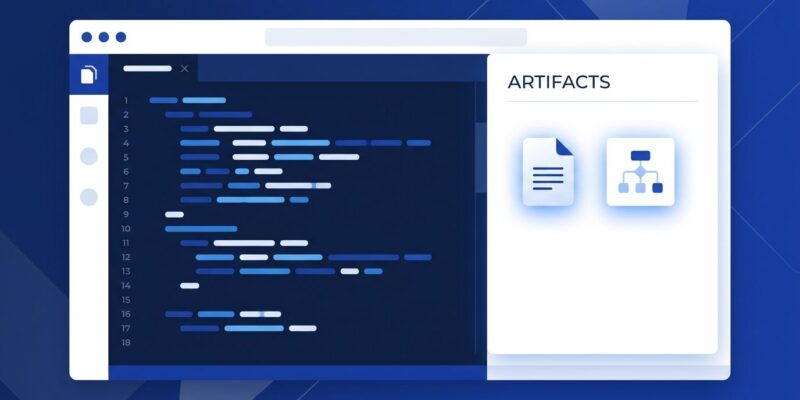
Kiro 1.1 addresses this with Agent Artifacts. Any document, diagram, code output, or image the agent produces can now become a durable, named artifact — not just a message in a thread. According to the official 1.1 release notes, you get three ways to access it:
- An inline compact preview appears directly in the conversation when the artifact is created
- You can open it full-size in Agent Focus mode, side-by-side with the chat
- The context panel keeps Artifacts, Specs, and Changed Files available throughout the entire session
This matters more for Kiro than it would for a generic coding assistant. Kiro’s core workflow generates structured documents — requirements.md, design.md, a sequenced task breakdown — as part of building any feature. Those outputs were already load-bearing; now they’re treated that way. An architecture diagram you reviewed and approved in step two doesn’t get swallowed by step seven’s conversation.
Native ARM64: A Housekeeping Fix That Still Matters
Kiro now ships separate ARM64 installers for both Windows and Linux. Previously, ARM64 users ran the x64 build through emulation — functional, but with a performance cost that’s hard to ignore in a full IDE. x64 apps under ARM emulation carry startup latency and CPU overhead that makes the editor feel sluggish compared to a native build.
The developers who benefit are more numerous than you might expect. Windows on ARM has expanded considerably through Qualcomm Snapdragon-based Copilot+ PCs, and Linux on ARM covers cloud VMs, Raspberry Pi 5 builds, and a growing range of Qualcomm developer boards. Native ARM64 builds are available now from the Kiro downloads page — separate installers for x64 and ARM64 on both platforms.
Kiro Web Is Also Now Generally Available
This shipped September 1 — just ahead of 1.1 — and fits the same release cycle. Kiro’s browser surface is out of preview and supports collaborative Specs (multiple developers shaping a spec together before handing off to the IDE) and end-to-end task handoff where you delegate a task from the browser and Kiro executes it in a cloud sandbox. Cloud configuration sync means Web, IDE, and CLI sessions share the same steering files, hooks, and custom agents, as detailed in the AWS Weekly Roundup for September 14.
New to Kiro? The Quick Version
Kiro is AWS’s agentic IDE that requires you to write a specification before the agent writes a single line of code. It’s built on Code OSS (the same base as VS Code), runs Claude models through Amazon Bedrock, and is the planned replacement for Amazon Q Developer, which reaches end of support April 30, 2027. The free tier offers 50 credits per month — autocomplete doesn’t consume credits, only agent interactions do — and new accounts get a 14-day 500-credit welcome bonus. Pro runs $20 per month for 1,000 credits. Full pricing is on the Kiro pricing page.
Should You Upgrade?
If you’re already using Kiro, yes — update now. Artifacts alone make the tool more usable for the kind of structured multi-stage work it’s designed for, and the ARM64 builds are a meaningful improvement if that’s your hardware.
If you’re evaluating Kiro against Cursor or GitHub Copilot, the core picture hasn’t changed. Kiro is the right call if you want your development process to start from structured intent — requirements first, then design, then implementation. It’s the wrong call if you prioritize fast prototyping cycles over documented architecture. The $20/month Pro tier lands at the same price as Cursor Pro and Claude Code Pro, so the decision comes down to workflow philosophy more than cost.
One thing is clear from this release cycle: AWS is investing seriously in Kiro. The student program expanded to 121 schools across 16 countries this month, Claude Fable 5.1 with a 1M context window just hit enterprise preview, and the Web surface is now GA. Kiro is getting more capable faster than most of its competitors, and 1.1 is a release that cleans up friction that was genuinely in the way.