InsForge is a Postgres-based backend platform trending #4 on GitHub this week, and it’s rewriting the rules for backend development. Unlike Supabase or Firebase—platforms designed for human developers to configure manually—InsForge exposes backend services through a semantic layer that allows AI coding agents to understand, provision, and operate infrastructure automatically. Describe your requirements in a natural language prompt, and the agent handles the rest.
AI coding agents like Claude Code, Cursor, and GitHub Copilot are rapidly becoming how developers build software. But traditional backend platforms weren’t designed for agents. They require manual API integration, dashboard configuration, and constant context-switching. InsForge eliminates this friction by making backends “speak agent,” enabling deployments that would typically take days of manual work to complete in minutes.
Backends for Agents, Not Humans
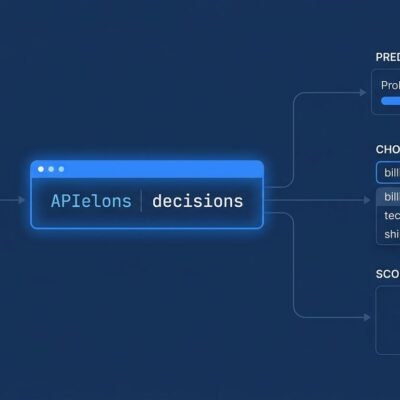
Traditional Backend-as-a-Service platforms were designed around human-centric workflows. Developers manually configure services, write integration code, and manage infrastructure through dashboards. InsForge takes a radically different approach: it exposes backend primitives through Model Context Protocol (MCP), creating a semantic layer that agents can read, understand, and operate autonomously. Developers describe what they want in natural language, and the agent provisions the entire backend stack without leaving the code editor.
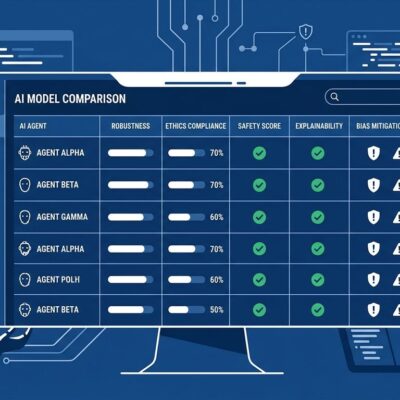
According to InsForge’s MCPMark benchmark testing 21 real-world backend tasks, the platform achieves 1.6x faster task completion, 30% fewer token consumption, and 47.6% pass rate accuracy compared to 28.6% for Supabase MCP. Real-world feedback notes that InsForge “cut rework cycles by 40 to 60 percent in teams that have adopted it.” This isn’t incremental improvement—it’s a paradigm shift. If AI agents become the primary way developers build software (and with GitHub Copilot hitting 20M+ users in 2026, evidence suggests they are), then infrastructure needs to be agent-operable. InsForge is the first platform built specifically for this future.
Seven Integrated Services Through One Semantic Layer
InsForge bundles seven essential backend services into a unified platform: PostgreSQL database with auto-generated APIs, authentication (JWT + OAuth), S3-compatible storage, edge functions for serverless execution, realtime pub/sub messaging, AI model gateway, and vector database powered by pgvector for RAG applications. The innovation isn’t the services themselves—it’s how they’re integrated through the semantic layer. Instead of stitching together six different platforms, agents can coordinate across all services from conversational prompts.
An official tutorial from March 6, 2026 demonstrates building a complete AI analytics dashboard in roughly 30 minutes. The agent ingests user events, sets up Postgres storage, configures real-time WebSocket updates, integrates the AI model gateway for insights, and deploys everything to production—all from a single multi-line prompt describing the desired features. This level of integration eliminates the cognitive overhead of managing multiple platforms. Developers can build sophisticated full-stack applications with database, auth, storage, real-time, and AI capabilities without ever touching a dashboard.
Active Development: April-May 2026 Updates
InsForge has shipped major updates in the last 30 days showing active development momentum: S3-Compatible Storage Gateway (April 27), Database Backup & Restore (April 12), Backend Alert Notifications with Integrations Hub (April 7), and Stripe payment integration (May 2026). The platform is part of Y Combinator’s Spring 2026 batch, backed by $1.5M in pre-seed funding, and is currently trending #4 on GitHub with 8,766 stars (459 gained today).
The S3-compatible storage update is particularly significant—it enables standard S3 clients like AWS CLI and boto3 to work with InsForge, making migration from AWS S3 straightforward. The backup/restore feature addresses production readiness concerns by enabling point-in-time recovery for disaster scenarios. These aren’t cosmetic updates—they’re addressing real production needs like data backup, monitoring, payments, and storage compatibility. For a 6-month-old platform (launched November 2025), this pace of development suggests long-term viability despite being a 5-person team.
Choosing Between InsForge and Supabase
InsForge isn’t a replacement for Supabase in all cases—it’s optimized for a specific workflow. Choose InsForge if you’re using AI coding agents (Claude Code, Cursor, etc.), need rapid prototyping speed (MVPs in days not weeks), or are building AI-heavy applications like RAG systems, chatbots, or analytics with LLM integration. Choose Supabase if you need a battle-tested platform for enterprise critical systems (Supabase has 7+ years of production experience versus InsForge’s 6 months), prefer human-centric manual control, or require extensive third-party integrations and plugins.
As industry analysis notes: “Supabase is designed around human-centric workflows, where developers configure, integrate, and operate backend services directly. InsForge is built for agentic coding, where AI coding agents are first-class backend operators that can provision and operate the system as part of the development loop.” Honest assessment matters: InsForge excels in specific scenarios (agent-driven development, rapid iteration) but isn’t universally better. The trade-off is speed and innovation versus maturity and reliability.
Getting Started: Cloud or Self-Hosted
InsForge offers two deployment options: managed cloud (insforge.dev) with zero setup friction, or self-hosted Docker Compose for full infrastructure control. The platform is fully open source under the Apache License 2.0, meaning you own the code and can inspect, modify, or migrate away without vendor lock-in. Self-hosting is straightforward with official Docker Compose configurations:
git clone https://github.com/insforge/insforge.git
cd insforge
cp .env.example .env
docker compose -f docker-compose.prod.yml up
This starts PostgreSQL, authentication services, storage, functions runtime, and the MCP server on localhost—identical to the cloud version but under your control. Open source plus self-hosting addresses two major developer concerns: vendor lock-in (you can always migrate) and data sovereignty (host wherever you need). Start with cloud for speed, migrate to self-hosted for production control.
Key Takeaways
- InsForge is the first backend platform purpose-built for AI coding agents, using a semantic layer (Model Context Protocol) that enables autonomous infrastructure operation
- Performance benchmarks show 1.6x faster task completion and 30% fewer tokens consumed compared to traditional BaaS platforms when used with agents
- Seven integrated services (database, auth, storage, functions, realtime, AI gateway, vector DB) eliminate platform-switching overhead
- Recent updates (S3 storage, backups, alerts, Stripe) show production-readiness improvements despite being only 6 months old
- Choose InsForge for agent-driven development and rapid iteration; choose Supabase for battle-tested enterprise stability
- Open source (Apache 2.0) with self-hosting option prevents vendor lock-in
If agents are the future of development—and with 20M+ GitHub Copilot users, that future is now—then backends need to be agent-operable. InsForge is positioned correctly for that shift. The platform is young (6 months old), which means limited documentation and smaller community support compared to Supabase’s 7-year ecosystem. But for developers building with AI agents today, InsForge offers a workflow advantage that traditional platforms can’t match: backends that understand what your agents are trying to do.