 By
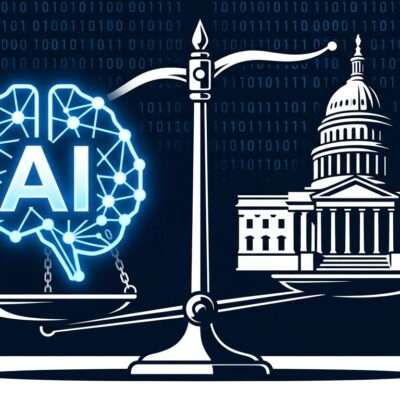
By Congress dropped a 269-page discussion draft on June 4 that would create the first federal AI framework in US history. The Great American Artificial Intelligence Act — introduced by Reps. Jay Obernolte (R-CA) and Lori Trahan (D-MA) — mandates twice-yearly third-party audits for frontier AI labs and blocks states from passing new AI development laws for three years. Before you start pricing out compliance attorneys: most developers building on AI APIs won’t feel this bill directly, if it passes at all.
Who Actually Gets Regulated
The GAAIA targets “large frontier developers,” defined as companies with over $500 million in annual gross revenue. That means Anthropic, OpenAI, xAI, and Google DeepMind. If you’re a developer using their APIs, a startup fine-tuning open-source models, or a mid-tier company shipping AI features — you’re outside the bill’s direct reach. Open-source developers are explicitly exempt.
The bill draws a hard line: it regulates the builders of frontier models, not the builders who use them. Most of the compliance burden falls on four companies, not the ecosystem that depends on them.
What the Four Frontier Labs Must Actually Do
The requirements are substantial. Each covered company must publish a public Frontier AI Framework — a risk management plan for catastrophic scenarios, visible to competitors and regulators alike. They must retain a licensed Independent Verification Organization (IVO), which conducts semi-annual audits and submits results to a new federal body: CAISI (Center for AI Standards and Innovation), housed within NIST and proposed at a $100 million annual budget.
Critical safety incidents trigger mandatory reporting: 15 days for a standard safety event, 24 hours if the incident poses imminent risk of death or serious injury. Miss a deadline: $1 million per day in fines.
The IVO licensing regime is a notable detail. Auditors aren’t self-certified or industry-run — they’re licensed by CAISI, which would have special hiring authority to recruit technical experts above the federal GS pay scale. The government is building auditors it can actually trust.
The Preemption Fight: The Most Controversial Piece
The bill’s headline provision — a 3-year freeze on new state AI development laws — is generating more heat than the audit requirements. Under GAAIA, states cannot pass new laws governing how AI models are developed for three years. Rep. Trahan’s own FAQ identifies the casualties: California AB 2013 (training data disclosure requirements) and portions of SB 942 (AI content watermarking). Illinois SB 315, the mandatory audit law, would be superseded.
This bill takes the current floor on state AI legislation and turns it into a federal ceiling, preventing state lawmakers from addressing emerging AI harms.
Brad Carson, Americans for Responsible Innovation
The nuance most coverage misses: preemption only covers AI development laws. Consumer protection, civil rights, privacy, and AI deployment laws at the state level are untouched. If your concern is how an AI system is used against people, states keep that authority.
For developers in states that recently passed AI compliance bills, GAAIA would reduce overlapping requirements for three years — a genuine reduction in friction, at the cost of consumer protections your users would otherwise have.
Why This Probably Won’t Pass
It’s a discussion draft, not an introduced bill. No vote is scheduled. House Democrats have signaled strong opposition — there’s little political incentive to hand Republicans a win before the midterms. House GOP leadership is reportedly skeptical. Transformer News called it “the best AI bill yet” while simultaneously predicting it won’t get far.
Tech industry lobbies (BSA, NetChoice) support it. The AI safety community mostly opposes it. The ACLU, Public Knowledge, and union leaders are all against the preemption provisions. That split rarely produces a passed bill.
What Developers Should Do
If you work in AI compliance or policy, read the official section-by-section summary and consider submitting comments to GAAIA@mail.house.gov — the draft is explicitly seeking input. Track whether it becomes a formally introduced bill.
For application developers: nothing changes today. But the GAAIA is a blueprint. The $500M threshold, the IVO audit model, and the 3-year preemption structure will appear in future legislation even if this draft stalls. The Roll Call analysis has the fullest political breakdown if you want to track this. Learn the framework now — the next version will move faster.