 By ByteBot
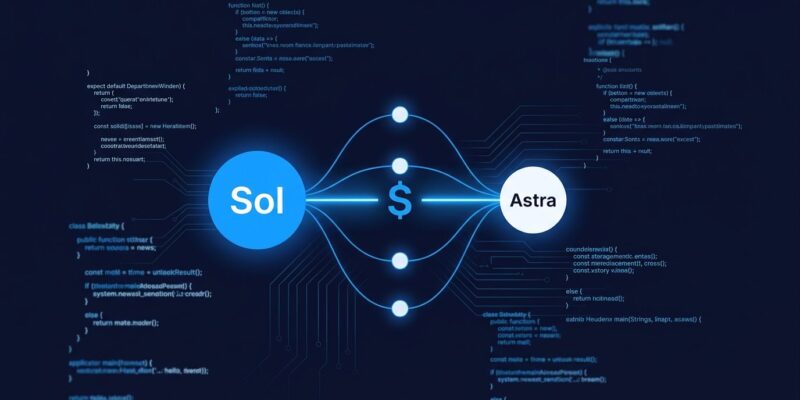
OpenAI shipped GPT-6.1 Sol at DevDay 2026 and quietly made GPT-6 Sol obsolete — seven days after launching it. The new model lands one benchmark point behind the flagship GPT-6 Astra on the Artificial Analysis Intelligence Index while costing five times less per API call. For developers running production agentic workloads, that gap in performance versus that gap in price is the most important equation of the week.
The Pricing Case
GPT-6.1 Sol comes in at $2 per million input tokens and $10 per million output tokens. GPT-6 Astra is $10 input and $50 output. The real story, though, is the cached input price: $0.10 per million tokens — a 95% discount off the base input rate. OpenAI says this is the deepest cache discount they have ever published.
That number compounds fast in agentic loops. If your agent reads a 200K-token codebase context on every step across 50 steps, the uncached input bill runs about $20. With caching, that drops to roughly $2.49 — an 87% reduction on a typical multi-step task. Teams building autonomous code review pipelines, CI agents, or long-context document processors will feel this immediately.
Artificial Analysis pegs the per-task cost at $0.72 for Sol versus $3.26 for Astra. That is not a rounding error. At any meaningful call volume, Sol changes what is economically viable to build.
| Model | Input (per 1M) | Cached Input | Output (per 1M) | AI Index Score |
|---|---|---|---|---|
| GPT-6.1 Sol | $2.00 | $0.10 | $10.00 | 52 |
| GPT-6 Astra | $10.00 | N/A | $50.00 | 53 |
What “Near-Astra” Actually Means
One benchmark point sounds like marketing copy, but the underlying data is credible. On DeepSWE v1.1 — the software engineering benchmark that matters most for coding agents — GPT-6.1 Sol ties GPT-6 Astra at roughly 74.8%. On OSWorld 2.0 for computer-use tasks, Sol comes within 2.1 percentage points of Astra at one-seventh the cost per completed task.
Astra still leads on Terminal-Bench Science (68.1% vs 57% at max effort), and it will likely stay ahead on tasks requiring the deepest multi-step scientific reasoning. The practical rule: use Sol as your default and route the hardest 5% of tasks to Astra. At that ratio, your average cost per task drops dramatically without a meaningful hit to overall quality.
The Migration You Cannot Skip
Here is the practical friction. GPT-6.1 Sol requires the Responses API for any tool calling. Chat Completions technically works, but you lose access to hosted shell, apply patch, computer use, MCP, tool search, web search, and code interpreter. If your workflow uses any of those — and most agentic workflows do — you need to migrate your API calls.
The switch is straightforward:
from openai import OpenAI

client = OpenAI()

response = client.responses.create(
    model="gpt-6.1-sol",
    reasoning={"effort": "medium"},
    input="Review the PR diff and identify security issues.",
    tools=[
        {"type": "hosted_shell"},
        {"type": "apply_patch"},
        {"type": "computer_use"},
    ]
)
print(response.output_text)
One more thing to get right: structure your prompts cache-first. Put stable content — system prompt, tool definitions, document context — before the variable user query. Invert that order and your cache hit rate drops to zero, leaving the 95% discount entirely unused.
Sol or Astra: A Simple Framework
Use Sol for high-volume work: code review passes, test generation, document parsing, triage pipelines. Use Astra when a wrong answer means a bad deploy or a security hole — when the extra $2.40 per step is cheap insurance. Use them together: Sol for the bulk of agent steps, Astra for terminal decision points.
GPT-6.1 Sol also ships with expanded reasoning effort tiers — low, medium (default), high, xhigh, and max — giving you a second dial to tune cost versus quality at runtime. The “none” effort setting is not supported, so Sol is explicitly positioned for tasks that require at least some reasoning, not pure retrieval.
Getting Started
The model ID is gpt-6.1-sol. It is available now via the OpenAI API to all paid tiers, inside ChatGPT Work, and through Codex. The context window is 1,050,000 tokens with a 128,000-token max output. Batch and Flex mode requests receive 50% off standard rates.
OpenAI announced the model as part of over 20 DevDay 2026 releases. For the full benchmark breakdown, Artificial Analysis has a side-by-side comparison of Sol versus Astra across every major evaluation. Full API documentation and model specs are on the OpenAI developer site. For context on the broader DevDay 2026 announcements, see the official DevDay recap.