
 By
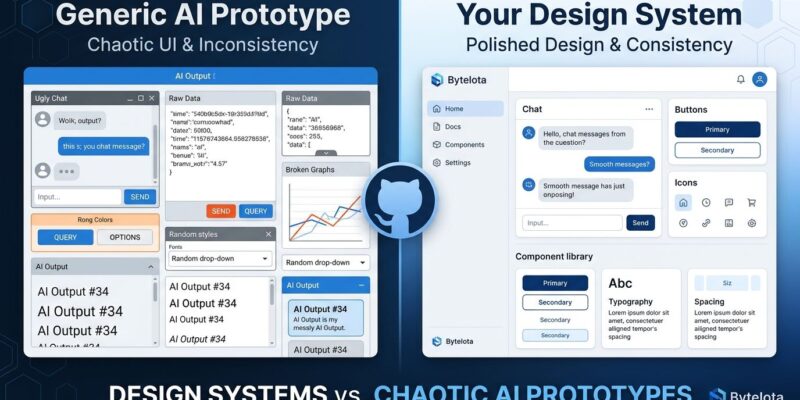
GitHub shipped Replica on October 28 — an open-source AI prototyping tool that does something the entire field has avoided: it uses your design system instead of guessing. The result is prototypes that look like your actual product, not a generic React app wearing your brand colors.
The Problem Nobody Fixed
AI prototyping tools are genuinely impressive until you need to build something that matches your product. v0 is excellent at greenfield UIs. Lovable can assemble a polished app from a paragraph of text. But when tested against real design systems, these tools score 1 to 1.5 out of 20 on design system awareness. They hallucinate logos, miss fonts, and introduce visual choices that belong to no one’s product.
This explains why only one-third of developers trust AI prototype output — the most common complaint being “AI solutions that are almost right, but not quite.” For teams with established component libraries, that gap makes these tools essentially decorative.
How Replica Works
Replica has four pieces:
- Starters — creates a local prototype project from one of two React templates: Minimal (bare React) or CoreAI Sandbox (React Router with CoreAI components and a Foundry shell). You point it at your design system documentation and components; that becomes the AI’s palette.
- Copilot Canvas Extension — opens your local prototype alongside a GitHub Copilot conversation. Describe what you want in natural language; the canvas renders and refines it in real time.
- Replica Hub — an optional, self-hosted server for sharing prototypes with your team and collecting comments. Not required for local work.
- GitHub Build Action — builds prototypes for publishing to Hub. Only needed if you use Hub.
The setup is straightforward: install the Copilot app, add your team’s prototyping repository (where your design system guidance lives), install the canvas extension, and start building. The design system repository is where the real work happens — the guidance you put there shapes every prototype the AI generates.
Not Another Spark
Context matters here. GitHub retired Spark on August 31, stranding users who had built on GitHub-managed infrastructure with a hard export deadline. The lesson: don’t build on hosted AI tools you don’t control.
Replica is MIT licensed and fully open source. The Hub is self-hosted. Your prototyping repository lives wherever you keep your code. Nothing here can be deprecated away. That is not a small detail — it is the whole argument for trusting it.
Where It Fits
Replica is not trying to replace v0 or Lovable for greenfield work. Those tools are legitimately good at building something new from nothing. Replica is for teams that already have a product and need new features to look like they belong in it.
The closest competitor is Figma Make, which uses your Figma component library as context. But Figma Make outputs Figma prototypes, not running code. Replica outputs deployable React — a meaningfully different artifact for engineering teams.
The Bigger Shift
GitHub Replica is a small tool with a clear signal: AI tooling is moving from generic capability to system-aware intelligence. The same pattern showed up when Cursor beat Copilot by knowing your codebase instead of just knowing code. Replica applies that lesson to design. The question for every AI tool in 2026 is whether it knows your system or just the average of all systems.
Replica is open source and available now at github.com/github/replica.


