 By
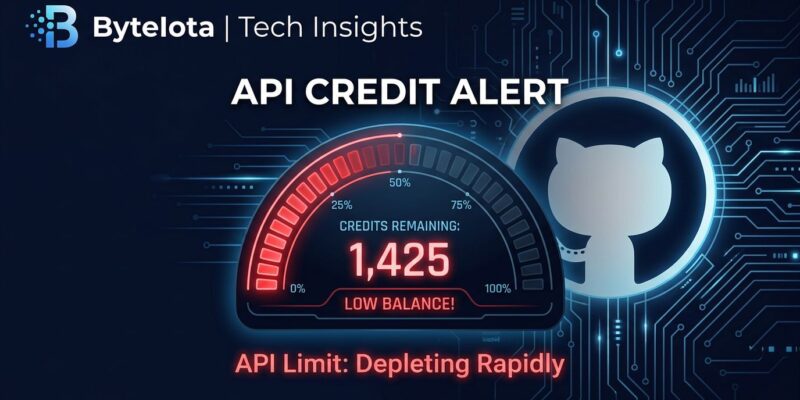
By GitHub Copilot flipped a switch on June 1, and thousands of developers immediately noticed their monthly credits evaporating. One developer burned $6 on a single agentic feature request. A Pro+ subscriber watched 8% of their monthly allocation disappear in two hours and projected their $39/month plan would cost $750 going forward. The tool marketed on the promise of “let AI handle more of your work” had quietly started charging by the token for every conversation, review, and agent session. The backlash was not purely about price. It was about trust.
What Changed on June 1
GitHub Copilot moved from flat-rate subscriptions to usage-based “AI Credits.” One AI Credit equals $0.01. Every Copilot plan still carries the same monthly price — Pro at $10, Pro+ at $39, Business at $19 per user — but those fees now buy a fixed credit allotment rather than unlimited access to premium features. Pro subscribers get 1,500 credits ($15 worth), Pro+ subscribers get 7,000 ($70 worth).
The only things left genuinely unlimited are code completions and Next Edit Suggestions. Everything else — Chat, Agent mode, code reviews, multi-model access — burns credits at rates that vary dramatically by model. GitHub’s own model pricing documentation reveals a 24x cost gap between its cheapest option (GPT-5.4 nano at roughly $1.25 per million output tokens) and its most capable (GPT-5.5 at $30 per million output tokens). Choosing the wrong model for a long agentic session is now a budget decision, not just a quality one.
Why Agentic Users Got Hit Hardest
The developers most affected are not casual chat users — they are the ones GitHub spent the past two years convincing to go all-in on agent mode. Agentic sessions are inherently expensive. They generate long context windows, execute multi-step plans, read and write files, and loop through tool calls. A single session fixing bugs with Claude 4.8 consumed 1,180 credits — 16% of a Pro+ subscriber’s entire monthly allowance.
The real-world cost breakdowns on DEV Community tell a consistent story: power users who leaned into agentic features face 10x to 50x cost increases. Uber’s case is an extreme but instructive data point — the company burned through its entire 2026 AI coding tools budget by April and capped employee AI spending at $1,500 per month. GitHub’s flat-rate model was a subsidy for heavy users. That subsidy is gone.
The Trust Problem Is Bigger Than the Price
GitHub — and the broader AI coding tools industry — spent three years building one message: use more AI, automate more workflows, lean on agents for complex tasks. Developers responded by restructuring how they work. They built multi-step agent pipelines, integrated Copilot into CI/CD loops, and trained junior developers to start with Copilot chat before reading documentation.
Now the meter is running on all of it. What The Register’s backlash coverage and others keep surfacing is not just sticker shock — it is a feeling of retroactive bait-and-switch. The new term spreading through developer forums is “token anxiety” — the cognitive overhead of wondering how much each interaction costs before sending it. A coding assistant that makes you hesitate before using it is a worse product, regardless of model quality.
What Developers Are Actually Doing
The official GitHub announcement frames the change as a step toward “a sustainable, reliable Copilot business.” That framing is honest — the math on flat-rate agentic AI did not work. But framing does not stop migrations. The most common destinations in developer threads:
- Claude Code: Anthropic’s terminal-native agent at $20/month flat. No per-token anxiety, strong performance on complex agentic tasks.
- Cursor: The AI-native IDE (codename Glass in version 3) with parallel agent execution. Subscription-based, not token-metered.
- OpenCode: Open-source, terminal-native, BYOK model support. 160K+ GitHub stars. Zero markup — you pay the model provider directly.
- MAI-Code-1-Flash within Copilot: Microsoft’s own cheapest model at ~1.65 credits per step. Sacrifices capability to stay within budget.
The End of Flat-Rate AI
GitHub is not alone in facing this reckoning. The flat-rate subscription era for AI tools was always a customer acquisition strategy, not a sustainable business model. Inference costs for frontier agentic models are simply too high to absorb at fixed prices. The surprise is not that metered billing arrived — it is that the transition happened this abruptly, with so little runway for developers to adapt.
The lesson applies beyond Copilot: if your production workflows depend on a vendor’s flat-rate AI pricing, treat that pricing as temporary. Model it as a variable cost from day one. The meter was always there. Now it is just visible.