 By
By Google just made AI agent infrastructure boring — in the best possible way. At Google I/O 2026, the company launched the Gemini Managed Agents API: call an endpoint, and Google hands you a stateful AI agent running inside an isolated Linux sandbox. No VM provisioning, no Docker setup, no orchestration boilerplate. The infrastructure problem collapses to a single HTTP call.
One Call, Full Agent Runtime
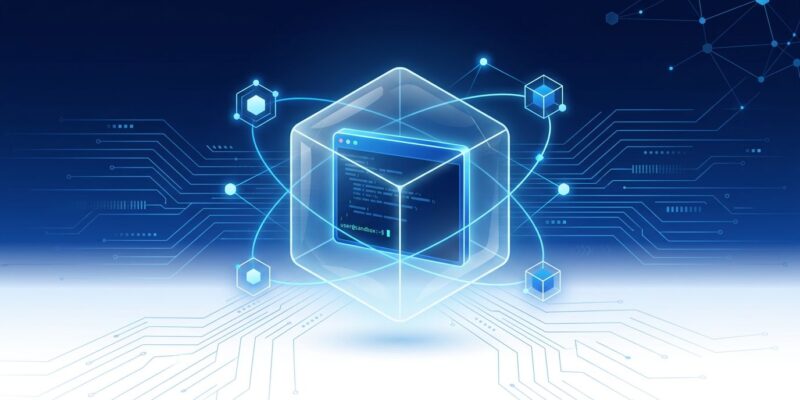
The mechanism is the new Interactions API (POST /v1beta/interactions). Pass an agent ID and a prompt, and Google provisions a sandboxed Linux container, runs your agent inside it, and returns the result. The agent has a Bash terminal, can install packages, and can write files.
The stateful piece is what separates this from a simple code execution sandbox. Each interaction returns an environment_id. Pass that ID on your next call and the agent resumes in the exact same environment — same filesystem, same installed packages, same state. Session persistence without a database, a queue, or a state machine on your end.
from google import genai

client = genai.Client()

# First call — provisions a new sandbox
interaction = client.interactions.create(
    agent="antigravity-preview-05-2026",
    input="Analyze sales_data.csv and generate a summary report."
)

# Follow-up — resumes the same sandbox and state
follow_up = client.interactions.create(
    agent="antigravity-preview-05-2026",
    input="Now create a bar chart of the top 5 products.",
    environment={"id": interaction.environment_id},
    previous_interaction_id=interaction.id
)
The sandbox has a 7-day TTL. Network isolation is off by default — you enable external access via an explicit allowlist. Paid-tier interactions are retained for 55 days; free tier, 1 day.
Agent Config as Code: AGENTS.md and SKILL.md
Managed Agents are configured through markdown files committed to your repository. .agents/AGENTS.md holds system instructions loaded automatically at agent startup. .agents/skills/<name>/SKILL.md defines repeatable, specialized actions the agent can perform.
The convention will feel familiar to anyone already using Claude Code’s CLAUDE.md pattern. Your agent’s behavior lives in version control — diffable, reviewable, auditable — not locked in a dashboard you have to click through.
The Antigravity Agent
The default managed agent — antigravity-preview-05-2026 — runs on Gemini 3.5 Flash and uses the same runtime powering Google’s first-party products. It is not a sandbox demo. Google is eating its own cooking here.
Beyond the API, Google also shipped Antigravity 2.0 as a full desktop IDE (VS Code-based, with a Manager View that orchestrates up to five parallel agents), a CLI (agy) that replaces the old Gemini CLI, and an SDK for hosting custom agents on your own infrastructure. Pricing runs from free preview up to 00/month for the highest quota tier.
ADK 2.0: The Enterprise Path
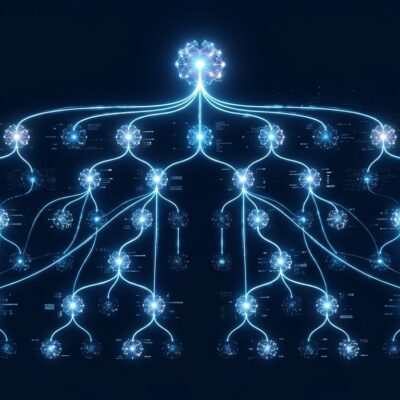
Alongside the Managed Agents launch, Google released ADK 2.0 (Agent Development Kit). The major change: a graph-based workflow engine replacing the old hierarchical executor, giving developers a slider from dynamic model-led reasoning to strict deterministic pipelines. Collaborative Workflows handles multi-agent teams with sub-agents that run in parallel or sequentially. ADK 2.0 is now GA in Python, TypeScript, Go, Java, and Kotlin.
The architecture is clear: Managed Agents is the fast prototype path. ADK 2.0 is how you build production systems. Both feed into the same Google Cloud enterprise agent platform.
The Infrastructure Shift
The honest comparison: Google’s Managed Agents and OpenAI Codex have similar architectures — cloud-hosted sandboxes, managed compute, isolated environments. The key difference from Anthropic’s Claude Agent SDK is philosophy: Claude runs locally or on your infrastructure, with full network access and your filesystem in reach. Gemini runs on Google’s infrastructure, isolated by default. Neither is objectively better; they optimize for different threat models and deployment contexts.
What Google has executed here is cleaner than most of the competition: the Interactions API is a well-designed primitive. The environment_id model for statefulness is simple and composable. The AGENTS.md convention respects how software teams actually work. For developers who want a hosted, managed, serverless agent runtime and are comfortable running on Google’s stack, this is now the easiest path to production.
Getting Started
You need the google-genai Python package at version 1.55.0 or later. The official Managed Agents quickstart covers authentication and first calls. The Interactions API announcement has the full design rationale. ADK 2.0 docs are at google.github.io/adk-docs/2.0.
The full launch post is on Google’s blog. Both the Managed Agents API and Antigravity 2.0 are currently in public preview.