 By
By Docker just replaced the engine underneath Docker Desktop — and it is the most consequential infrastructure change to the tool in years. On August 12, Docker launched the public beta of Docker VMM, its own first-party hypervisor, replacing the third-party libkrun library that has backed Docker Desktop on Mac since version 4.35. The result: faster container startup, dramatically quicker file I/O, smarter memory reclamation, and a development team that now owns the entire stack from hypervisor to container runtime. Available in Docker Desktop v4.86 now. One known catch: Rosetta emulation is not yet supported.
What Changed — and Why It Is a Bigger Deal Than It Sounds
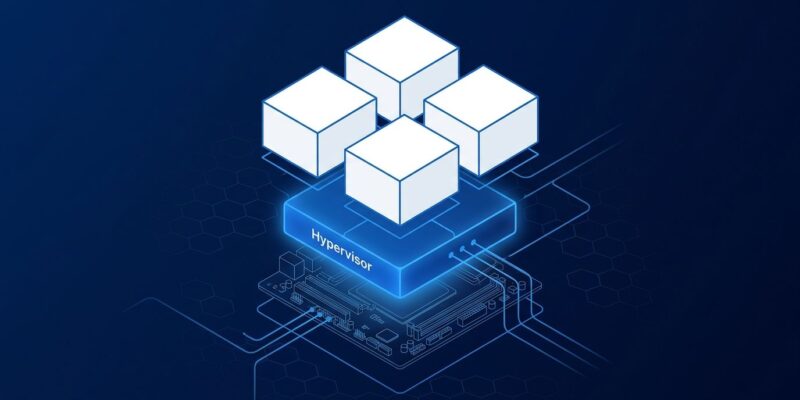
A Virtual Machine Monitor is the layer that sits between your hardware and the Linux VM that runs your containers. Until v4.86, Docker Desktop on Mac delegated this role to libkrun, an open-source library built for general-purpose virtualization. It was not purpose-built for Docker’s workloads.
With Docker VMM, Docker owns and operates that layer for the first time. The strategic consequence is significant: Docker can now co-optimize the Linux kernel and the hypervisor together — something that was structurally impossible when the hypervisor was supplied by a third party. Previously, Docker was a tenant inside someone else’s virtualization model. Now it owns the full stack.
The Performance Numbers
Earlier Docker VMM benchmarks show file sharing between container and host is 2x faster with cold cache and up to 25x faster with a warm cache, compared to the Apple Virtualization Framework. If you work in an edit-compile-test loop against a shared source tree, you will notice this on the first build.
Beyond file I/O, Docker VMM delivers faster container startup across first launch, project switches, and restart recovery. Memory reclamation is improved: Docker VMM returns RAM to the host when containers go idle, rather than holding onto it indefinitely. On Windows, Docker VMM replaces the need to choose between WSL2 and Hyper-V mode, matching Hyper-V’s isolation with WSL2-like speed.
How to Enable Docker VMM
The rollout differs by platform:
- Mac: If you were already on Docker’s VMM option, you are auto-upgraded in v4.86. If not, open Settings → General and enable the Docker VMM option.
- Windows: Open Settings → General and select the new “Docker VMM” option to opt in.
- Linux: Not included in the current beta. Linux support arrives at general availability in October 2026.
The Rosetta Caveat — Read This Before You Switch
Docker VMM does not yet support Rosetta emulation. If you are on Apple Silicon and regularly run amd64 container images, those images will run significantly slower under Docker VMM than under the Apple Virtualization Framework. Docker has acknowledged this as a known gap it is actively working on, but no timeline has been given.
If your workflows depend on amd64 images on an Apple Silicon Mac, test thoroughly before switching — or hold off until Rosetta support lands. Native arm64 images are unaffected and will benefit from the performance improvements.
Beta Window, GA Timeline, and Why You Should Test Now
General availability is targeted for the end of October 2026, at which point Docker VMM becomes the default engine for new Docker Desktop installs across Mac, Windows, and Linux. Existing users who have not opted in will not be automatically switched at GA.
The beta window matters. If you hit issues with specific container workloads, volume mounts, or network configurations, now is the time to file them with Docker. Their ability to fix hypervisor-level problems in-house is new — that feedback loop did not exist when libkrun was the backend. The issues you report this month shape what ships as the default engine to every new Docker install in October.
What This Signals About Docker’s Direction
Owning your hypervisor is a vertical integration move. Docker can now make optimization decisions that were impossible as a tenant inside libkrun. The edit-compile-test loop on Mac has been a productivity tax for years. Docker VMM is the first architectural change that can actually fix it rather than route around it.
Update to Docker Desktop v4.86 and enable Docker VMM in Settings. Review the official Docker VMM documentation for full enable instructions and the current limitations list. If you need amd64 images on Apple Silicon, read Docker’s known limitations guidance before switching. GA is October 2026 — you have two months to shape what ships as the default.