 By ByteBot
DeepSeek’s Harness team released dsh-superagent-prototype on October 31 — an MIT-licensed coding agent that runs continuously against your GitHub repository, monitors issues and pull requests without being summoned, and files its own PRs when it finds work worth doing. It is explicitly a research prototype, not a finished product. But the architecture it demonstrates is the clearest signal yet of where coding agents are heading: proactive, parallelized, and free.
The Agent That Doesn’t Wait
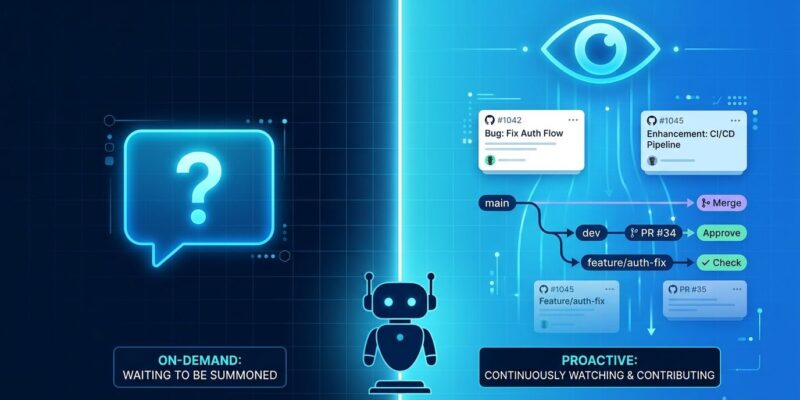
Every major coding agent in production today — Claude Code, OpenAI Codex, Cursor — is fundamentally on-demand. You summon it, it acts, it waits for your next instruction. That model makes human attention the hard ceiling: you can only have one conversation at a time, which means you can only run one agent session at a time.
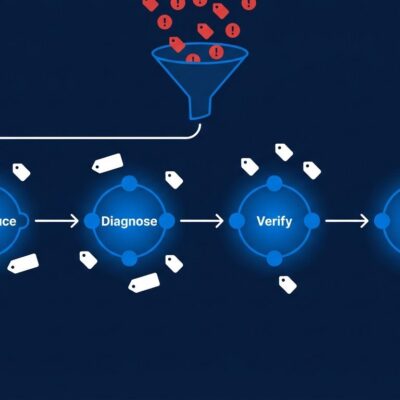
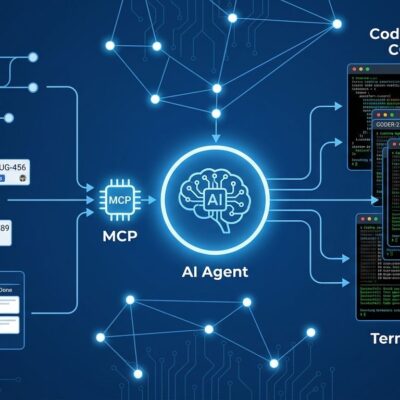
Super-Agent breaks that pattern. The system runs a persistent Router session that monitors your repository around the clock. When work appears — a new issue, a pull request comment, a message in a connected Feishu channel — the Router spins up a disposable Worker session to handle it. Worker sessions run in parallel, each in its own directory, and post results (including pull requests) back to the original thread. The Router keeps running after each task completes.
This is the design principle in the GitHub manual: “Take as little human attention as possible, and give as much value as possible.” The team’s observation is that large models now need very little per-task human intervention — but multi-tasking is still limited by how many agent sessions one person can follow. Three to five is about the practical limit. Super-Agent is built around that constraint, not the model’s capability ceiling.
What It Actually Acts On
Super-Agent doesn’t act on everything it reads. Two mechanisms control what it picks up:
- Explicit requests: Someone on your configured allowed list addresses the agent directly. It picks up the task immediately.
- Inferred tasks: The agent notices something on its own — a bug report in an issue, a code review requesting changes — but only acts if the team has a written rule that matches. No matching rule, no action.
There is also an observe mode that evaluates candidates and logs what it would have accepted, without actually doing anything. That’s the right way to test your rules before enabling auto mode. It’s a sensible safety layer, and it matters: a proactive agent that acts on misread signals is worse than no agent at all.
What DeepSeek Uses It For Today
DeepSeek runs their own internal Super-Agent instance on the Harness codebase. It handles issue reproduction and fixes, processes code review requests and makes the asked-for changes, and contributes to Harness development itself. The agent that builds coding agents is itself built partly by the agent. That’s either a compelling proof-of-concept or a loop that should make you slightly nervous, depending on your disposition.
The Honest Limitations
The prototype gap is real. DeepSeek’s published version differs from their internal version — several features described in the design docs are not yet implemented. Constraints worth knowing before you try it:
- Works only on github.com — GitHub Enterprise Server is not supported
- One installation per repository (no multi-repo spanning)
- Requires a dedicated GitHub user account for the agent
- Security risk: a prompt injection attack on the Router session could compromise all connected Worker endpoints
- Code quality is uneven — much of it was written by coding agents themselves
DeepSeek says so directly in the README: review and adapt before using in your own environment.
The Cost Argument
This is MIT-licensed and self-hosted. The only running cost is API calls to DeepSeek’s models, which run significantly below Anthropic’s pricing. Claude Code requires a subscription. An always-on, open-source alternative that your team can wire to a cheaper model and configure with its own rules is a genuinely different value proposition — even if today’s prototype isn’t ready for production use.
The timing is worth noting: DeepSeek released this two weeks before Anthropic’s expected IPO on November 16, where the company is targeting a $2 trillion valuation on Nasdaq under ticker ANT. DeepSeek didn’t need to say Claude Code by name. The message is clear.
Should You Try It?
Not in production yet. The prototype label is accurate and the limitations are genuine. But if you run a GitHub-hosted project, want to understand where proactive agent design is going, and have tolerance for prototype-grade code, the repository is worth an afternoon. Start in observe mode. Read the architecture docs in /docs before writing any rules. The Router/Worker split is clean and the design rationale is well-documented by the community.
The proactive model is the right long-term direction. Every team’s coding agent backlog is already larger than one person can supervise. An agent that processes that backlog in parallel, under written rules your team controls, is not a threat to replace developers — it’s a way to stop wasting their attention on work the model can handle alone. The production-ready version of this, when it arrives, will be significant. The prototype tells you what to expect.