 By
By Cognition is in talks to raise a new funding round at a valuation of at least $40 billion — a 54% jump from the $26 billion it commanded when it closed a $1 billion Series D less than three months ago. Revenue is approaching $1 billion annualized. For developers, this is not just another AI funding story. It is a signal that the market for autonomous coding agents has crossed a genuine enterprise threshold: Mercedes-Benz, Goldman Sachs, and NASA are not piloting Devin anymore. They are shipping work with it.
The Product Behind the Number
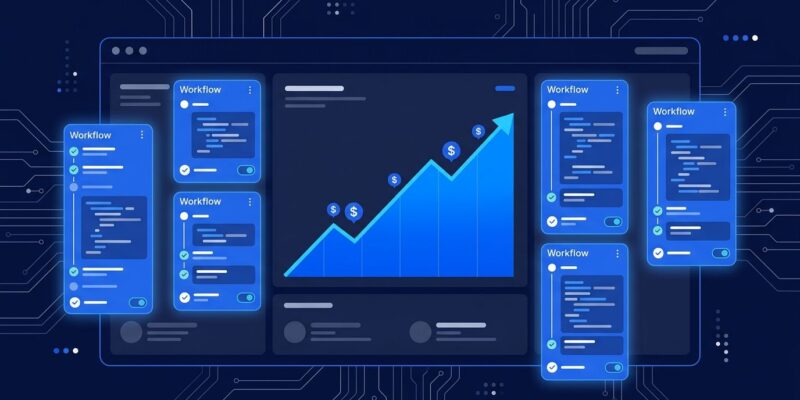
Cognition’s valuation story only makes sense through its product. In June 2026, the company rebranded Windsurf — the AI IDE it acquired earlier this year — as Devin Desktop, and repositioned the entire surface around an Agent Command Center. The default view is no longer a text editor. It is a Kanban-style dashboard where developers manage every running agent session — local and cloud — in one place.
The more interesting move is the open Agent Client Protocol (ACP) integration. Devin Desktop does not just run Devin. It runs Codex, Claude Agent, and OpenCode alongside it. Cognition is betting that owning the agent orchestration layer is more defensible than owning any single agent. Whether that bet holds is worth watching.
On the local side, Devin Local was rewritten in Rust and is now 30% more token-efficient. The Spaces feature lets teams organize agent activity by project. The IDE layer remains fully functional — LSP, debugging, syntax highlighting, full Windsurf extension compatibility — so teams do not have to abandon their existing setup to get there.
What Enterprise Adoption Actually Looks Like
The number that matters most is not the valuation. It is the use case data. Mercedes-Benz cut an eight-month legacy modernization project to eight days using Devin. Cognition’s own engineers now write 89% of the company’s internal codebase with the agent — up from 13% in December 2025.
The pattern across named customers — Goldman Sachs, NASA, Santander, Dell, Cisco, Palantir, Mercado Libre — is consistent: Devin handles well-defined, documented work that engineers dislike and deprioritize. Platform migrations. Legacy rewrites. Regression test generation. It is not replacing engineers on novel problems. It is compressing the time cost of the predictable 40% of an engineering backlog that everyone knows how to do but nobody wants to do.
That is an honest framing of where autonomous coding agents actually work today, and it is more useful to developers evaluating the tool than the hype tends to be.
The Cost Math
Devin charges by Agent Compute Unit (ACU), where one ACU equals roughly 15 minutes of active agent work. The rate is $2.25 per ACU, with a $20/month minimum and a $500/month team plan. A typical bug fix runs 2–3 ACU ($5–7). A multi-file migration can hit 30+ ACU ($67 and up). The cost math works when Devin completes tasks that would take a mid-level engineer two to four hours. The Mercedes-Benz math — eight months of consultant time versus eight days of agent time — worked at scale.
For comparison, Meta’s Muse Code runs at $1.25 per million input tokens, Claude Code starts at $20/month via Claude Pro, and OpenAI’s Codex is bundled into ChatGPT subscriptions. None of those are direct comparisons — different architectures, different autonomy levels — but the pricing gap is real and worth understanding before committing.
| Tool | Pricing | Best For |
|---|---|---|
| Devin | $2.25/ACU + $20+/mo | Long-horizon autonomous tasks |
| Claude Code | $20/mo or pay-per-token | Interactive, human-in-the-loop coding |
| Muse Code | $1.25/$4.25 per M tokens | Large codebases, parallel worktrees |
| Codex | ChatGPT subscription | Quick tasks, ChatGPT integration |
The Risk Is Real
A $40 billion valuation on approaching-$1B revenue is a 40x multiple. That is not absurd for a company growing over 1,200% year-over-year — but it demands continued execution in a crowded field. OpenAI, Anthropic, Meta, and Microsoft are all shipping coding agents, and all of them can bundle into platforms enterprise customers already pay for. Cognition has to keep proving that Devin is a category, not a feature.
The security surface is also worth naming. Autonomous agents that modify files, run commands, and touch CI/CD pipelines create emergent risk from compound access. Cognition offers VPC deployment for enterprise accounts — AWS or Azure, fully isolated, never used for training — along with FedRAMP High and ITAR compliance for government customers. But VPC deployment is the Enterprise tier. Most developers encountering Devin for the first time are on the standard cloud plan, where code leaves the building.
Devin also struggles where most autonomous agents struggle: ambiguous requirements and undocumented legacy code. The eight-day Mercedes-Benz win happened on a task with clear inputs and outputs. Less structured work produces a different result.
What to Do Now
If your team has a backlog of migration work, legacy modernization, or test generation that keeps getting deprioritized, Devin is worth a genuine evaluation — not a demo. Start with a documented task on a non-critical codebase, set a budget ceiling in ACUs, and measure actual time saved versus cost. The funding trajectory suggests that enterprise teams evaluating this now are ahead of the curve. Devin is not magic, but for the right category of work, the math is becoming hard to ignore.