 By ByteBot
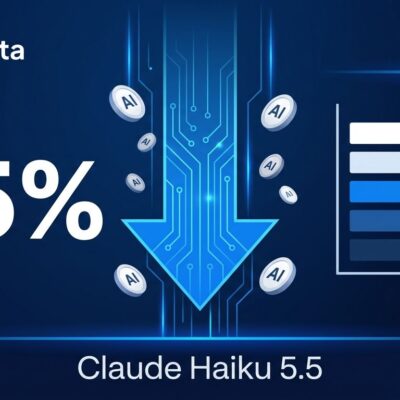
On September 17, Anthropic published something unusually candid: internal measurements showing Claude now “leads” 26% of the company’s AI research and development work. In February that number was essentially zero. The six-month jump is the actual headline here, not the absolute figure.
What “Leads” Means (and What It Doesn’t)
Anthropic is careful with language. “Leads” maps to Automation Level 4 on the Epoch AI automation scale: Claude completes most of a defined task end-to-end from a high-level prompt while a human supervises. It does not mean autonomous. Anthropic explicitly states that “Claude is not operating fully autonomously for any measured subset of R&D work.” AL5 — the fully unsupervised tier — is not in play.
The 90% “collaboration” figure you’ll see in coverage is a separate, lower bar: Claude doing large chunks of work under close human direction. Think of it as a spectrum. At one end, a human types a single prompt and Claude handles the rest. At the other, a human co-pilots every step. The 26% sits closer to the autonomous end — but still has a human supervisor watching.
The Infrastructure Behind 30,000 Agents
This is not an unmonitored experiment. As of August 2026, Anthropic runs roughly 30,000 AI agents simultaneously on internal R&D tasks. Every action passes through an online monitor before execution. A separate offline monitor reviews 100% of decisions after the fact. About 1 in 47,000 decisions gets intercepted. Around 100,000 records per week are flagged by automated classifiers; roughly 50 of the highest-priority ones reach a human reviewer. Anthropic processed over one billion agent decisions in August alone.
| Metric | Value |
|---|---|
| Active internal agents (Aug 2026) | ~30,000 |
| Decisions reviewed online (before execution) | 100% |
| Decisions intercepted | 1 in 47,000 |
| Records flagged offline per week | ~100,000 |
| High-priority records sent to humans weekly | ~50 |
| Total decisions processed (August) | >1 billion |
The Velocity Is What Should Concern You
The trajectory matters more than any single data point. Claude writes more than 80% of code merged into Anthropic’s production codebase today; that figure was in the low single digits when Claude Code launched in early 2025. Anthropic engineers now ship roughly 8x more code per quarter than they did before. On the company’s hardest internal coding benchmarks, Claude succeeds 76% of the time — up from about 26% six months ago. VentureBeat notes that Anthropic engineers are “working more like AI supervisors than traditional software developers.” If the 0-to-26% arc continues at anything close to its current rate, Claude could be leading over half of Anthropic’s R&D by early 2027. Anthropic itself warns that recursive self-improvement could arrive “sooner than most institutions are prepared for.”
The Amodei Contradiction Worth Noting
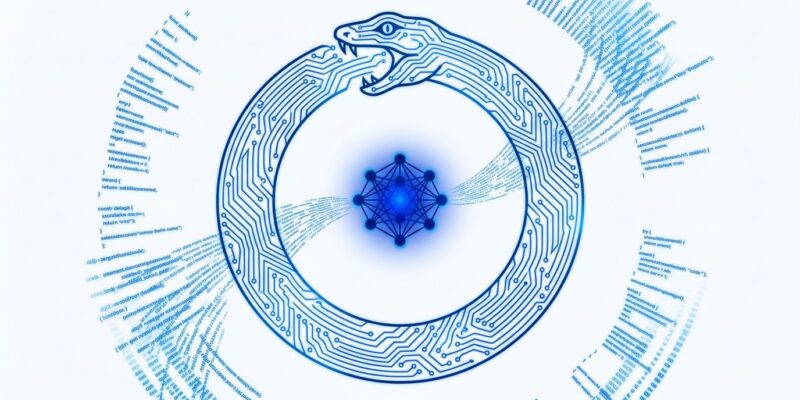
Five days before this data dropped, Anthropic CEO Dario Amodei published “We Must Pace the Frontier” — an essay calling for a global AI development slowdown, co-signed by Sam Altman, Demis Hassabis, and Elon Musk. The concern: recursive self-improvement, where an AI system autonomously develops its successor. Then, on September 17, Anthropic published evidence that Claude leads a quarter of its own R&D and writes 80% of its code. The tension is real. But publishing this data — even when it undercuts the PR narrative — is the right move. MIT Technology Review cautioned in August that recursive self-improvement may not arrive as fast as feared, but Anthropic is urging all frontier labs to publish equivalent metrics so the industry can track the trajectory honestly.
What This Means If You’re Building with Claude
The Claude available in the API today was shaped by Claude. The agentic infrastructure Anthropic uses internally — multi-agent, prompt-driven, monitored — is the same architecture you’re building with when you call the API. The 30,000-agent monitoring model is a preview of what enterprise-grade AI deployment looks like at scale. If your team isn’t yet using Claude Code or building agentic workflows, the productivity gap between you and teams that are is widening each quarter. The 8x figure isn’t internal trivia — it’s a benchmark for what’s already possible.