 By ByteBot
Blender 5.2 LTS shipped on July 14. It is the first Long-Term Support release of the 5.x series, and if you have been running 4.2 LTS while watching the 5.x cycle from a safe distance, the signal you were waiting for just arrived. The 4.2 LTS end-of-life landed this month. Blender 5.2 LTS has two years of support ahead of it. The migration window is open.
Why LTS Releases Are the Only Releases That Matter for Studios
Blender ships LTS versions on a predictable cadence: 2.83, 3.3, 3.6, 4.2, and now 5.2. These are the releases studios pin production pipelines to, because they get bugfix-only updates — no API surprises, no UI regressions mid-project, no scramble to update addons every six weeks. The Blender Foundation explicitly recommends 5.2 LTS for new projects. It will receive maintenance patches through July 2028.
The timing is deliberate. Blender 4.2 LTS expired at exactly the moment 5.2 LTS launched. Studios that stayed conservative on 4.2 now face a simple calculus: you are already off support, and there is a two-year window ahead on 5.2. The conservative choice has flipped.
XPBD Physics: Blender Finally Speaks Houdini’s Language
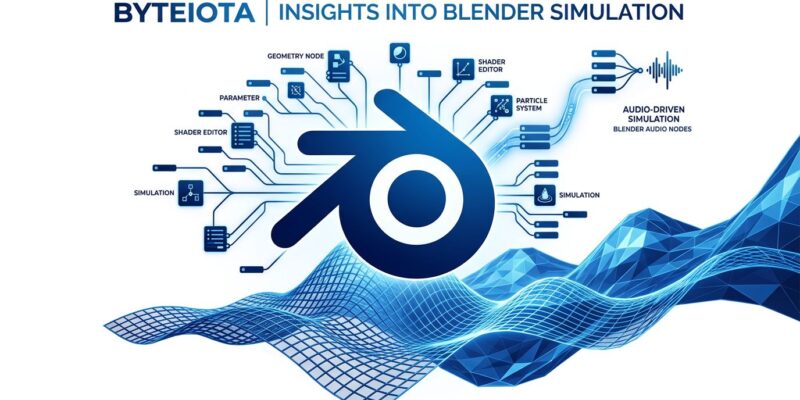
The most technically significant addition in 5.2 is the XPBD Solver inside Geometry Nodes. Extended Position Based Dynamics is the same algorithm underpinning Houdini’s Vellum solver and Unreal Engine’s cloth toolset. For the first time, Blender’s simulation approach is on the same technical footing as the VFX industry’s production standards.
Simulations now live inside node trees — composable, procedural, not locked into legacy modifier stacks. Hair and cloth are the initial targets. The Blender team flags it as experimental, meaning real-world edge cases are still being collected before it graduates to stable. That caveat matters: do not drop this into a shipping production before it earns its stable tag. However, the architecture is right, and CG Channel’s five key features breakdown makes clear why this one leads the list.
Audio-Reactive Geometry Nodes and Remote Libraries
Two additions that look minor on a release notes scan but remove real friction from production workflows:
Audio-reactive nodes. The new Sample Sound Frequencies node and Sound socket let you load an audio file directly into a Geometry Nodes tree and drive any parameter from frequency bands or amplitude. Previously, this required a third-party add-on or manual keyframe work against an exported waveform. It is now native. Motion graphics work, music visualizations, and game cinematics — any time-synced animation workflow benefits here.
Remote asset libraries. The Asset Browser now connects to remotely hosted libraries, and individual assets download on demand. Blender Online Essentials works this way out of the box, and studios can host their own shared libraries on internal servers. The practical result: no more copying 40GB of shared assets to every workstation before a project begins.
Cycles Texture Cache: Real Gains, Real Trade-offs
The Cycles Texture Cache converts images to optimized .tx files that load only the tiles and resolutions a render actually needs. In Blender’s own demo scenes, memory consumption dropped by up to 80 percent. That is not a typical-project figure, but even a 30–40 percent reduction in a scene-heavy production pipeline matters when you are pushing memory limits on render nodes.
The trade-off is straightforward: slightly longer render times and additional disk space. This mimics the behavior of professional renderers like Arnold and RenderMan. If your team comes from that world, the mental model is already familiar.
Before You Migrate: What the 5.x Jump Actually Breaks
Jumping from 4.2 LTS to 5.2 LTS is a major version change. Several things break:
- The Python API for
paint.eraser_brushandpaint.eraser_brush_asset_referencehas been removed - The API for accessing Geometry Nodes modifier properties changed — any pipeline scripts that touch those properties need updating
- Socket identifiers for the Compare and Random Value nodes changed
The broader 5.x API shift has affected many addon authors. Before migrating a production pipeline mid-project, check your critical addons against 5.x compatibility lists. If your studio runs community addons that have not been updated since 4.x, wait for those maintainers to ship compatible releases — or plan for the port yourself.
The official Blender 5.2 LTS release announcement has the full compatibility changelog. The release earned 221 points on Hacker News at launch — notable for a tools release that does not ship a flashy headline feature.
The Verdict
Blender 5.2 LTS is a stabilization release more than a feature release — and that is exactly what studios needed from the 5.x cycle. The XPBD physics system is the headline, but the honest answer is that the headline is the LTS tag itself. If you are on 4.2 LTS and your addons pass a 5.x compatibility check, the window is open. Start testing now.