 By ByteBot
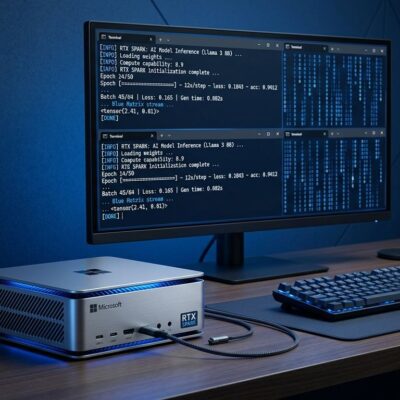
One week after releasing seven open-source Adobe Creative Cloud replacements in Rust, ArtCraft has expanded its ambitions to Microsoft Office. WordCraft, GridCraft, and DeckCraft dropped on October 7 as free, MIT-licensed reimplementations of Word, Excel, and PowerPoint respectively — built with Claude Opus 5.5, compiled to WebAssembly for the browser, and designed from the ground up to be operated by AI agents. They are pre-alpha, missing critical features, and already have 4,600 GitHub stars. That is a lot of attention for software that cannot yet open a real business document without losing your charts.
What You Actually Get
ArtCraft publishes its own completion metrics, and they deserve a closer reading. WordCraft claims 354 of 405 ribbon commands implemented — about 87 percent — but the project’s own roadmap puts real-world feature parity closer to 62 percent. Charts, SmartArt, and embedded OLE objects are silently dropped when you load and re-save a DOCX file. DOCX compatibility testing against real business documents has not started. GridCraft fares better: 89 percent of Excel’s ribbon and 93 percent of worksheet functions, though VBA is deliberately excluded and validation remains limited to files the developer created himself. DeckCraft sits at 79 percent, with WMA and WMV media embedded but unplayable.
To be fair: WordCraft worked on an ARM Surface device for straightforward writing tasks in testing. If your use case is “write a document without a subscription,” it may already serve you. If your use case is “open the quarterly report your finance team built in Excel,” wait.
Why This Is Different from LibreOffice
LibreOffice has existed for 25 years, reached version 26.8.1, and has battle-tested DOCX compatibility that ArtCraft cannot match. The obvious question is: why does WordCraft exist?
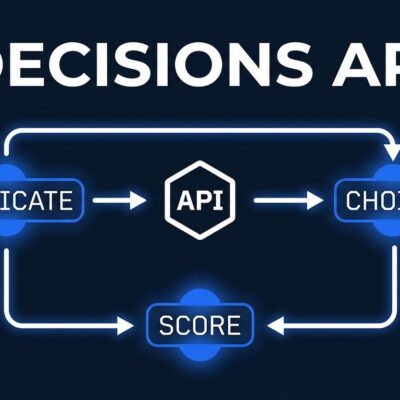
Because ArtCraft is not building for the LibreOffice audience. Every action in WordCraft is a command with an identifier. Those same 422 commands are reachable from the ribbon, from keyboard shortcuts, from a CLI, from a JSON control channel, and from an MCP server. You can hook Claude directly into WordCraft with a single command:
claude mcp add wordcraft -- wordcraft-cli mcpFrom that point, an AI agent can open a document, select text, apply styles, inspect structure, render pages, and save — entirely programmatically. LibreOffice does not do this. Microsoft 365 does not do this natively at the application level. ArtCraft’s bet is that the next wave of productivity software is not “a human using an app” but “an agent using an app on a human’s behalf.” For developers building document automation workflows, this is a meaningful architectural difference.
The AI Scaffolding Problem Has Not Gone Away
159 of 187 WordCraft commits carry the line “Co-Authored-By: Claude Opus 5.5.” Brandon Thomas, the developer behind ArtCraft, says he has written code exclusively with AI tools since February and brings 10 years of Rust experience to the project. That combination — deep domain expertise plus AI execution — is a more credible development model than pure vibe coding. But the earlier Adobe suite exposed where this approach hits its ceiling: the apps compile, the menus work, the architecture is clean, and the UX still feels unfinished in the ways that matter to people who spend eight hours a day in the software.
WordCraft’s situation may be better than PhotoCraft’s. Word’s feature surface is more clearly specified in OOXML documentation than Photoshop’s rendering pipeline. Spreadsheet functions are testable. Presentation layouts are deterministic. These properties favor the spec-from-documentation approach. GridCraft’s 93 percent worksheet function coverage suggests the method can work for well-defined problem spaces.
The Legal Cloud
ArtCraft describes its approach as “clean-room reimplementation” — built from public specifications without access to Microsoft’s source code. Legal expert Neil Brown of decoded.legal notes that this argument is available to ArtCraft, but adds that the outcome is “quite possibly litigated” when the aggrieved party has deep pockets. Patent law adds another dimension: a patent covers the underlying method regardless of how independently the code was written. Microsoft, Adobe, and the Document Foundation all declined to comment when contacted. That silence probably has a deadline.
Who Should Pay Attention Now
Enterprise Word users: not yet. The DOCX compatibility gap disqualifies ArtCraft’s Office suite for any team that regularly exchanges files with Microsoft 365 users — which is most teams.
Developers building document automation pipelines: now. The MCP server integration is live, the CLI is available, and the agent tooling is real. If your use case involves generating, formatting, or inspecting documents programmatically, WordCraft is worth evaluating ahead of a more complete release.
ArtCraft will not replace Microsoft Office this year. Whether it earns the chance to become a serious challenger — or becomes another artifact of the AI scaffolding era — depends on whether the DOCX compatibility work starts and whether the UX polish catches up to the architectural ambition.