 By ByteBot
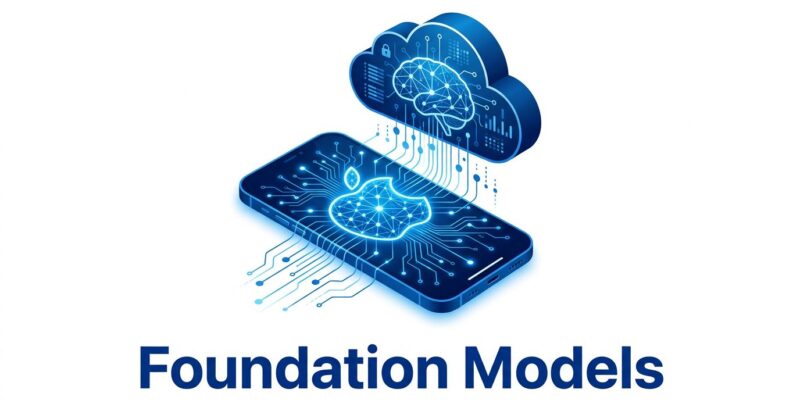
Apple just cut the biggest cost barrier standing between indie iOS developers and server-side AI. As of the Xcode 27 and iOS 27 developer betas shipping now, developers enrolled in the App Store Small Business Program with fewer than two million first-time downloads can access Apple Foundation Models running on Private Cloud Compute — at zero cost. No API key required. No usage bill. No 3 AM spending-cap panic when a background job runs longer than expected.
Who Qualifies (And the Threshold Is More Generous Than It Sounds)
To access the free Private Cloud Compute tier, you need two things: enrollment in the App Store Small Business Program, and fewer than two million first-time App Store downloads across all your apps. The Small Business Program already reduces Apple’s commission from 30% to 15% for developers earning under $1M annually — so if you’re not enrolled yet, you were leaving money on the table before this announcement too.
The two-million-download threshold sounds like a lot until you realize what it actually measures: unique device installs, not re-downloads or updates. The majority of independent iOS developers never cross that line. This is not a narrow “starter” tier with a 30-day expiration. It’s designed for real, shipping independent developers — the kind who have apps in the store, users relying on those apps, and no budget line for a $200/month AI inference bill.
What You Get: AFM 3, Image Input, and One-Line Model Switching
The server-side model you’re calling is AFM 3 Cloud, Apple’s third-generation Foundation Model. Apple’s evaluations show it’s preferred over last year’s model on 64.7% of prompts. The on-device counterpart, AFM 3 Core Advanced, is a 20-billion-parameter sparse model that activates only 1–4 billion parameters per prompt using a technique called Instruction-Following Pruning. The 2026 framework also adds image input support — pass images alongside text into a LanguageModelSession for tasks like photo captioning or structured data extraction without a cloud round-trip.
The API surface for switching between on-device, PCC, and third-party models is a single parameter change:
import FoundationModels

// On-device — always free, no network required
let session = LanguageModelSession(model: .default)

// Private Cloud Compute — free for eligible small developers
let session = LanguageModelSession(model: .privateCloudCompute)

// Third-party routing — Claude or Gemini, their pricing applies
let session = LanguageModelSession(model: .claude)

let response = try await session.respond(to: prompt)
That consistency matters. Build your feature targeting on-device, test it against PCC with one line changed, and fall back to Claude for tasks that exceed what Apple’s models can handle — all without rewriting your inference layer.
The Open Source Angle Changes the Long-Term Picture
Apple confirmed at WWDC26 Session 241 that the Foundation Models framework will go open source later this summer. They’ve already released CoreAILanguageModel and MLXLanguageModel — the latter lets you run open-source Hugging Face MLX models on your Mac’s GPU and Neural Engine through the same API. When the core framework ships as open source, it runs on Linux servers too, not just Apple devices. This is an unusual move for Apple, and it signals something: they’re not trying to lock developers into a proprietary AI stack. They’re betting that fast, private, affordable inference on Apple devices is enough to become the default.
The Cost Math, Plainly
A feature doing 50,000 prompts per month, averaging 200 tokens per prompt, runs about 10 million tokens monthly. At standard 2026 API rates, that’s roughly $30–150/month depending on the provider. On Apple PCC with a qualifying developer account: $0. For an indie developer shipping a $3.99 app, that gap determines whether an AI feature is viable or a margin killer.
What to Do Now
Download Xcode 27 beta and verify your account qualifies for the Small Business Program at developer.apple.com/private-cloud-compute. The free PCC tier is available in the developer beta today. Production support ships with iOS 27 and macOS 27 this fall. If you’ve been holding off on adding AI features to your app because of inference costs, you just lost your last excuse.