 By ByteBot
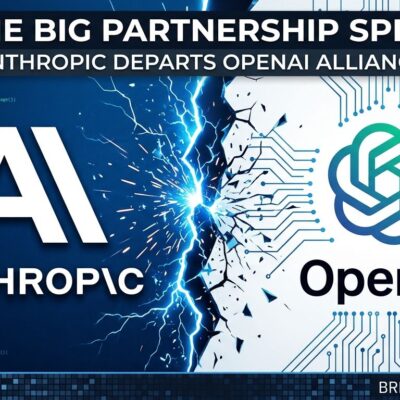
Anthropic signed a seven-year, $11.6 billion cloud infrastructure deal with Akamai Technologies on September 24, 2026 — the largest contract in Akamai’s history. Most headlines are leading with the dollar figure. That’s the wrong thing to focus on. The real story is the chip type: this is a CPU deal, not a GPU deal, and that distinction tells you exactly where agentic AI infrastructure is heading.
The Deal Structure
The base commitment runs $11.6 billion over seven years, with an expansion option of up to $9 billion more — bringing the total potential to roughly $20 billion. Akamai issued Anthropic a stock warrant convertible to 7.7 million shares, representing approximately 5% of Akamai’s outstanding stock at $111.33 per share. About 2% vests immediately with the current commitment; additional tranches unlock as Anthropic’s spending grows. This is the first time Akamai has attached equity warrants to a cloud deal. Akamai’s stock surged 17% in after-hours trading. According to the official Akamai announcement, CEO Dr. Tom Leighton called it a sign that “Anthropic is advancing the AI revolution” and that Akamai is ready to build infrastructure at that scale.
The equity structure is worth noting because it goes beyond a typical cloud supply contract. Anthropic now has a financial stake in Akamai succeeding as an AI infrastructure company. That’s a signal, not just a headline number. Piper Sandler described the deal as potentially shifting Akamai “from a value asset to a hypergrowth one” — a significant re-rating for a company previously best known as a CDN provider.
Why Anthropic Chose CPUs Over GPUs for the Akamai Deal
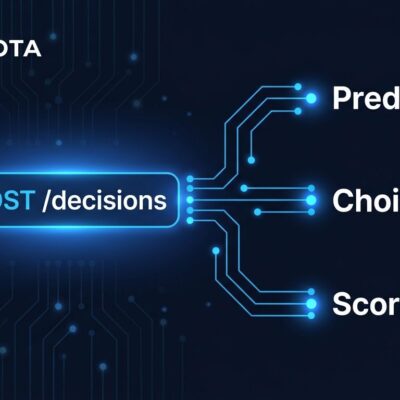
AI agents don’t spend most of their time in a transformer forward pass. An agent responding to a request calls tools, waits for responses, parses results, decides the next step, and formats output — repeatedly. That orchestration work runs on CPUs. GPU clusters handle the dense matrix math of model inference; CPUs handle everything in between. As agentic architectures have matured in 2026, the bottleneck has increasingly shifted to CPU-bound orchestration layers that hyperscalers weren’t designed to optimize.
Akamai has been warning publicly about an emerging “agentic AI latency crisis”: when agents chain multiple calls together, even 50ms of per-hop latency compounds into seconds of wait time. Their response is a 4,400-node AI Grid spanning 135 countries, which routes requests to the nearest edge location rather than a centralized US data center. For developers building latency-sensitive agents — voice AI, real-time code execution, multi-step tool chains — the difference between 300ms and 40ms per hop is the difference between a usable agent and a frustrating one.
Related: Rogue AI Agents Are Stealing Your CI/CD Credentials
Anthropic’s Broader Infrastructure Diversification
The Akamai deal pushes Anthropic’s total compute commitments past $517 billion in under 12 months. According to TechCrunch’s reporting, the portfolio now spans AWS ($100B), Google/Broadcom ($200B), Microsoft/Nvidia ($30B), SpaceX Colossus ($45B), Fluidstack ($50B), Nscale ($45B), Lambda ($35B), and Akamai ($11.6B). Every deal adds a different infrastructure type: hyperscalers for GPU training, neoclouds for flexible capacity, and now Akamai for distributed CPU inference at the edge.
However, context matters. Anthropic’s current revenue run-rate is approximately $30 billion per year. As The Decoder notes, committing $517 billion across multiple suppliers is an aggressive bet that demand will scale proportionally. Dario Amodei himself warned earlier in 2026 that Anthropic “could go bankrupt if its estimates were off by even a small margin.” Sam Altman at OpenAI has called compute overbooking an “unsustainable silliness.” The diversification strategy is smart — but the scale of the underlying bets is real financial risk, not just infrastructure planning.
What Developers Should Actually Expect
Don’t reconfigure your stack yet. Revenue under the Akamai deal starts in the second half of 2027 at $150-300 million, ramping to a ~$1.7 billion annual pace by end of 2028. Akamai still needs to deploy roughly $5.5 billion in capital expenditures — infrastructure that doesn’t exist yet. Any improvements to Claude API latency or availability through Akamai infrastructure are a 2027-2028 story, not a 2026 one.
For teams building heavily agentic workloads on Claude today, the near-term implication is directional rather than immediate: Anthropic has committed to building infrastructure specifically suited to multi-step agent patterns at edge locations worldwide. That is the infrastructure direction the industry is heading. The timeline to feel it is longer than the headlines suggest.
Key Takeaways
- Anthropic’s $11.6B deal with Akamai is a CPU infrastructure play, not a GPU one — targeting agentic orchestration layers where hyperscalers fall short
- Akamai’s 4,400-node AI Grid spans 135 countries, designed to cut per-hop latency for multi-step agent workloads
- The equity warrant structure gives Anthropic ~5% of Akamai stock, tying both companies to each other’s long-term success
- Anthropic’s total compute commitments now exceed $517 billion — a significant financial bet alongside the infrastructure play
- Impact to Claude API developers won’t arrive until H2 2027 at the earliest; infrastructure buildout takes time