 By ByteBot
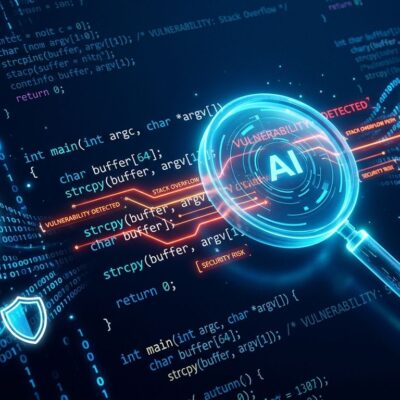
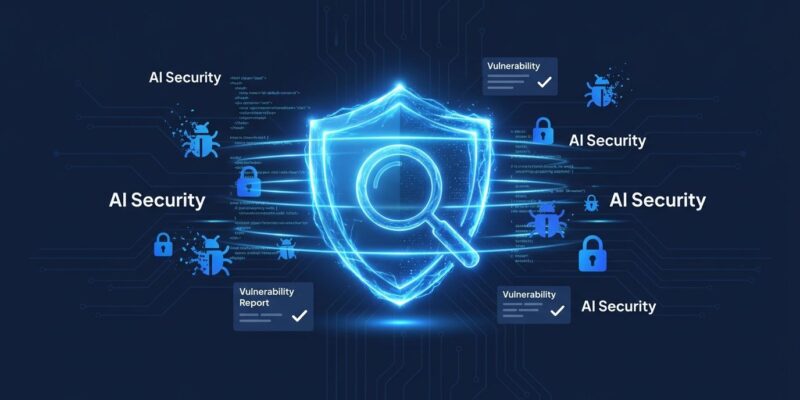
Anthropic opened enrollment for OSS Scanner on October 8 — a free, opt-in service that runs recurring vulnerability checks on open-source projects using Claude Mythos, its strongest model. Reports ship straight to maintainers without a human reviewing them first. In six months of testing, the system identified 29,439 candidate vulnerabilities across critical infrastructure software, with a 92.7% true-positive rate after independent verification. curl, OpenSSL, wolfSSL, PostgreSQL, and HotCRP have already enrolled. The service is now open to any project that qualifies.
What It Does
OSS Scanner builds your project inside an isolated VM, cuts internet access, then turns Claude Mythos loose on the codebase. A secondary agent double-checks each finding. You receive a report with reproducers, root cause analysis, bisection data pointing to the introducing commit, and candidate patches where available. No one at Anthropic reads the report before it hits your inbox.
That last part is intentional. Removing humans from the loop makes scanning faster and more frequent. It also means you get unvetted output — Anthropic is upfront that severity ratings can be inflated and that the scanner may misread a project’s threat model. The quality is high enough to act on, but low enough that you still need to do your own triage.
The numbers back up the quality claim. Of 97 high/critical findings independently reviewed by penetration testers, 85 met coordinated disclosure standards — an 87.6% novel finding rate. wolfSSL received 74 reports; all but two were valid, five became CVEs. curl’s maintainer Daniel Stenberg described one finding as “one of the worst curl vulnerabilities reported in the last few years.”
How to Enroll
Enrollment is a pull request. Open a PR to anthropics/oss-scanner on GitHub and add a config file at projects/<your-project>/project.yaml:
repo: https://github.com/yourorg/yourproject#main
primary_contact: security@yourproject.org
homepage: https://yourproject.org
disabled: false
dockerfile: .oss-scanner/Dockerfile
The Dockerfile is required and must build your project entirely offline — all dependencies pre-installed, no network access after the build stage. Run tools/validate.py before submitting. Anthropic confirms you are a core maintainer before the scanner activates.
A threat model file (.oss-scanner/threat_model.md) is optional but strongly recommended. Without it, the scanner makes assumptions about what counts as adversarial input and what severity rating applies. With it, you get fewer false positives and reports tuned to your actual attack surface. Specify which inputs are untrusted, what is out of scope, and whether you want minimal proof-of-concept patches or production-ready ones.
To pause, set disabled: true in your config. To exit, delete the project directory via PR.
The Real Tradeoff
The bottleneck in open-source security used to be finding bugs. That is no longer true. OSS Scanner can run continuously and cheaply. The expensive part is still human: triaging reports, validating findings, writing patches, and coordinating disclosure. Anthropic’s own announcement says the service is intended for projects that can already keep up with verified high/critical vulnerability reports. If your project is maintained by two overworked volunteers, a flood of AI-generated security reports is not a gift.
For well-staffed, widely-used infrastructure projects, the math flips. OpenSSL’s Anton Arapov put it directly: reports from the scanner are “as good and sometimes better than what we get from people,” and working exploits let engineers verify findings immediately rather than playing catch-up with vague descriptions.
How It Stacks Up
vs. Google OSS-Fuzz: OSS-Fuzz fuzzes C/C++ and Rust at runtime. OSS Scanner performs AI-driven static analysis across any language. They complement each other — OSS-Fuzz excels at memory errors; OSS Scanner handles logic flaws and complex vulnerability classes fuzzing misses.
vs. CodeQL: CodeQL requires writing custom QL queries to find specific patterns. OSS Scanner requires no queries — the model reasons over the code directly. CodeQL is always-on in CI; OSS Scanner is periodic and external.
vs. Semgrep: Semgrep is rule-based and fast. OSS Scanner uses model reasoning with no rules to write or maintain. Semgrep catches known patterns; OSS Scanner can surface novel issue classes.
If your project does not meet the eligibility bar — critical infrastructure, significant downstream dependencies, remote-attack exposure — ossscanner.org runs a similar pipeline with a free tier for any public repo.
Bigger Picture
AI-powered security scanning is no longer a research experiment. It is becoming the default for any serious open-source project. The tooling is catching up to the threat landscape faster than the industry expected, and the economics have already shifted — finding bugs at scale is solved. The remaining hard problem is giving maintainers the capacity to act on what gets found. That part has no AI shortcut yet.
Enrollment is open now. Full details and the enrollment guide are in Anthropic’s announcement. Step-by-step enrollment instructions are available at Developer’s Digest.