 By ByteBot
Running one AI coding agent is a solved problem. Running ten of them on the same codebase — without agents overwriting each other, without you spending two hours manually merging branches afterward — that part is still a mess. Acyclic, a YC F2026 company that launched this week, is building the infrastructure layer to fix it.
What Acyclic Does
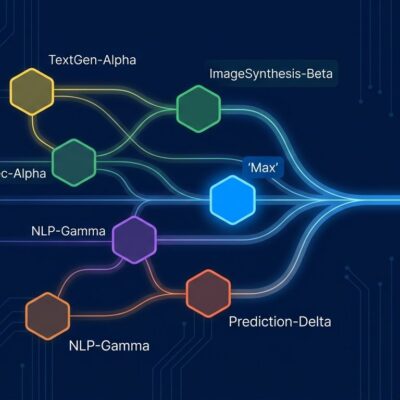
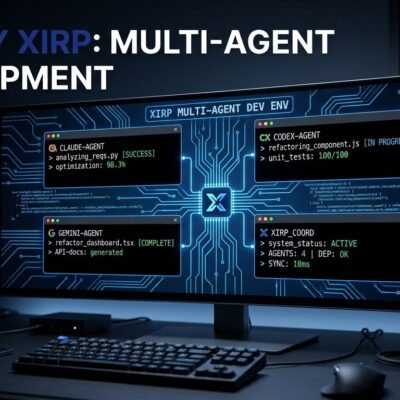
Acyclic is not a coding agent. It is the layer that runs coding agents as a swarm. You hand it a task, it splits the work across multiple agents, each running in its own isolated workspace fork, and then it merges everything into a single patch or pull request. The mental model is simple: one task in, one merged result out, agents running in parallel in between.
The workflow is three commands:
npm install -g @acyclic-labs/cli
acyclic swarm run --task "migrate all REST endpoints to the new auth middleware" --dir . --watch
acyclic swarm pull <swarm-id> --apply
You can also trigger swarms from the dashboard or connect a coding agent over MCP — meaning you can fire off a swarm from inside Claude Code or Cursor without leaving your editor.
Why This Is Harder Than It Looks
The obvious alternative is git worktrees. Many developers are already running parallel agents that way: give each agent a separate worktree and branch, let them work, then merge. It works at two or three agents. At ten, it stops working.
Git worktrees give you isolation. They give you nothing else. There is no coordination layer telling agent seven that agent three already rewrote the auth middleware. There is no automatic merge. Shared files — config files, routing tables, schema definitions — become collision surfaces that no tool warns you about in advance. Coordination overhead scales non-linearly. A dozen agents updating the same progress file is a dozen merge conflicts waiting to happen.
Acyclic automates the parts that git worktrees leave to you. Workspace forking is instant — it uses copy-on-write primitives on Btrfs and APFS, so spawning a new isolated environment takes milliseconds, not minutes. Merging is handled. The open-source SDK exposes the Rust harness and TypeScript packages if you want to build on top of or self-host the primitives.
The Harvard Study Problem
A working paper from Harvard researchers Fiona Chen and James Stratton, drawing on data from 718 firms and 725,000 workers, found that AI coding agents drove a 30% increase in lines of code written — but no statistically significant increase in resolved issues or completed features. Code review time rose 49%. Revision requests nearly doubled.
The bottleneck shifted. More agents writing more code faster just floods the review queue unless the task-completion layer keeps pace. That is exactly where Acyclic is playing: not making agents write faster, but making large tasks complete in fewer round trips by running the work in parallel and handing you a single reviewed patch rather than a pile of branches to untangle.
The Open-Source Play
The SDK is open source. The managed platform is where Acyclic monetizes. That split is smart: it builds developer trust and lets teams self-host on sensitive codebases, while the managed platform handles teams who want it running without infrastructure overhead. YC F2026 backing suggests the thesis — dedicated agent swarm infrastructure as a category — has enough validation to build a company on.
For now, Acyclic is a two-person team in London. The SDK is active, the CLI is installable today, and the MCP integration means it fits into the workflows developers are already running rather than requiring a wholesale change to how they work.
Who Should Try It Now
If you have a large refactor, a migration, or a multi-file feature where you have already started reaching for git worktrees manually, Acyclic is worth fifteen minutes. Install the CLI, run a swarm on something you were planning to split across agents anyway, and see how the merge comes out. The downside is low. The upside — a working infrastructure layer for parallel agent coordination — is real infrastructure that does not exist anywhere else right now.
The parallel agent problem is not going away. The tooling gap is closing. Acyclic is one of the first purpose-built answers to it.