ByteDance, the company behind TikTok, open-sourced DeerFlow on February 27, 2026, and it immediately hit GitHub Trending #2 with 692 stars in a single day. This isn’t another experimental agent toy—it’s a production-ready “super agent harness” with built-in sandboxes, persistent memory, and specialized sub-agents for complex research and automation tasks. As enterprises like BNY Mellon deploy 20,000+ AI agents, the infrastructure war is heating up. ByteDance just entered the arena with a strategic open-source play.
The question isn’t whether DeerFlow is technically impressive (it is). Rather, why did ByteDance give away production-grade technology instead of keeping it proprietary? What does this signal about the AI agent framework market’s maturity and ByteDance’s competitive strategy?
Production-Ready From Day One
DeerFlow differentiates itself from experimental frameworks by shipping enterprise features out of the box. Most agent frameworks are research projects that break the moment you try to run them in production. However, DeerFlow includes Docker and Kubernetes sandboxed execution for safe code running. Moreover, it provides TIAMAT cloud memory for cross-session persistence, web authentication, and a complete skills system. The framework covers research, web scraping, report generation, and image/video creation.
Version 2.0, released this month, was a ground-up rewrite specifically focused on production deployments. The multi-agent orchestration framework supports three deployment modes: local for development, Docker for single-server production, and Kubernetes for multi-server environments. Furthermore, recent pull requests added the TIAMAT cloud memory backend, web authentication, and UI redesign.
All of these changes target enterprise use cases. ByteDance’s credibility (they run TikTok) matters here. With 21.5k GitHub stars, 2.6k forks, and 107 contributors, DeerFlow isn’t vaporware. Compare this to AutoGPT, which has 160k stars but remains fundamentally experimental. Popularity doesn’t equal production-readiness.
Consequently, enterprises need security through sandboxed execution, reliability through checkpointing, and scalability through Kubernetes. DeerFlow includes these features from day one.
The “Super Agent Harness” Architecture
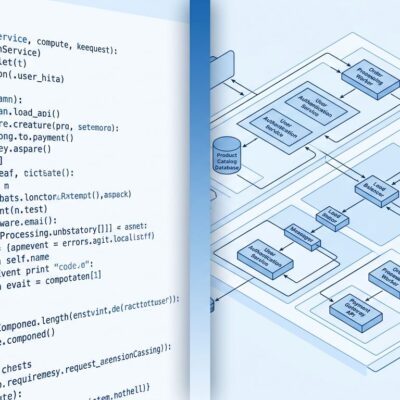
DeerFlow isn’t a chatbot framework—it’s an orchestration system that spawns and coordinates specialized sub-agents. Think researcher, coder, analyzer, and reporter agents. Each runs in isolated sandboxes with distinct tools and execution contexts. Built on LangGraph for directed graph workflows and LangChain for LLM reasoning, DeerFlow handles tasks that take minutes to hours by decomposing them into parallel sub-tasks.
The architecture flows logically. The super agent core receives a task, decomposes it into sub-tasks, assigns them to specialized agents, executes them in parallel within sandboxes, and synthesizes results. For example, “Research edge computing trends” spawns one agent to search the web, another to analyze code repositories, and a third to synthesize findings. All run simultaneously.
DeerFlow’s built-in skills system is the differentiator. Most agent frameworks make you build web search, crawling, Python execution, and file operations from scratch. In contrast, DeerFlow includes them. This matters because single-agent systems hit limits fast. They can’t parallelize, can’t isolate risky code execution, and can’t maintain state across long workflows.
Therefore, the orchestration model is how enterprises will actually deploy AI agents at scale. It’s the difference between an AI chatbot and an AI workforce.
Related: Superpowers Agent Framework: 1,528 Stars in 24 Hours
Entering a Crowded Agent Framework Market
DeerFlow launches into a fragmented landscape of AI agent frameworks. CrewAI offers role-based team abstractions. AutoGen brings Microsoft’s research focus on asynchronous agents. LangGraph provides stateful workflow orchestration. Meanwhile, Superpowers hit GitHub Trending #1 with 1,549 stars in its first 24 hours (also February 2026). Notably, Superpowers is DeerFlow’s most direct competitor.
Here’s the irony: DeerFlow builds on LangChain and LangGraph, then competes with them. Framework comparisons from Turing.com and DEV Community reveal the strategic positioning. LangGraph emerged as the definitive choice for production-grade workflows. CrewAI appeals to business users with its simple model. AutoGen targets research and Microsoft ecosystems.
As a result, DeerFlow positions itself as “LangGraph plus batteries”—production infrastructure, not just workflow abstraction. The agent framework market is experiencing a Cambrian explosion. Five major frameworks launched or gained traction in February 2026 alone. Industry analysts predict consolidation to 2-3 winners by 2027 as enterprises standardize.
Developers choosing frameworks now face a critical question: which will survive? ByteDance’s credibility, resources, and open-source strategy position DeerFlow as a likely survivor. Nevertheless, Superpowers’ explosive launch shows the race is wide open.
Why ByteDance Open-Sourced DeerFlow Now
ByteDance’s decision to open-source DeerFlow under the MIT license raises strategic questions. Why give away production-grade technology instead of monetizing it? Several explanations emerge. First, competing with proprietary systems from OpenAI and Microsoft requires ecosystem lock-in, not product lock-in. Second, attracting top AI engineering talent to ByteDance requires open-source credibility. Third, influencing agent infrastructure standards before market consolidation has strategic value.
Fourth, TikTok likely runs on even more advanced internal systems. DeerFlow is competitive table stakes, not ByteDance’s secret sauce. The official ByteDance Open Source Twitter account promoted DeerFlow as a “cutting-edge multi-agent framework built on LangChain.” Indeed, active maintenance with 1,527 commits and 107 contributors signals long-term commitment, not a marketing stunt.
Additionally, the open-source playbook is familiar: release the core, then potentially offer enterprise SaaS on top. Many successful infrastructure companies follow this model. Infrastructure wars are won on ecosystems, not just features. Developers choose frameworks with strong communities, active development, and proven reliability. OpenAI keeps its agent tools proprietary. Conversely, ByteDance is betting on open source.
The outcome will reveal which strategy works for AI infrastructure.
The Bottom Line
DeerFlow is production-ready infrastructure, not experimental vaporware. Enterprise features like sandboxed execution, persistent memory, web authentication, and Kubernetes support ship from day one. The super agent orchestration model—where specialized sub-agents execute parallel tasks—is how AI agents scale beyond simple chatbots.
The AI agent framework market is crowded with five major players competing for developer mindshare. Consolidation to 2-3 winners seems inevitable by 2027. ByteDance’s open-source strategy signals confidence in their broader AI infrastructure. Specifically, it represents a bet on ecosystem growth over product lock-in.
Real-world deployment won’t be trivial. GitHub issues reveal production gotchas. Recursion limits cause agents to loop infinitely. Token overflows occur during long research tasks. CORS and sandbox networking issues emerge. These are solvable problems, but they underscore a reality—this is infrastructure, not magic.
Ultimately, the market will decide whether DeerFlow survives the consolidation ahead. ByteDance’s resources, TikTok’s credibility, and the framework’s production focus give it strong odds. For developers choosing an agent framework now, the decision isn’t just technical. It’s a bet on which ecosystem will still exist in 18 months.