 By ByteBot
Revolut just moved 2,000 engineers off Claude Code and Codex. AI coding bill: down 90%. The replacement is GLM-5.3 — an MIT-licensed open-weight model from Chinese lab Z.ai — running on 56 Nvidia B200 GPUs they own outright. Blended inference cost: $0.30 per million tokens, against the $1,000–$10,000 per engineer per month they were spending on commercial seats. This is not a marginal optimization. This is a different category of spend.
Why Commercial Tools Became a Problem
The surprising part is how self-defeating the commercial model turned out to be at Revolut’s scale. Early Claude Code rollout was “shaky economically,” according to ops lead David Abitbol, who presented the results at AI Engineer NYC in October. Some engineers were burning through five-figure monthly token budgets without measurable return. Revolut’s response was predictable: impose spending limits.
That made things worse. When tokens feel like a scarce resource, engineers start hoarding them. They skip using AI for the routine work — code review, documentation, boilerplate — and save their budget for the hard problems only. The result is a tool that’s expensive and underused. The psychology of metered access actively undermines adoption.
Self-hosting breaks that dynamic. When inference costs a fraction of a cent and the meter is invisible to the engineer, they use the tool everywhere. That is exactly what Revolut measured: 60% faster coding time and 70% improvement in lead time after the switch.
The Model and the Hardware
GLM-5.3 is a 754-billion-parameter mixture-of-experts model from Z.ai, the same lab previously known as Zhipu AI. Only 40 billion parameters activate per token, which is what makes it economical to serve. It carries a 1-million-token context window, an MIT license for unrestricted commercial use, and coding benchmarks that sit ahead of Claude Opus 4.8 on Z.ai’s internal Code Bench (31.4% vs 29.5%). On DeepSWE v1.1, it scores 66.9 — up from 46.2 in the previous version.
The hardware is 56 Nvidia B200 GPUs across seven eight-GPU DGX systems. The model needs roughly 380 GB of GPU memory for weights alone, plus 6 to 26 GB per active user context. At roughly $450,000–$515,000 per eight-GPU DGX, Revolut is looking at $3–4 million in GPU infrastructure. That is the number most coverage quietly glosses over.
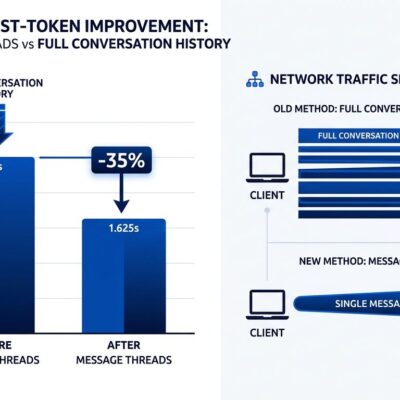
Revolut did not get this right immediately. The initial migration produced a time-to-first-token of 14.26 seconds — which is not a coding assistant, it is a loading screen. After tuning the serving system against real demand patterns, they hit 1.68 seconds TTFT and 76% higher requests per second. The serving layer is where the real engineering work was.
What Your Team Can Actually Replicate
Not every team is Revolut. Here is a realistic breakdown by scale:
| Team Size | Recommended Approach | Estimated Cost |
|---|---|---|
| Under 50 engineers | GLM-5.3 API (Z.ai) or DeepSeek Flash API | $1.40/$4.40 or $0.15/$0.60 per M tokens |
| 50–200 engineers | Rented H100/B200 cluster + vLLM | $5–8/GPU-hour; ROI at 5–10M tokens/month |
| 500+ engineers | Owned hardware, Revolut blueprint | ~$3–4M CapEx, ROI within 12–18 months |
Revolut also kept Claude Code and Codex in the mix — available as exception tools for the genuinely hard problems. This is a smart hybrid. Self-hosting the default workload does not mean abandoning frontier models entirely. It means paying frontier prices only when the problem actually requires a frontier model.
The Caveats Worth Taking Seriously
The $0.30 per million tokens figure is real but incomplete. It does not include GPU amortization, cloud costs, the MLOps staffing required to tune a production serving stack, or the observability tooling needed to run this reliably. The honest cost breakdown is higher — meaningfully higher for teams building this from scratch.
There is also a data sovereignty question that mainstream coverage has not pressed hard enough. Z.ai is a Chinese lab. For enterprises handling sensitive proprietary code, routing that code through a model from a Chinese AI lab — even self-hosted — raises IP and security questions that legal teams will want answered before this goes to production. How Revolut handled this is not publicly documented.
None of this invalidates the result. It contextualizes it. If your team spends more than $5,000 a month on AI coding tools, you should run this math. The economics have shifted, and teams that do not notice will be outspent by those that do.