 By
GitHub just made Copilot an official gatekeeper. As of October 28, the AI can now formally approve pull requests — not just comment, not just suggest, but sign off in a way that counts toward your repository’s required reviewers. That’s a governance decision, and most teams haven’t had time to think it through.
What Actually Shipped
Two things landed on October 28. First, the Max effort level for Copilot code review entered public preview. Max runs several independent review agents across models from different providers, then reconciles findings through an aggregation agent. It’s the most thorough review Copilot can produce — and at ~$10 per review in AI credits, you’ll want to be selective about when you use it.
For comparison: Lite averages $0.25, Balanced averages $1.50. Balanced became the default on September 28 — a quiet change GitHub made without fanfare. Teams that did not notice are now paying six times more per review than they were a month ago. Check your settings before your next billing cycle.
One more cost trap to know: since June 1, every code review on a private repository is billed twice — once in AI credits for the model, once in GitHub Actions minutes for the runner. Public repositories remain free on the Actions side.
Copilot Approvals Are Now Generally Available
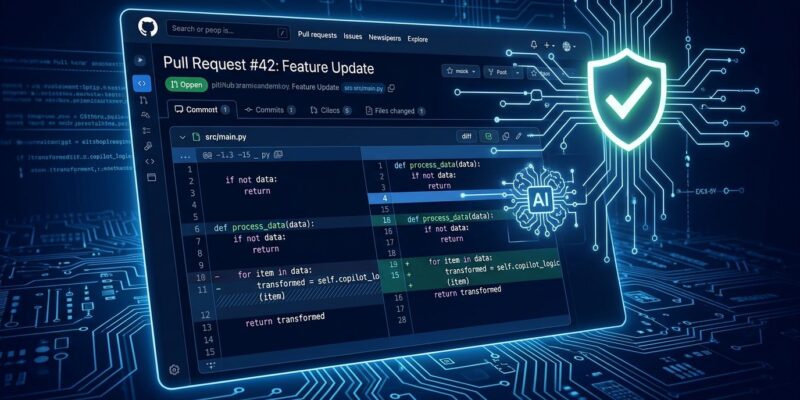
The second thing that shipped is bigger. Copilot approvals — the ability for Copilot to submit an approving review that actually counts toward your branch protection rules — graduated from public preview to generally available.
The mechanics matter here. When an admin enables this, Copilot’s approval satisfies a required-approvals gate the same way a human reviewer’s would. It dismisses automatically when new commits are pushed — the same behavior as a human review dismissal. It can be restricted to specific file paths using a glob allowlist of up to 15 patterns.
The one non-negotiable safety guard: Copilot cannot approve its own pull requests. If Copilot opened the PR, a human must still sign off. That constraint is built in and it is the right call.
The Accountability Gap You Should Actually Worry About
Here’s what gets glossed over in the launch post. Copilot did not become a smarter reviewer on October 28. It became an eligible ruleset identity in your governance chain. Those are different things.
A human reviewer who approves a bad merge can be held responsible. Their judgment is on the line. An AI approval does not carry that weight — an agent’s sign-off does not carry accountability for being wrong the same way a human’s does. The approval satisfies the gate. The accountability does not transfer.
There’s also a structural risk that is not getting enough attention. Copilot reads its reviewer configuration from the PR’s head branch. That means a contributor can modify the code being reviewed and the reviewer’s operating instructions in the same commit. Before approvals carried governance weight, that was a curiosity. Now it’s an instruction-plane vulnerability worth designing around explicitly.
The Blind Spots in Every Review
Copilot skips lockfiles, minified assets, and SVGs. For comment-only reviews, that is a reasonable call. But when approval carries merge authority, those exclusions become governance gaps. A dependency swap buried in a lockfile update does not get reviewed — and Copilot approves the PR containing it anyway.
This is not a reason to avoid approvals entirely. It is a reason to scope them carefully to the change types where blind spots do not matter.
How to Enable This Without Breaking Your Repo
If you are enabling Copilot approvals, the community consensus is consistent: start narrow.
- Shadow mode first: Enable approval assessments without counted authority. Collect Copilot’s verdicts on real PRs for a few weeks before they carry governance weight.
- Path-restrict from day one: Docs, examples, fixtures — not auth code, not migrations, not workflow files, and never the reviewer configuration itself.
- Keep humans in CODEOWNERS: For security-critical paths, enforce human review through CODEOWNERS. Copilot’s counted approval should supplement, not replace, human oversight.
- Design for approval failure: AI credit budgets can cap out. Test what happens when Copilot cannot review before you depend on it in production workflows.
For effort level: Balanced is the right default for most reviews. Reserve Max for large, complex PRs where the multi-agent depth justifies the cost. The GitHub billing docs break down credit consumption per plan if you need to model costs before rollout.
The Bigger Picture
Copilot can now write code, review code, and approve code for production. That is the full PR lifecycle in AI hands — minus the one constraint that holds: it still cannot approve its own work. Keep that boundary intact, and use everything else with appropriate guardrails in place.
Approvals are opt-in, off by default, and only as risky as your configuration makes them. The teams that will regret enabling this are the ones who flip it on org-wide because it is available, not because they have thought through where AI approval authority is and is not appropriate.