 By
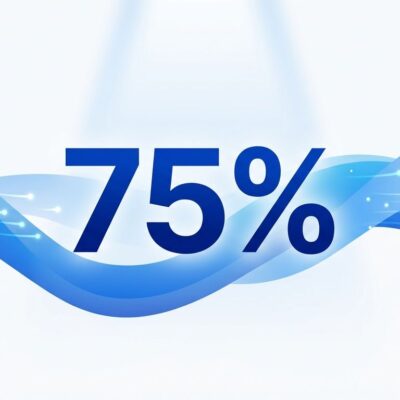
By Anthropic announced a “permanent 25% increase” to Claude Code’s weekly limits. What they buried is the part that matters: if you’re using Claude Code today, your actual limit drops 16.7% on September 14. The temporary 50% weekly boost introduced in May expires, replaced by a permanent 25% bump over the original pre-May baseline. Two different baselines, two different percentages — both true, one more useful than the other.
Here is the math Anthropic did not lead with. Index the pre-May baseline at 100. The May 13 boost brought that to 150. The new permanent limit is 125 — 25% above the original baseline, but 16.7% below what developers have right now. Anthropic initially posted the announcement without surfacing that reduction, developers pushed back, the original thread was deleted, and a clearer version went up. The Hacker News response called it “a terrible press release.” Hard to argue.
Why the Boost Existed in the First Place
The temporary 50% weekly boost was Anthropic’s competitive response to OpenAI Codex in May 2026, backed by expanded compute capacity from the SpaceX Colossus 1 data center partnership — over 220,000 NVIDIA GPUs. The boost was originally set to expire July 13, then extended, then extended again. Now it ends for real on September 14. The new permanent baseline of 125% normalizes what was always meant to be temporary, but that context was absent from the announcement.
Who This Actually Hits
If you rarely touch your weekly cap, this is a non-event. If you live in the terminal, it is not. The developers most exposed are agentic workflow runners who spawn multiple subagents for complex tasks. Each subagent starts with fresh context, and three subagents running in parallel cost roughly 4x the tokens of a single-thread session — a 200–500% overhead that compounds against a lower ceiling. CI/CD pipeline users generating test suites, running automated security reviews, or producing documentation on a schedule will feel the squeeze most directly.
Plans affected: Pro, Max 5x, Max 20x, Team (seat-based), and seat-based Enterprise. API users are not affected — they pay per token without weekly limits. That distinction matters more than it might seem: if you are hitting the ceiling regularly, the API route for high-volume tasks is worth pricing out.
What to Do Before September 14
You have 12 days. Here is how to use them.
First, check where you actually stand. Run /usage inside Claude Code and read the “Current week (all models)” row. If you are consistently at or near the cap, plan accordingly. For more granular data, npx ccusage@latest parses your local Claude Code JSONL session logs and outputs daily, monthly, and per-session cost breakdowns with per-model splits — no account required, 16,500 GitHub stars, free.
Second, front-load high-value long runs now. The tasks that benefit most from autonomous Claude Code sessions — test suite generation, migration scripts, documentation passes, security reviews — should be queued for this week and next. Do not burn the remaining promo window on one-line fixes.
Third, reduce unnecessary subagent spawning. Where a single-thread session can handle the task, use it. The token multiplier from parallel subagents is the single fastest way to exhaust a weekly limit, and reducing it buys real headroom without any plan change.
Fourth, route cheap tasks off Claude Code. Simple completions, boilerplate generation, and single-file edits do not need the full agentic stack. Cheaper models or non-agentic completions preserve your weekly budget for work that actually needs it. The Anthropic power user guide covers model routing in more detail.
On Upgrading
If current limits are blocking daily work, Max 20x at 00/month gives 20x the Pro baseline. For teams, seat-based plans cap at 150 seats with a minimum of two. For very heavy usage, the API route — routing cheap tasks to Haiku and complex tasks to Sonnet or Opus — can be more cost-effective than hitting a weekly ceiling on a flat plan. BleepingComputer’s breakdown has the plan comparison details.
The Bigger Picture
This is not just an Anthropic story. Every AI coding tool vendor running flat-rate subscriptions against agentic workloads faces the same structural tension: the economics of autonomous agents were not priced into plans designed for human-paced usage. The temporary boost was a market-share move. The permanent normalization is the correction. Expect more of this from every vendor in the space as agentic usage grows. The full math breakdown at Claude Lab is worth reading if you want every detail of the dual-baseline calculation.
September 14 is 12 days out. Run /usage today.