Tesla expanded its Robotaxi service to Orlando and Tampa on July 21 — one day before Q2 2026 earnings. The company called it a significant milestone. The actual fleet powering this expansion: approximately 21 unsupervised vehicles across all US markets. Waymo, which launched driverless service in Tampa two weeks earlier, runs roughly 1,500 driverless cars and completes 500,000 paid trips every week.
Three Florida Cities in 18 Days
Miami came online July 3. Orlando and Tampa followed July 21. Tesla’s Robotaxi now operates across seven US markets — Austin, Dallas, and Houston in Texas, plus the three Florida cities. Bay Area remains supervised testing only.
The operating zones are geofenced and small. Orlando covers 12 to 15 square miles in the Conway and Lee Vista neighborhoods. Tampa covers 4 to 5 square miles in West Tampa, Tampa Heights, and Seminole Heights. Riders open the Robotaxi app, hail a production Model Y, and get a fully unsupervised ride — no safety driver, no front-seat monitor.
The expansion itself is real. The scale behind it is not what the press releases imply.
The Fleet Gap Nobody Is Talking About
Austin has been Tesla’s flagship Robotaxi market for over a year. It currently operates 17 unsupervised vehicles — down from a peak of 25 in April. Dallas runs approximately four. Total US unsupervised fleet: roughly 21 cars.
Waymo’s fleet is 14 times larger. It is expanding into Tampa on the same timeline as Tesla, but with hundreds of vehicles, a target of one million weekly rides by year-end, and commercial operations in 11 metro areas covering more than 1,400 square miles. Prediction markets currently give Tesla an 8% chance of leading autonomous rides by end of 2026.
Adding cities is a legitimate step. It is not the same as building a commercial ride-hailing service. The announcement the day before Q2 earnings suggests Tesla understands the distinction.
Camera-Only FSD in Florida Rain
Tesla’s FSD runs entirely on cameras — no lidar, no radar. A single end-to-end neural network takes raw camera input and outputs steering and throttle commands directly. Waymo’s 6th-generation Driver uses 13 cameras, four lidar units, and six radar sensors. If one sensor type is impaired by weather or glare, the others compensate.
In March 2026, NHTSA elevated its Tesla FSD investigation to an Engineering Analysis covering 3.2 million vehicles. The agency’s own language: FSD “fails to detect and/or warn the driver appropriately under degraded visibility conditions such as glare and airborne obscurants.” Nine incidents reviewed; one fatality. Tesla’s formal response to NHTSA’s 24-part information demand is due August 12.
On July 21 — the same day Tesla launched in Orlando and Tampa — NHTSA separately demanded Tesla hand over an internal document titled “Radar Saves Us.” The document’s title alone signals how Tesla’s own engineers assessed the camera-only architecture.
Florida averages heavy afternoon thunderstorms from May through October, intense sun glare off wet asphalt, and high ambient humidity. These are exactly the degraded-visibility conditions NHTSA identified as FSD failure modes. Tesla is running camera-only hardware commercially in the environment most likely to stress it.
New Jersey Wants Lidar on Every Robotaxi
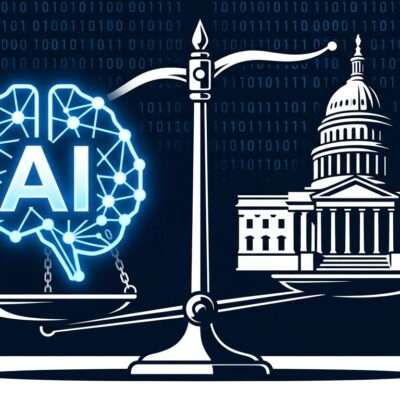
State Senator Andrew Zwicker — a physicist at Princeton Plasma Physics Laboratory — introduced S1677, which would require all commercial driverless vehicles in New Jersey to carry cameras plus two additional sensing technologies. In practice: radar and lidar. The bill also requires 50,000 miles of supervised in-state testing before any driverless commercial operation, crash reporting to the state, and traditional vehicle controls including a steering wheel and pedals.
Tesla’s Robotaxi fails on every technical requirement. The Cybercab has no steering wheel or pedals. The system has no lidar or radar. New York is considering nearly identical language. If S1677 passes, it would be the first state-level sensor mandate written into law — and a template other legislatures could adopt.
Zwicker’s position: “This is not anti-Tesla. I’m pro-New Jersey safety.”
FSD v15 Is the Real Unlock
Tesla’s current Robotaxi fleet is less a commercial service than a safety-validation operation under live conditions. The real bet is FSD v15, targeting late 2026 or early 2027. The upgrade is a full architectural overhaul: roughly 10 billion parameters versus approximately one billion in the current version. Tesla is already testing an early build of v15 in some Robotaxi vehicles.
The argument for this approach: unsupervised Robotaxi trips generate a uniquely high-quality training signal — edge cases, novel road conditions, real consequences for errors. The counter: Tesla already logs more than 100 million consumer FSD miles continuously. Twenty-one Robotaxi cars contribute minimally to that dataset.
FSD v15 might genuinely change the safety and capability picture. But that is a late-2026 event at earliest, contingent on the architectural overhaul delivering what Tesla needs to actually scale. Until v15 ships and validates in real conditions, the Robotaxi is an expensive, low-volume demonstration.
What This Actually Means
Tesla’s Florida expansion is real in the geographic sense: three cities in 18 days is a faster rollout than Austin got. Every unsupervised trip is safety validation data for the stack that eventually ships to millions of consumer vehicles. The data flywheel is turning, even if it’s spinning slowly.
But 21 cars competing against Waymo’s 1,500-vehicle network in a shared market, under active NHTSA investigation, with a federal document demand issued the same day as the launch, and a state legislature drafting a bill that would ban the hardware outright — that is not a dominant competitive position. The Orlando and Tampa launches are progress. They are not evidence that Tesla has solved autonomous driving at scale.
FSD v15 is the answer to that question. It is not here yet.