 By ByteBot
Microsoft shipped Agent Framework 1.0 in April 2026 — the production-ready merger of Semantic Kernel and AutoGen into a single open-source SDK for .NET and Python. If you’re building agents in either language, this is now the official path forward. The migration question isn’t whether, it’s when. And if you’re on AutoGen, “when” has a hard deadline: before Q3 2026, when major API providers will drop support for the callback patterns your code relies on.
One SDK to Replace Both
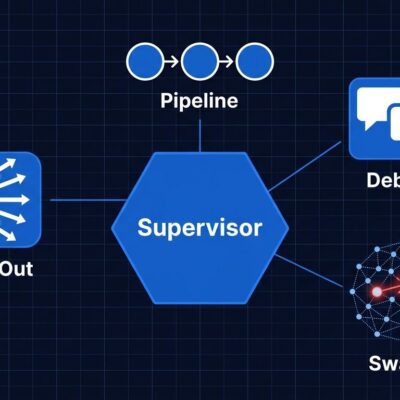
Microsoft Agent Framework (MAF) is what you get when two frameworks with 75,000 combined GitHub stars get merged by the same company that built them. Semantic Kernel contributed the enterprise-grade foundation — the kernel abstraction, plugin model, and service connectors. AutoGen contributed the multi-agent orchestration patterns, specifically the graph-based workflow engine for composing agents into deterministic, repeatable pipelines.
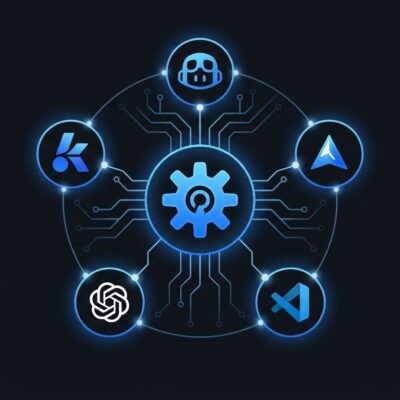
The result is a single SDK with first-party connectors for Azure OpenAI, OpenAI, Anthropic Claude, Google Gemini, Amazon Bedrock, and Ollama. Both Semantic Kernel and AutoGen are now in maintenance mode — critical bug fixes and security patches only, no new features. All new agentic investment from Microsoft, including multi-agent orchestration, MCP integration, checkpointing, and human-in-the-loop patterns, goes into MAF first.
AutoGen Users: Your Timeline Just Got Real
AutoGen v0.2 does not run unmodified on MAF 1.0. This isn’t a minor API shuffle — it requires substantial refactoring. The core abstractions changed: AssistantAgent becomes ChatAgent, FunctionTool moves to the @ai_function decorator pattern (Python) or AIFunctionFactory.Create() (.NET), and the Team abstraction is replaced by Workflow.
That last change matters more than it sounds. AutoGen’s Team ran continuously with no built-in way to pause. MAF’s Workflow is request-response: any executor can pause and request human input via ctx.request_info(), then handle the response with @response_handler. Human-in-the-loop is a first-class feature, not a workaround bolted on outside the framework.
The urgency isn’t just about new features. Major API providers are deprecating the legacy callback patterns AutoGen uses natively in Q3 2026. If you’re running AutoGen agents in production today, that’s the real deadline to plan around.
Semantic Kernel Users: Strategic, Not Emergency
Semantic Kernel users have more breathing room. Microsoft has committed to critical bug fixes for at least one year after MAF’s GA date, and SK’s kernel, plugin model, and connector system are preserved intact inside MAF — they’re the foundation layer. Microsoft’s own guidance: if your agent system is stable and in production, staying on SK is a valid option for now.
When you do migrate, the lift is measured in hours, not weeks. Estimates from the official Semantic Kernel migration guide run 2-4 hours for a typical app. The agent abstractions are what changes; the rest of your SK code largely survives. Start new projects on MAF; migrate existing ones on your next planned refactor cycle.
Durable Workflows: Progress With an Asterisk
The most compelling new capability in MAF is the Durable Task extension — it brings Azure Durable Functions-style execution guarantees to agents. Each agent call is checkpointed. If the process crashes, the workflow resumes from the last checkpoint without re-executing completed steps. Human-in-the-loop approvals can pause for hours, days, or weeks without consuming compute.
That’s real progress. But worth noting: Diagrid published a critique arguing that checkpointing is not the same as durable execution. There’s no built-in supervisor, no automatic failure detection, no lease mechanism. A filed issue documents 7-second load times for sessions with 500+ messages. The Durable Task extension requires the Azure Durable Task backend — it’s not an out-of-the-box guarantee.
For short-to-medium workflows, MAF’s durable patterns are solid. For truly long-running, crash-resilient production workflows, pair with the Azure Durable Task extension and test your recovery paths explicitly.
What BUILD 2026 Added
Three additions debuted at BUILD 2026 in June. Agent Harness brings production patterns into the core: context compaction, instruction merging, todo tracking, shell and filesystem access, and managed approval flows for long-running sessions. Hosted Agents provides a direct deployment path from local development to Foundry Agent Service — with scaling, session persistence, and built-in observability — and extends to Microsoft Teams and Microsoft 365 Copilot.
CodeAct is the one worth watching. Instead of executing tools one at a time in a loop, the model writes a short Python program that chains all tool calls via call_tool(), runs it once in an isolated Hyperlight micro-VM, and returns a consolidated result. It ships as agent-framework-hyperlight in alpha. If it graduates, it fundamentally changes how agentic loops work — fewer roundtrips, stronger isolation per call.
Where to Start
The official migration guides are the right starting point: from Semantic Kernel and from AutoGen. Today, Microsoft is hosting a .NET Day on Agentic Modernization livestream (4 PM UTC) covering exactly this migration path. The MAF 1.0 release post has the complete picture and links to the GitHub repo.
AutoGen users: get this on your sprint board now. SK users: plan it for your next refactor. Either way, MAF is where Microsoft’s agent investment is going — and the migration is less painful than being stranded on a framework in maintenance mode.