 By ByteBot
JetBrains shipped Koog 1.0 at KotlinConf 2026, and the headline isn’t a new feature — it’s a commitment. The framework now carries a one-year API stability guarantee, meaning no breaking changes to stable modules for at least twelve months. For JVM teams who have watched Python-centric agent frameworks break APIs every minor release, that promise changes the production calculus entirely.
What Koog Is
Koog is JetBrains’ open-source framework for building AI agents on the JVM. It targets Kotlin and Java and, via Kotlin Multiplatform, runs on JVM backends, Android, iOS, and in-browser environments via WebAssembly. The core abstractions — tools, workflows, memory, persistence, and observability — cover the full lifecycle of a production agent without reaching outside the framework.
The 1.0 Stability Guarantee
The biggest change in 1.0 is not a new feature: it’s a guarantee. Koog now divides its surface into stable and beta module streams. Stable modules will not break for at least one year. All previously deprecated APIs have been removed and the graph DSL’s node names are finalized. Teams can pin to 1.0 without scheduling surprise migration work.
This matters because API churn has been one of the genuine costs of adopting AI agent frameworks early. Python-first frameworks like LangChain shipped breaking changes in minor releases through most of 2024 and 2025. JVM developers — accustomed to the Spring and Java release discipline — have higher expectations. Koog 1.0 is the answer to the question of whether this framework is ready to be a dependency.
Android, Multiplatform, and the LiteRT Addition
No other JVM agent framework runs agent logic across JVM, Android, iOS, and WebAssembly from a single codebase. Koog 1.0 adds local LiteRT model support for Android, enabling fully on-device AI agent execution without cloud dependency. The same agent graph that runs on a backend service can be deployed to an Android application without rewriting the workflow in a different framework.
Graph Workflows and Fault Tolerance
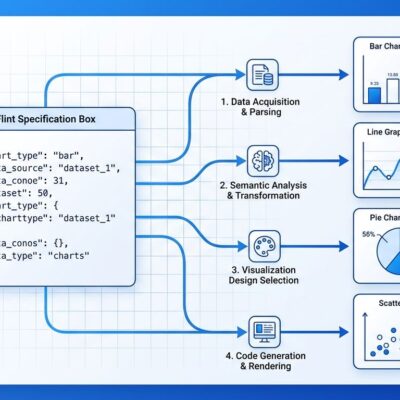
Koog models agents as directed graphs. Each node performs an operation — calling an LLM, invoking a tool, running a subgraph — and edges define control flow. The model supports loops, branches, parallel execution, and fallbacks natively. What sets it apart from chain-based alternatives is the fault tolerance model: Koog can checkpoint the entire agent state at any node and restore execution exactly where it stopped. If an agent fails at step 7 of a 10-step workflow, it resumes from step 7 — not step 1. Individual subgraphs can be retried without replaying the whole execution. For agents that make external API calls or depend on expensive LLM invocations, this is the difference between a retry costing milliseconds and one costing dollars.
ACP: Your Agents Live in the IDE
Koog 1.0 is natively compatible with the Agent Client Protocol (ACP), the open protocol JetBrains co-leads for agent-IDE communication. Agents built with Koog can be published to the ACP Agent Registry and installed directly into IntelliJ IDEA, Android Studio, and Zed. The workflow is: build the agent, register it, and it appears in your IDE’s AI chat panel. No additional tooling required.
Observability and Anthropic Caching
OpenTelemetry support now spans all Koog targets — JVM, Android, iOS, and Wasm. Langfuse, Weave, and DataDog connect via a Ktor-based OTLP/JSON exporter. Anthropic prompt caching is included out of the box, which cuts latency and token costs for agents with repeated system prompts or static context windows.
Getting Started
Add the stable dependency to your Gradle build:
dependencies {
    implementation("ai.koog:koog-agents:1.0.0")
}
For Maven:
<dependency>
  <groupId>ai.koog</groupId>
  <artifactId>koog-agents-jvm</artifactId>
  <version>1.0.0</version>
</dependency>
A Spring Boot starter (ai.koog:koog-spring-boot-starter) is available for teams on the Spring stack. Full documentation is at docs.koog.ai and the source is at JetBrains/koog on GitHub.
Mercedes-Benz is already running Koog in production for vehicle maintenance support agents — structured workflows with carefully controlled execution logic, which is exactly the use case the graph model and fault tolerance features are built for.
The pre-1.0 versions of Koog were worth watching. The 1.0 release is worth adopting. If your team runs on the JVM and has been waiting for a stable AI agent framework that doesn’t require Python, this is it. Read the full Koog 1.0 release announcement for the complete changelog.