 By
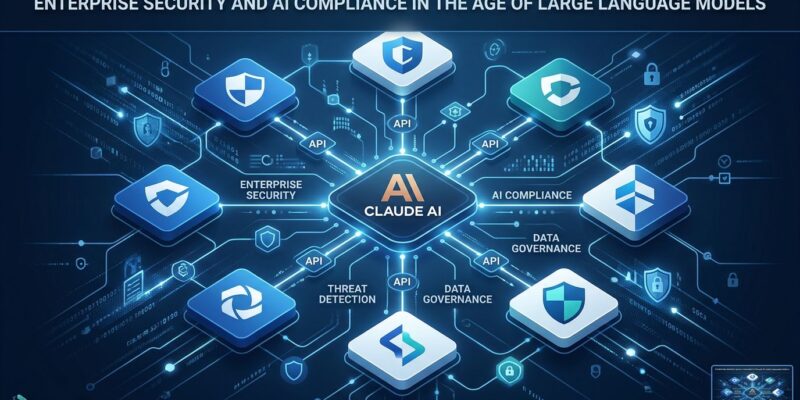
By Anthropic just connected Claude to 28 enterprise security platforms — Cloudflare, CrowdStrike, Datadog, Microsoft Purview, Okta, Wiz, and 22 more. The Claude Compliance API streams conversation activity and admin events directly into the SIEM, DLP, and identity tools enterprise teams already run. No more CSV exports, no more scheduling manual data pulls. For teams chasing EU AI Act compliance deadlines, this matters. But most coverage of this announcement missed something important: the API deliberately doesn’t log what you might assume it does, and deploying it without knowing the gap creates false confidence.
What the Compliance API Actually Streams
The Compliance API exposes two data streams. First, conversation content from Claude Enterprise — chats, uploaded files, and projects — which lets you apply your existing DLP policies to Claude activity instead of standing up separate enforcement. Second, roughly 30 typed activity events covering identity events (SSO logins, Google auth, Apple auth), organization config changes (API key creation, member additions, permission updates), and conversation lifecycle events (created, renamed, deleted). All of it carries a 180-day retention window, the same as Claude’s audit log export.
For teams already running Datadog, Sumo Logic, or a Splunk SIEM, the integration model is straightforward: connect Claude via the Compliance API key, and Claude activity flows into the same dashboards alongside Okta, GitHub, and your other SaaS audit sources. Cloudflare’s CASB integration is the clearest example — enable it through Zero Trust > Integrations > Cloud & SaaS > Anthropic, enter the API key, configure DLP profiles, and findings surface in minutes. Teams with Cloudflare already deployed report under 30 minutes from zero to live monitoring.
The Gap Most Coverage Skipped
Here is what the Compliance API does not log: prompt content, response content, which Claude model was invoked, and which tools Claude called. Cowork activity is also explicitly excluded. The audit feed contains conversation identifiers, not conversation titles — if you need the title, you’re making a separate content endpoint call.
This isn’t a criticism of the API design; Anthropic has been transparent about the scope. The problem is that teams reading “compliance API with SIEM integration” may assume they have full coverage when they have control-plane coverage only. If your threat model includes data exfiltration via Claude prompts, or if a regulator asks for evidence of what the model was instructed to do, the Compliance API alone won’t answer that question.
Three Layers for Complete Coverage
The expert consensus for a complete enterprise audit story runs three layers:
- Compliance API — control plane: identity events, access changes, configuration changes, conversation lifecycle. This is what Anthropic ships.
- OpenTelemetry instrumentation — agent operational plane: traces, spans, latency, tool calls from your application code. Covers what your agents do, not just who accessed Claude.
- LLM gateway or network proxy — network and content plane: prompt content, response content, DLP enforcement at the wire level. Options include Cloudflare Gateway, LiteLLM, or a self-hosted proxy.
Run all three or you have gaps. The detailed coverage analysis from General Analysis confirms that the Compliance API handles layer one well. Layers two and three still require your own instrumentation.
GDPR Article 15 and 17 in Practice
For teams with GDPR obligations, the Compliance API makes data subject requests (DSARs) tractable. For Article 15 (right of access), build a worker that takes a subject identifier, walks the audit feed for all referenced resources, fetches each through the content endpoints, packages, and delivers. Engineers report this takes under a day to build.
Article 17 (right to erasure) follows the same flow — the final step is a delete call rather than a packaging step. The API provides per-resource deletion and logs each deletion as its own auditable event. That audit trail is exactly what a GDPR regulator wants to see. Bulk admin deletion is not equivalent; auditors want scoped, logged deletes tied to a specific DSAR request.
One security note: treat Compliance API keys as service account credentials. They’re scoped to the organization, not a specific person. Vault them, rotate on schedule, and audit access to the key store itself.
Why the Timeline Is Forcing the Issue
The EU AI Act reaches general application on August 2, 2026 — ten weeks out. Colorado’s AI Act takes effect June 30, four weeks out. Both demand documented AI governance with audit-ready evidence, not policy PDFs. The 28-partner expansion is Anthropic’s direct response to enterprise procurement and legal teams asking “what’s your compliance story?” The API, wired into your existing stack, is a significant part of that answer. The hard part isn’t enabling it. The hard part is understanding what it covers and building the remaining two layers before a regulator asks.
What to Do This Week
- Enable the Compliance API: Organization Settings > Data and Privacy > Enable (Claude Enterprise required).
- Connect one integration your team already runs — Cloudflare CASB, Datadog, or your existing SIEM — before adding new tooling.
- Document what the Compliance API covers and what it doesn’t. Add OpenTelemetry instrumentation and a gateway for the remaining layers.
- If GDPR applies, scope a DSAR worker now. The engineering lift is small while the codebase is fresh.
Anthropic’s Compliance API doesn’t give you a complete AI governance story out of the box. It gives you a solid control-plane foundation. Whether that’s enough depends on your threat model — and increasingly, on your regulator’s definition of “sufficient evidence.”