 By ByteBot
ChatGPT launched advertising on February 9, but April 2026 developments show OpenAI is accelerating hard: they launched a self-serve ads manager on April 10, slashed the minimum spend from $250,000 to $50,000, and extended the pilot through May. Meanwhile, a leaked StackAdapt deck reveals CPMs as low as $15 and exposes the mechanics of “prompt targeting“—a new ad technology that mines your active conversation content for ad signals. For developers who use ChatGPT daily for coding and debugging, this means your work conversations are now being mined for ad targeting. Hacker News erupted today with 152 points and 70 comments debating whether this crosses a privacy line.
What Is “Prompt Targeting” and Why It’s Different
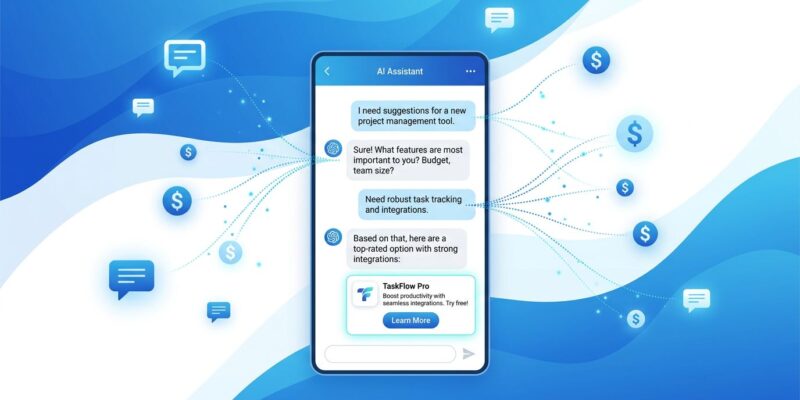
Traditional advertising tracks what you browsed yesterday. Prompt targeting tracks what you’re asking right now. OpenAI’s system uses semantic understanding of your entire conversation—your stated goals, implied needs, and the specific language you use—to serve contextual ads in real-time. Ask ChatGPT about meal planning? Expect ads for meal kits. Debug Python code? Ads for cloud platforms might appear.
However, the technical implementation ditches third-party cookies, demographic targeting, and browsing history entirely. Instead, it analyzes three signals: your current conversation topic (primary), optionally your past chats if personalized ads are enabled, and your ad interaction history. OpenAI claims ads never influence ChatGPT’s responses through what they call “Answer Independence”—ads are selected separately from AI-generated answers.
Consequently, here’s the privacy tension: this is more invasive than cookies in one sense—it’s targeting your intent while you’re actively problem-solving, not your past behavior. Your work questions, coding problems, and research queries become ad signals. That’s a fundamentally different model than Google tracking your search history or Meta profiling your demographics.
ChatGPT Ads Economics: StackAdapt’s Leaked Playbook
Adweek obtained a leaked StackAdapt deck that exposes the real economics. CPMs range from $15 for niche single-advertiser placements to $60 when multiple advertisers compete, with a $50,000 pilot minimum running through May 2026. This undercuts OpenAI’s original $200,000 minimums announced in February—clear evidence they’re aggressively courting advertisers.
Nevertheless, the catch? Reporting is bare-bones. Advertisers get weekly impressions and clicks only, with no access to individual user data, no real-time optimization, and no ROAS or CPA tracking. One agency exec captured the problem: “Very difficult to justify a $60 CPM when trying to narrow down on ROAS or CPA.” Compare that to Google search ads ($2-$50 CPMs typical) with robust attribution, and the value proposition gets hazy.
Therefore, OpenAI faces a dilemma: advertisers want better tracking to justify the high CPMs, but better tracking means more invasive targeting—precisely what developers fear. The April 10 self-serve launch and plummeting minimums suggest OpenAI is betting on volume over premium pricing.
Developer Backlash: “The Beginning of the End”
The community response has been brutal. Reddit threads warn this is “the beginning of the end” for ChatGPT’s integrity. Today’s Hacker News discussion saw 70 comments dissecting privacy implications, with developers threatening migration to ad-free alternatives like Claude or Gemini. Additionally, U.S. Senator Ed Markey escalated concerns by sending letters to OpenAI about privacy risks and manipulation potential.
Moreover, developers are ChatGPT’s power users. Most use it daily for work—coding, debugging, architecture decisions. The prospect of those conversations being mined for ads hits differently than social media advertising. Furthermore, the core concern isn’t the current implementation (which has guardrails), but the slippery slope: will revenue pressure eventually compromise “Answer Independence”? Can we trust OpenAI’s privacy claims long-term?
As a result, the migration threat is real. Claude positions itself as privacy-focused with no ads. Gemini offers a free tier without advertising. If ChatGPT’s power users exodus, it signals broader trust erosion beyond the developer community.
Current Limitations and Privacy Guardrails
The current implementation is deliberately constrained. Ads appear as square 1:1 images with 30-character headlines and 60-character descriptions, clearly labeled as “Sponsored” and displayed separately from ChatGPT responses. No ads appear for users under 18 or near sensitive topics like health, mental health, or politics. OpenAI maintains that conversations are never shared with advertisers and no data is sold.
However, here’s the question: are these guardrails permanent or temporary? The technical setup suggests privacy-conscious design, but the business pressure to monetize $7 billion in annual operating costs creates incentives for feature creep. Today’s “contextual only” targeting could become tomorrow’s “enhanced with behavioral signals” if CPMs need to drop further.
What Happens Next with ChatGPT Ads
OpenAI’s pilot ends in May 2026, likely expanding to broader rollout. The next few months will reveal whether users accept ads in AI conversations or migrate to competitors. This sets a precedent for the entire AI industry—if ChatGPT successfully monetizes through advertising, Gemini and Claude will face pressure to follow. If it backfires, “ad-free AI” becomes a competitive differentiator.
Ultimately, the developer community will be the canary in the coal mine. If they stick with ChatGPT despite ads, the broader market will likely accept it. If they migrate to Claude, it signals that trust matters more than convenience. Either way, April 2026 marks the month OpenAI bet its user trust on advertising revenue. The verdict is still out.