Anthropic launched Claude Managed Agents in public beta on April 8, a fully managed service that handles the infrastructure layer developers previously spent months building themselves. Within days, at San Francisco’s HumanX conference on April 12, Claude had become the dominant topic of conversation as enterprises like Notion, Rakuten, and Asana revealed they’re already running the platform in production.
The timing tells the story. Just 48 hours separated two competing visions for enterprise AI agent development: Microsoft shipped Agent Framework 1.0 on April 6 (self-hosted, multi-provider), then Anthropic countered with Claude Managed Agents on April 8 (fully managed, Anthropic-only). One offers control. The other offers speed. Neither is wrong, but they force developers to pick a philosophy.
From Months to Weeks
Claude Managed Agents turns custom infrastructure work into API calls. Developers previously built containerization, sandboxing, state management, and error recovery manually. Anthropic now provides that scaffolding at $0.08 per runtime hour plus standard model costs. A 24/7 agent runs about $58 monthly for infrastructure, before token usage.
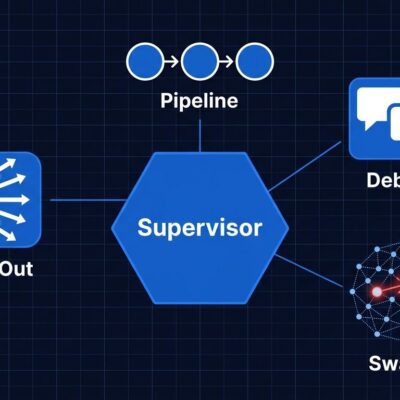
The managed service includes secure sandboxing with isolated containers, long-running sessions for persistent execution, tool orchestration with MCP server integration, automatic state management, and error recovery that lets agents resume after outages. Research preview features add agent spawning (agents creating sub-agents for complex tasks) and automatic prompt refinement that improved task success by 10 points in internal testing.
Notion, Rakuten, and Asana aren’t piloting this technology. They’ve integrated it into production systems. That’s the proof point that matters.
Self-Hosted vs. Managed: The 48-Hour War
Microsoft’s Agent Framework 1.0 and Anthropic’s Claude Managed Agents represent opposite bets on how enterprises will build agents. Microsoft went self-hosted: run it on your infrastructure, integrate any LLM provider (OpenAI, Anthropic, Google, Amazon, Ollama), maintain full control. Anthropic went managed: we run it, you build faster, but you’re locked into our platform.
The trade-offs are real. Managed means zero DevOps setup and weeks to production instead of months. Self-hosted means infrastructure ownership, multi-provider flexibility, and a dedicated DevOps team. Cost comparisons favor managed when you factor in technical headcount—self-hosting runs $121-$240 monthly for VPS alone, before accounting for the engineers maintaining it.
But vendor lock-in isn’t theoretical. Anthropic-only means no migration path to OpenAI or Google without rewriting agent infrastructure. Pricing changes affect every agent simultaneously. The counterargument: cutting-edge models don’t leave frontier labs’ clouds anyway, and abstraction layers can reduce switching costs for teams that plan ahead.
The Agentic AI Boom
This launch doesn’t exist in isolation. Gartner projects 40% of enterprise applications will include task-specific AI agents by year-end. The market hit $10.91 billion in 2026, up from $7.63 billion in 2025, with a 45.8% CAGR through 2030. Telecommunications leads adoption at 48%, followed by retail and CPG at 47%.
Fifty-one percent of enterprises already run agents in production. Eighty-eight percent of executives are increasing AI budgets for agentic AI. This isn’t speculation—it’s a market responding to proven demand. Managed agent platforms are the logical next step when infrastructure becomes commodity.
Choose Your Abstraction
The real debate isn’t managed versus self-hosted. It’s what level of abstraction fits your priorities. Teams shipping fast with standard workflows benefit from managed services. Teams with data sovereignty requirements, multi-model strategies, or extreme cost optimization at scale still need self-hosting.
Enterprise best practices emerging in 2026 suggest using different vendors for different use cases, maintaining architectural separation between orchestration and model APIs, and investing in abstraction layers that reduce switching costs. Choose based on control needs, not vendor preference.
What developers spent months building in 2025 is now available as a managed service or production-ready framework. Agent infrastructure commoditized faster than anyone expected. The competitive advantage shifted from “can you build agents?” to “can you design effective agents?” That’s the market Microsoft and Anthropic are racing to capture.