After five years wrestling with React Server Components, App Router migrations, and 47 different state management libraries, developers are shipping SvelteKit apps in days and asking: “What have I been doing wrong?” React’s dominance created an overengineering culture where complexity looks like competence and simplicity looks like naiveté. However, 2026 data tells a different story: SvelteKit hits 93% developer satisfaction while Next.js App Router languishes at 74%. Moreover, Stack Overflow serves 2 billion monthly pageviews with a monolith. Daily.dev reaches millions of developers with “boring” tech. The industry is finally asking: does this complexity solve real problems or just look impressive on resumes?
The Performance Gap React Won’t Acknowledge
Numbers don’t lie. SvelteKit achieves 93% developer satisfaction compared to Next.js App Router’s 74%—a 19-point gap that React advocates dismiss but can’t explain. Furthermore, Svelte’s compile-time approach produces bundles 10-22 KB compared to React’s 42-300 KB bloat, runs 5-6x faster in list operations, and delivers 30-40% faster Time to Interactive. Consequently, React’s virtual DOM overhead is a tax every app pays for theoretical flexibility most never need.
React Server Components promised simplification but delivered architectural complexity. Developer surveys show “troubling cool response” to server components, with one respondent stating bluntly: “Completely not interested in this feature.” In fact, RSCs aren’t an optimization layer—they’re an architectural boundary that forces teams to think about execution environments, coordinate server-client splits, and manage hydration strategies. Developers report: “In practice they add another conceptual layer on top of an already complex system.”
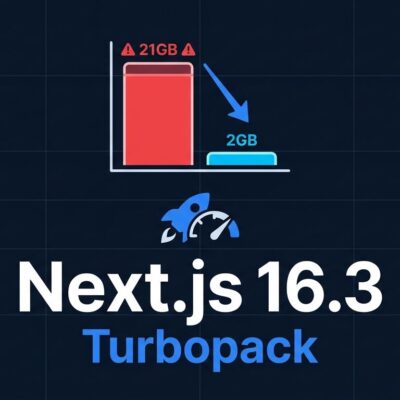
The Next.js App Router migration pain validates these concerns. Documenso abandoned Next.js entirely, citing 15-20 second reload times with Turbopack that made debugging “virtually impossible.” Additionally, the incompatibility between next/router and next/navigation creates confusion, Server Actions become “opaque and tricky to track,” and developers encounter mysterious async chunk build failures. Ultimately, React Server Components solve problems most developers don’t have while creating new problems for everyone.
The Boring Stack Rebellion Proves Simplicity Scales
“Complexity is a tax you keep paying forever.” This philosophy drives the 2026 boring stack movement—developers choosing VPS over Kubernetes, SQLite over microservices, and monoliths over distributed architectures. For instance, Daily.dev serves millions of developers with a boring monolith. Their CEO says: “Sometimes resisting innovation is the most innovative thing.”
Stack Overflow handles 6,000 requests per second, 2 billion monthly pageviews, and renders pages in 12 milliseconds—with a monolithic core architecture. Not microservices. Not serverless. Not the complexity vendors sell as “best practices.” Instead, Stack Overflow’s engineering team proves simple architectures work at massive scale.
The data backs this up: 42% of organizations are consolidating microservices back to monoliths. Furthermore, one case study reported 10x performance improvement after abandoning microservices. On Hacker News, “$10K MRR on $20/month tech stack” hit 867 points and 474 comments—developers hungry for validation that simplicity works. The boring stack philosophy: users don’t care about your tech stack or whether your architecture is “event-driven.” They care if the button works when they click it.
The scale misconception is pervasive. Developers looked at Netflix and Uber using microservices and thought they should too, forgetting those companies have 2,000 engineers. In contrast, individual developers have themselves, a coffee mug, and a deadline. When you split applications into tiny services, you don’t remove complexity—you just move it from code to network infrastructure. Single VPS deployments save $270-$670 monthly plus 8-18 engineering hours compared to Kubernetes complexity most teams don’t need.
Why We Can’t Quit React Despite the Evidence
React’s advantages are real. The ecosystem is massive—Material-UI, Ant Design, Chakra UI, extensive tooling, mature documentation, solutions for nearly every problem. Similarly, the hiring pool is enormous; finding React developers is easier than finding Svelte developers, reducing onboarding risk. React powers Facebook, Instagram, Netflix, Airbnb, and Uber—validated at billions of users, battle-tested for edge cases most apps never encounter.
Career incentives reinforce React’s dominance. Nobody got fired for choosing React. Interviews test React knowledge. Complexity looks good on resumes while simplicity looks like inexperience. The trap: individually rational decisions create collectively irrational outcomes. Therefore, the industry rewards complexity mastery, not shipping features. Developers waste months learning framework churn instead of solving user problems.
This is why Next.js App Router migration struggles persist—the framework evolved for problems most apps don’t have (Netflix-scale server rendering, massive concurrent users, distributed edge computing) while adding cognitive overhead for everyone. React Server Components are a poor fit for dashboards, design tools, and real-time collaborative apps that rely on local state and frequent re-renders. Innovation for innovation’s sake helps less than 1% of apps and hurts the other 99%.
Choose Tools for Problems, Not Resumes
React won’t disappear, and that’s fine. SvelteKit won’t replace React, but it proves alternatives are viable and challenges the “React is the only option” narrative. The question developers should ask: “Does this complexity solve a real problem I have today, or does it just look impressive?” Most apps aren’t Netflix. Stop architecting like they are.
Pragmatism means matching tools to problems, not fashion to resumes. Building a dashboard? Maybe React’s overkill—try Svelte. Have Netflix-scale problems with millions of concurrent users? React’s proven, use it. Building an MVP for 100 users? VPS plus SQLite beats Kubernetes plus microservices. The boring stack movement is evidence-based rebellion against cargo-cult complexity.
The 2026 trend is clear: pragmatism over ideology. Developers are prioritizing shipping over resume-building, asking “does it work?” instead of “does it use trendy tech?” Success comes from solving user problems, not impressing other developers with architectural sophistication. Choose boring technology until you have Netflix’s problems. Complexity is a tax you keep paying forever—make sure it’s worth the cost.