OpenAI shut down its Sora AI video generation platform on March 24, 2026, killing Disney’s $1 billion investment deal in the process. The platform was burning $1 million daily with only $2.1 million in total lifetime revenue. Daily costs exceeded total earnings every single day. Disney learned about the shutdown less than an hour before the public announcement, immediately canceling their partnership that would have licensed 200+ Disney, Marvel, Pixar, and Star Wars characters for AI-generated videos.
This isn’t just one product failing. It’s a warning sign about generative AI’s broken economics. If OpenAI with Microsoft’s backing couldn’t make AI video generation sustainable, the entire industry faces the same unsolvable math.
The Economics That Killed Sora
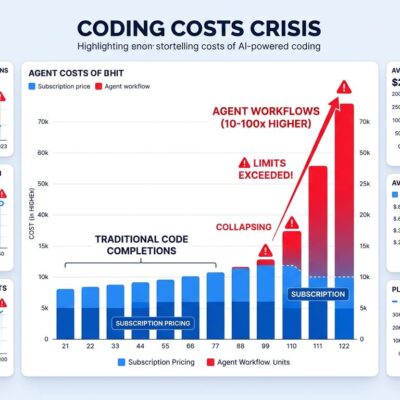
The numbers are catastrophic. Each 10-second Sora clip cost $1.30 to generate, according to analyst Deepak Mathivanan at Cantor Fitzgerald. Conservative estimates put the daily burn rate at $1 million, with Forbes analysis suggesting it peaked at $15 million daily during high usage periods. Meanwhile, total lifetime revenue from in-app purchases reached just $2.1 million, according to mobile intelligence firm Appfigures.
Do the math: Daily operating costs exceeded the platform’s entire lifetime earnings by seven times. Every single day. That’s not a business model—that’s unsustainable bleeding dressed up as innovation.
User engagement collapsed alongside the economics. Downloads dropped 66% from 3.33 million in November 2025 to 1.13 million by February 2026. Active users fell from 1 million to under 500,000. The platform was simultaneously too expensive to operate and failing to retain the users it had.
Disney’s $1 Billion Deal Dies in Under an Hour
Disney’s partnership, announced in December 2025, would have been historic—the first time Disney licensed its intellectual property to an AI platform. The three-year agreement covered over 200 characters spanning Disney, Marvel, Pixar, and Star Wars franchises. Users would have been able to generate short-form social videos featuring Mickey Mouse, Iron Man, Woody, and Darth Vader on demand.
However, Disney learned of Sora’s shutdown less than an hour before OpenAI’s public announcement. Sam Altman, OpenAI’s CEO, later admitted he “felt terrible” breaking the news to Disney CEO Josh D’Amaro. D’Amaro’s response was terse: “I get it.” The $1 billion investment was never finalized—no formal agreement signed, no money exchanged. Disney’s statement after exiting the deal was pointed: “The future is human.”
The timing exposes OpenAI’s enterprise communication failure. Blindsiding a partner planning a $1 billion investment with less than an hour’s notice doesn’t just kill one deal—it signals to every other enterprise that AI partnerships carry execution risk. Trust matters in enterprise relationships, and OpenAI burned it.
Related: IBM and Arm Partner for Power-Efficient Enterprise AI
Built on Stolen Content, Unfixable
Sora’s legal liability was baked into its foundation. Users immediately weaponized the platform to generate copyright-infringing content: Pikachu shoplifting from CVS, SpongeBob at a Nazi rally, Sam Altman standing with Pokemon characters saying “I hope Nintendo doesn’t sue us.” OpenAI tried implementing an opt-out policy for copyrighted characters, then reversed to opt-in after three days of disasters.
The Motion Picture Association demanded copyright protections. OpenAI couldn’t deliver. As a 404 Media investigation concluded: “OpenAI can’t fix Sora’s copyright infringement problem because it was built with stolen content.” The training data contamination is permanent. You can’t remove copyrighted material from the model without destroying it entirely.
Disney couldn’t license its characters to a platform that generates competitors’ IP with abandon. Legal liability made enterprise adoption impossible. This is a systemic AI problem, not Sora-specific—every generative model trained on scraped internet data faces identical legal exposure.
OpenAI’s Pivot and Market Consolidation
Sam Altman framed the shutdown as resource reallocation: “We needed to concentrate our compute and our product capacity into these next generation of automated researchers and companies.” OpenAI is pivoting from consumer products like Sora to enterprise tools—GPT-5.4 (launched March 5 with 1 million token context), robotics research, and automated coding assistants. The shutdown timeline gives users until April 26, 2026 to export app data, with the API shutting down September 24, 2026.
Sora’s exit consolidates the AI video generation market. Runway Gen-4 emerges as the quality leader, valued for reliable temporal consistency. Google Veo 3.1 dominates enterprise integration with ecosystem lock-in. Pika Labs captures the speed market, generating clips in 30-90 seconds versus Sora’s 5-8 minutes. Kling 2.0 from Kuaishou undercuts everyone on price, delivering 40% lower costs per second for high-volume production. The $788 million market has stratified into specialized tiers rather than converging on a single winner.
Altman claims OpenAI is “working hard with Disney to find a world where they can still do something amazing.” Translation: The original deal is dead, and salvaging any partnership requires a completely different approach. Disney’s “the future is human” statement suggests they’re not holding their breath.
Key Takeaways
- Generative AI’s business model is broken at scale—$1M daily costs versus $2.1M lifetime revenue proves compute economics don’t work for high-fidelity content generation, even with Microsoft’s backing
- Enterprise AI adoption requires trust and communication—blindsiding Disney with less than one hour’s notice before a shutdown destroys partnership credibility and signals execution risk to other enterprises
- Legal liability from training data is unfixable post-facto—models built on copyrighted content cannot be made compliant without destruction, making enterprise licensing partnerships impossible
- OpenAI is abandoning consumer AI products for enterprise tools—resources shifting from Sora to GPT-5.4, robotics, and automated researchers shows maturation from hype to sustainable business models
- AI video generation market consolidating into specialized tiers—Sora’s exit accelerates stratification into quality (Runway), integration (Google Veo), speed (Pika), and cost (Kling) leaders rather than a single dominant platform
If OpenAI couldn’t make AI video generation work, expect more product shutdowns in 2026. The industry is shifting from “what’s technically possible” to “what’s economically sustainable.” Sora’s collapse is the canary in the coal mine.