Meta announced yesterday it will deploy four new AI chip generations—MTIA 300, 400, 450, and 500—by the end of 2027, achieving a 6-month release cadence that’s 3-4× faster than the industry standard. The company’s modular chiplet design enables this breakneck pace, with MTIA 300 already in production, MTIA 400 completing testing, and MTIA 450/500 scheduled for 2027. This challenges Nvidia’s 80% market dominance and signals Big Tech’s broader shift toward custom silicon to escape GPU supply constraints.
Here’s the thing: the chips themselves aren’t the story. Meta’s real innovation is the development model.
Speed Is the Strategy, Not the Specs
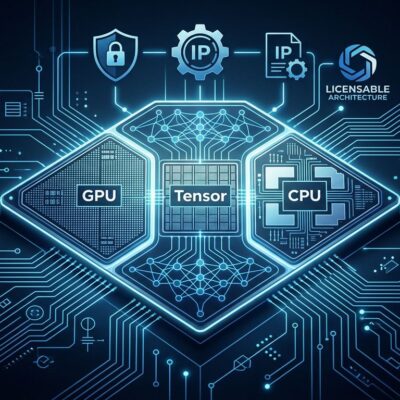
The chip industry standard is simple: one new generation every 1-2 years. Meta just obliterated that timeline. By building modular chiplets for compute, networking, and I/O, they’ve created reusable building blocks that snap together across generations. MTIA 400, 450, and 500 all use the same chassis, rack, and network infrastructure. Drop in a new chip, skip the data center redesign.
The results speak louder than the strategy. In under two years, Meta increased HBM memory bandwidth by 4.5× and compute performance by 25× across successive MTIA generations. That’s not incremental improvement—that’s a fundamentally different approach to silicon development. If Meta proves this model works, every hyperscaler will copy it. Nvidia’s 1-2 year cycle suddenly looks slow.
Inference First, Training Second: Meta Inverts the Playbook
While Google, Microsoft, and Amazon optimize AI chips for training first, Meta went the opposite direction. MTIA 300, 400, 450, and 500 prioritize inference—real-time responses for 3 billion users generating billions of AI operations daily. Training happens once. Inference happens billions of times.
The business case is brutal in its simplicity. Meta’s ads retrieval engine moved across Nvidia, AMD, and MTIA chips, nearly tripling compute efficiency. When you’re running that many inferences per second, reducing per-operation cost by 20% saves hundreds of millions annually. Every social media platform with similar scale—YouTube, TikTok, Twitter/X—will follow this inference-first approach. It’s not about the best chip. It’s about the cheapest chip that’s good enough.
MTIA 450 and 500: Betting on Bandwidth Over Compute
The specifications tell a specific story. MTIA 450 doubles HBM memory bandwidth to 18.4 Tbps compared to MTIA 400, which Meta claims exceeds “leading commercial products” (read: Nvidia H100). MTIA 500 adds another 50% bandwidth increase, 80% higher HBM capacity (up to 512 GB), and 43% higher MX4 FLOPS. Both chips use modular 2×2 chiplet configurations with power draws of 1,400W and 1,700W respectively.
Memory bandwidth, not raw compute, is becoming the AI bottleneck in 2026. Large language models and generative AI are memory-bound—moving data matters more than crunching numbers. Meta’s bet on bandwidth over FLOPS reflects this industry shift. MTIA 400 is Meta’s first chip they claim is “competitive with leading commercial products.” Whether MTIA 450 and 500 actually beat Nvidia B100/B200 remains to be seen, but the bandwidth focus is the right call.
Nvidia’s 80% Market Share Will Compress
Nvidia currently controls 80-85% of AI chip market share with $51.2 billion in quarterly data center revenue and 73.6% gross margins. That’s monopoly pricing power. It’s also unsustainable. Industry analysts expect Nvidia’s share to compress to 60-75% by late 2026 as custom silicon gains ground. Google already holds 58% of the custom cloud AI accelerator market. Amazon’s Trainium3 is sold out through mid-2026. Microsoft’s Maia 2 is in production.
More importantly, Nvidia’s margins will compress from 70% to an expected 55-65% as pricing power erodes. Custom ASIC shipments are projected to grow 44.6% in 2026 versus GPU shipments at 16.1%. That’s the market voting with its wallet. For developers, this means one thing: lower cloud AI costs as competition intensifies. Nvidia’s H100 prices are already expected to drop from $30,000+ to around $20,000 by late 2026 as B100/B200 deployments ramp up.
What This Means for Developers
Cloud AI infrastructure is becoming heterogeneous. PyTorch and TensorFlow will need to optimize for Nvidia, Google TPU, Meta MTIA, and Amazon Trainium separately. That’s more work, but it’s also more competition driving down costs. The two-tier AI infrastructure is here: hyperscalers build custom silicon for their massive scale, everyone else rents commercial GPUs or cloud services.
Watch HBM memory supply as a leading indicator. Samsung and SK Hynix control 93% of the memory market alongside Micron, and both are scaling HBM production by 50%+ in 2026. Memory bottlenecks will delay chip deployments faster than fab capacity constraints. Meta’s partnership with Samsung and SK Hynix for HBM supply is as strategically important as the chips themselves.
Meta’s modular chiplet strategy enabling 6-month releases is the story. If it works, the entire industry will adopt it. If it doesn’t, Meta will have spent billions proving that chip development velocity has physical limits. Either way, Nvidia’s monopoly is cracking, and developers will benefit from the pricing pressure.