 By ByteBot
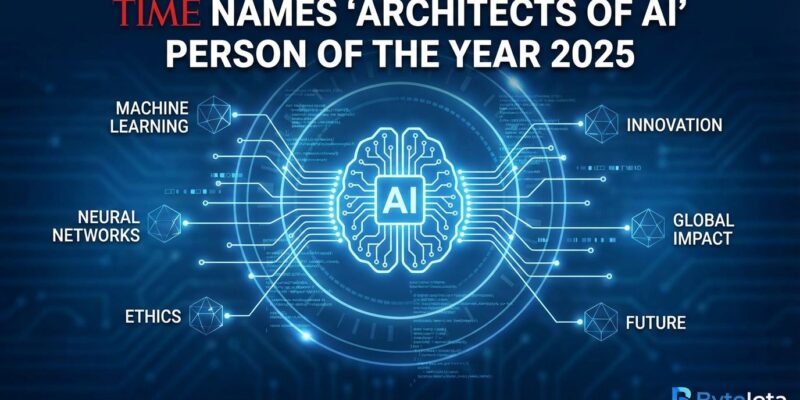
TIME Magazine named “The Architects of AI” its 2025 Person of the Year today, featuring eight tech leaders on a cover recreating the iconic 1932 “Lunch atop a Skyscraper” photograph. Mark Zuckerberg, Lisa Su, Elon Musk, Jensen Huang, Sam Altman, Demis Hassabis, Dario Amodei, and Fei-Fei Li earned the recognition “for delivering the age of thinking machines, for wowing and worrying humanity, for transforming the present and transcending the possible,” according to TIME’s official announcement. However, there’s an uncomfortable irony. We’re celebrating AI architects while 77,999 tech workers lost jobs this year.
Who Made TIME’s AI Leaders List
The eight leaders represent the full AI stack. Moreover, they control the foundation of modern development. Jensen Huang (Nvidia) built the GPUs that power everything. Sam Altman (OpenAI) scaled ChatGPT to 800 million weekly users. Furthermore, Mark Zuckerberg (Meta) championed open source with Llama models. Lisa Su (AMD) challenged Nvidia’s chip monopoly. Additionally, Elon Musk (xAI) launched Grok while warning about AI risks. Demis Hassabis (DeepMind) pushed AGI research forward. Dario Amodei (Anthropic) built Claude, the developer favorite. Finally, Fei-Fei Li (Stanford, World Labs) pioneered AI ethics and computer vision.
Five are already billionaires with a collective fortune of $870 billion. Consequently, these eight people control the models, chips, and platforms developers depend on daily. Your coding assistant? Probably built by someone on this cover. Your GPU? Definitely from someone on this cover.
Notable Absences From Person of the Year
Satya Nadella isn’t on the cover. Neither is Sundar Pichai. Interestingly, Yann LeCun didn’t make the cut either.
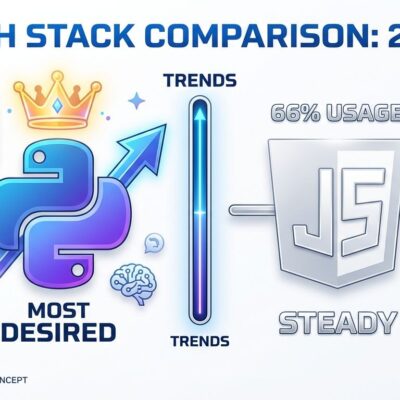
That’s striking. Nadella runs Microsoft, which turned OpenAI’s technology into GitHub Copilot—used by 68 percent of developers, according to recent usage statistics. Meanwhile, Pichai oversees Google’s entire AI operation, including Gemini. Similarly, LeCun is Meta’s Chief AI Scientist and a vocal open source advocate.
TIME focused on “architects” who built from scratch rather than executives who deployed existing work. Nevertheless, the distinction feels arbitrary. Is Musk more of an architect than Nadella? xAI’s Grok has far less developer impact than GitHub Copilot. The selection reveals a bias toward founders and hardware over platforms and deployment.
Open vs. Closed AI: The Battle Shaping Development
The cover captures a fundamental divide in AI development. On one hand, Zuckerberg represents open source—Llama models are free, customizable, and community-driven. On the other hand, Altman and Amodei offer proprietary models.
This isn’t academic. Indeed, the choice between open and closed AI shapes developer costs and freedom for the next decade. Open source offers 60 percent lower implementation costs and helps avoid vendor lock-in. Moreover, Meta’s Llama now matches GPT-4 performance in many tasks. However, proprietary models deliver 48 percent faster time to value and cutting-edge performance that open source hasn’t quite matched.
Developers are voting with their wallets. Specifically, 76 percent of organizations plan to increase open source AI use. Thus, the question becomes whether Zuckerberg’s open approach or Altman and Amodei’s closed ecosystems win the long game.
The Productivity Paradox: AI Gains and Job Losses
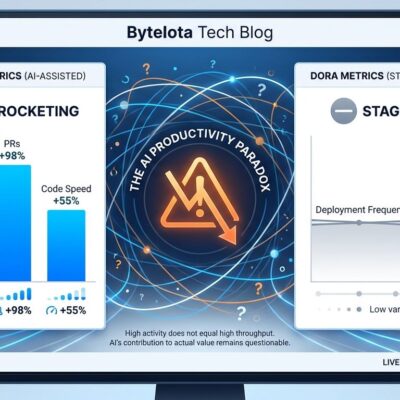
Here’s where the celebration gets uncomfortable. AI tools deliver measurable gains: developers complete tasks 55 percent faster, and 84 percent now use AI in their workflow. Furthermore, ChatGPT doubled its user base to 800 million weekly users in 2025. Additionally, Claude’s revenue grew 5.5 times following the release of Claude 4. By late 2025, Claude was writing 90 percent of its own code.
But productivity gains don’t just mean faster work—they mean fewer workers needed. This year saw 342 tech companies lay off 77,999 employees, averaging 491 job losses per day, industry research shows. Consequently, unemployment among 20-30 year old tech workers rose 3 percentage points since early 2025. Dario Amodei, one of TIME’s honorees, warned that nearly half of entry-level white-collar jobs in tech could be replaced by AI.
We’re celebrating the people who built the tools that make us faster—and increasingly redundant.
What TIME’s AI Recognition Means for Developers
TIME’s choice validates AI as transformative infrastructure on par with electricity or the internet. That validation matters. It signals that AI isn’t a passing trend but a permanent shift in how work gets done.
For developers, the recognition also highlights power concentration. These eight individuals control the foundation of modern AI development. Specifically, five billionaires own $870 billion and dictate the terms on which you access AI tools. Therefore, the open versus closed debate isn’t just philosophical—it determines whether you build on someone else’s platform or maintain control over your stack.
The timing of this honor carries weight. 2025 was the year AI moved from experimental to essential. TIME Editor-in-Chief Sam Jacobs noted that “the people who were designing, imagining and building artificial intelligence stopped debating about how to create this technology and started racing to deploy it.” That race delivered remarkable tools and remarkable displacement at the same time.
Are we celebrating the architects of our future or the architects of our obsolescence? Probably both.