SpaceX has struck a deal that gives it the right to acquire AI coding startup Cursor for $60 billion later this year—or pay $10 billion for ongoing collaboration if the acquisition doesn’t happen. Announced April 21, the deal values a two-year-old company at more than Ford or General Motors combined, and came just days before Cursor was set to close a $2 billion funding round. Microsoft explored buying Cursor first but declined to bid, clearing the path for Elon Musk to acquire the fastest-growing developer tool in history.
The Numbers That Don’t Add Up (But Make Sense Anyway)
Cursor hit $2 billion in annualized revenue by February 2026, up from $100 million just ten months earlier. That’s explosive growth, but $60 billion? The entire AI code tools market was valued at $9.46 billion in 2026. SpaceX is offering 6.3 times the size of the entire market for one player.
Here’s the logic: AI coding isn’t hype—it’s the most lucrative AI application today. Cursor has over 2 million users, more than 1 million paying customers, and nearly 70% of the Fortune 1000 as clients, including NVIDIA, Uber, Adobe, and Salesforce. Revenue doubled in three months. Enterprise buyers account for 45-60% of revenue. This is real money, real customers, real adoption at Fortune 500 scale.
The $60 billion isn’t about revenue multiples. It’s about controlling the infrastructure layer where software gets built. Think Microsoft buying GitHub in 2018 for $7.5 billion, but eight times bigger and in the AI era.
The 25-Year-Old Who Beat Microsoft
Michael Truell is 25 years old. He started coding at 11 to make mobile games, interned at Google at 18 working on language models, and founded Cursor in 2021 with MIT classmates. His personal net worth is now $1.3 billion. That’s the kind of Silicon Valley rocket ship that makes investors salivate and everyone else question reality.
Microsoft had first look. They passed. So did OpenAI. Cursor rebuffed both, prioritizing independence—until SpaceX showed up with $60 billion. Now the kid who impressed Google investors by acing a coding test “in record time” is selling his startup for more than General Motors is worth.
Why Musk Wants It
SpaceX and xAI merged in February 2026, creating a $1.25 trillion combined entity. The plan: vertical integration of AI and space infrastructure, with space-based data centers powered by solar energy. Musk’s vision is that orbital data centers are the only way to scale AI’s energy demands long-term.
But there’s a gap. As TechCrunch noted, “neither Cursor nor xAI has proprietary models that can match the leading offerings from Anthropic and OpenAI—the same companies now competing directly with Cursor for the developer market.” Cursor gives Musk what xAI lacks: the developer tools layer. Control the tools, control the infrastructure, control where code is written.
This isn’t about making a better code editor. It’s about owning the platform. Musk isn’t buying Cursor’s $2 billion in revenue. He’s buying access to 70% of the Fortune 1000, a team that built the fastest-growing dev tool ever, and strategic positioning to compete with Microsoft (GitHub), Anthropic (Claude), and OpenAI (GPT-4).
The deal structure reflects this. SpaceX has the option to acquire Cursor for $60 billion after its June 2026 IPO, or pay $10 billion for collaboration if the acquisition doesn’t proceed. The IPO needs to succeed first—SpaceX is aiming to raise over $75 billion with a post-merger valuation of $1.75 trillion. If it works, Musk gets Cursor using publicly-traded stock. If it doesn’t, he still gets collaboration for $10 billion.
What Developers Are Thinking
Cursor is technically superior to GitHub Copilot. It’s 30% faster at task resolution, supports multiple frontier models (GPT-4, Claude 3.5 Sonnet, Gemini), and offers agentic features Copilot lacks. Developers love it. But Musk ownership? That’s complicated.
Some companies already banned X (formerly Twitter) from corporate use. Cursor will get the same treatment at some firms, regardless of technical performance. As one developer put it, “Some teammates will quit rather than use a Musk-owned product.” Legal and executive teams will require Cursor reviews based on corporate policies around Musk-owned entities.
Then there’s pricing. Cursor Pro costs $20/month now. Post-acquisition? It could go up, go down, or get bundled into a SpaceX subscription. When a tool gets acquired, pricing gets restructured. Nobody knows which way it’ll go.
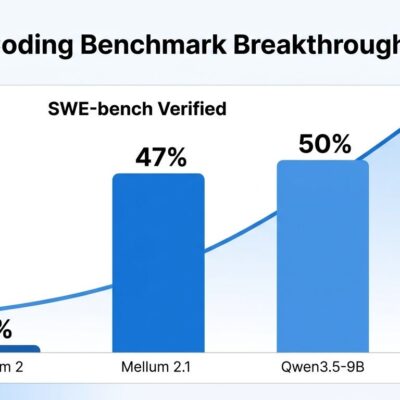
The alternative is GitHub Copilot: $10/month, Microsoft-owned, more stable, slightly more accurate on benchmarks (56% vs 51.7% on SWE-bench). It’s the safer bet for developers who want predictability over cutting-edge features.
What Happens Next
The SpaceX IPO is scheduled for June 2026. If it succeeds, expect the Cursor acquisition to close by year-end. If it doesn’t, Cursor gets $10 billion for collaboration instead. Either way, this deal signals where the AI coding market is headed: consolidation, vertical integration, and competition for control of developer infrastructure.
For developers, the question is simple: Stick with the best tool under uncertain Musk ownership, or switch to GitHub Copilot for stability? The answer depends on your company’s policies, your tolerance for uncertainty, and how much you value Cursor’s technical edge. But the choice matters, because this deal is bigger than one coding tool. It’s about who controls the layer where software gets built.