 By ByteBot
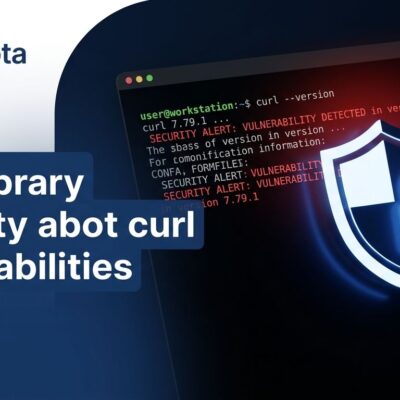
SolarWinds patched a hard-coded cryptographic key in Access Rights Manager (ARM) on September 17 — the tool that manages who has access to everything in your Active Directory environment. CVE-2026-28326 scores 8.8 on the CVSS scale and requires no credentials to exploit. Any attacker with network access to the ARM service can use the baked-in static key to forge authentication tokens and run arbitrary commands on the host. The fixed version is ARM 2026.2.1.
Why This Flaw Is Particularly Bad
ARM is not a peripheral tool. It sits at the center of enterprise identity management — provisioning accounts, managing Active Directory and Azure AD permissions, generating compliance audit trails for GDPR, HIPAA, and PCI DSS. Deploying ARM typically requires domain-admin-level access to your directory infrastructure. So when an attacker gets RCE on the ARM host, they do not just own one machine. They have a foothold into the permission layer that governs your entire organization.
The hard-coded key is the mechanism. SolarWinds embedded a static cryptographic key directly into the ARM application — presumably for internal service communication or token signing. That key is the same in every installation. Once security researcher Kai Huang of Armadin extracted it from the binary, the exploit path became straightforward: craft a token signed with the known key, reach the exposed ARM endpoint, execute commands as the service. No brute force, no phishing, no stolen credentials required.
Patch Path: ARM 2026.2.1
All versions of ARM 2026.2 and prior are affected. The remediation is a single version bump:
- Verify your current version in the ARM console under Settings > About.
- Download ARM 2026.2.1 from the SolarWinds Customer Portal.
- Run the in-place upgrade — it preserves existing configuration and data.
- After upgrading, rotate any credentials that ARM manages or has access to as a precautionary measure.
SolarWinds reports no exploitation in the wild as of the advisory date. That gap will close quickly once proof-of-concept code circulates, which is standard within days of a public disclosure like this. Patch before the weekend.
The Broader Problem: CWE-321 in 2026
Hard-coded cryptographic keys (CWE-321) are not a new vulnerability class. OWASP has listed them under A04: Cryptographic Failures for years. And yet there are 338 CVE records tagged CWE-321 in 2026 alone — 74 of them critical severity. The same pattern appeared this year in TP-Link’s Archer AX55 router, AVEVA’s Pipeline Integrity Monitor, and Adobe ColdFusion.
The reasons hard-coded keys keep shipping are predictable: a key gets embedded during development for convenience, code review does not flag it, SAST tooling is not configured to catch CWE-321, and the “no one will reverse-engineer this compiled binary” assumption goes unchallenged. In enterprise software shipped as a Windows installer, that assumption is particularly dangerous — binaries are extractable, decompilable, and the key is identical across every installation.
Audit Your Own Code
If you maintain software that uses cryptographic keys for internal authentication or service communication, now is a good time to check. The pattern to look for:
// Bad — static key baked into source
private static final String SIGNING_KEY = "s3cr3tK3y!ABC123";

// Good — loaded from environment or vault at startup
String signingKey = System.getenv("SERVICE_SIGNING_KEY");
// or: load from HashiCorp Vault, AWS Secrets Manager, Azure Key Vault
Tooling that helps: GitGuardian and gitLeaks scan codebases and git history for hardcoded secrets using pattern matching and entropy detection. GitHub Advanced Security has built-in secret scanning. SonarQube and Cycode both flag CWE-321 class issues in SAST passes. Do not forget git history — a key removed from source three commits ago is still in the repo log and still extractable.
SolarWinds, Again
Context matters here. After the 2020 Orion supply chain attack — where APT29 inserted a backdoor into Orion software updates that reached approximately 18,000 customers including US federal agencies — SolarWinds committed publicly to “Secure by Design” principles and underwent a major security overhaul. A hard-coded key in one of its flagship enterprise products in 2026 is not a good look. It does not approach the severity of Orion, but for organizations still running SolarWinds products, it reinforces that active security management is required, not passive trust in vendor commitments.
ARM 2026.2.1 is available now. The advisory is public. The key is static and identical across every ARM installation running 2026.2 or below. There is no workaround short of patching.