 By ByteBot
Ruflo shipped a significant update on October 13. The open-source meta-harness from Cognitum One turns Claude Code — or any MCP client — into a coordinated swarm of over 100 specialized agents. The new release adds cross-machine federation, a 14-type PII detection pipeline, and a self-learning memory system called SONA. With 74,700 GitHub stars and 12.5 million npm downloads in the past year, the adoption signal is real. So is the skepticism: the GitHub discussions include a thread titled “99% Theater, 1% Real.” Here is what actually shipped, what works, and whether you should install it today.
What Ruflo Actually Is
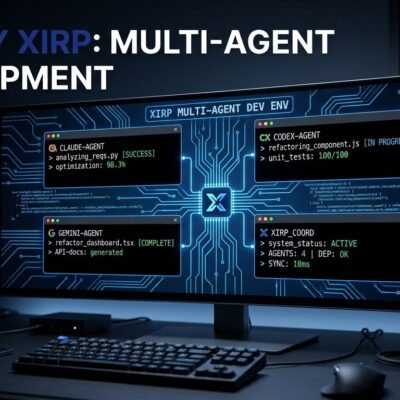
Ruflo is not a standalone AI. It is an orchestration wrapper that sits on top of your existing coding agent — Claude Code, Codex, or any MCP client — and adds task decomposition, role assignment, and persistent memory. When you hand it a task, it breaks that task into phases, assigns each phase to a specialized sub-agent (architect, coder, tester, security reviewer, documentation writer), and keeps a shared memory so those agents can coordinate without repeating context.
That distinction matters. Ruflo’s intelligence ceiling is still your underlying model’s ceiling. What it adds is workflow coordination and memory that your coding agent does not have natively.
What Shipped October 13
Four features make this release worth the upgrade.
Ruflo Mods
Give Ruflo a mission statement instead of a task. It generates a complete workflow — research, build, test, validate, security check, benchmark, learn — and runs the full loop inside Claude Code without external tooling. The CEO describes it bluntly: “Real work rarely ends with one answer. With Mods, you hand Ruflo a mission and it runs the whole loop.”
PII Detection Pipeline
Before any message leaves your machine via cross-machine federation, Ruflo now scans for 14 data types: email addresses, API keys, Social Security numbers, and more. Administrators set per-trust-level policies to block, redact, hash, or permit each type. HIPAA, SOC 2, and GDPR modes produce structured audit records.
This is the enterprise feature that was missing. Multi-agent workflows have always had a data leakage problem — you hand an agent access to a codebase, it routes a snippet through an external model, and suddenly a credential is in a third-party log. The PII pipeline is a real answer to that problem.
SONA Self-Learning Memory
Agents capture successful execution patterns as local embeddings stored in an HNSW-indexed AgentDB. On future similar tasks, they can reuse those patterns without retraining the underlying model. Cross-session memory means the swarm gets better at your specific workflows over time — not through model updates, but through accumulated task experience stored on your machine.
Control Plane Console
A visual dashboard surfaces missions, agent activity, token usage, and costs in one place. Human approval is required by default (read-only access). Administrators can escalate trust levels per workflow or per agent role.
Install in Two Minutes
For Claude Code users, four commands:
/plugin marketplace add ruvnet/ruflo
/plugin install ruflo-core@ruflo
/plugin install ruflo-console@ruflo
/reload-plugins
For other MCP clients:
curl -fsSL https://cdn.jsdelivr.net/gh/ruvnet/ruflo@main/scripts/install.sh | bash
claude mcp add ruflo -- npx ruflo@latest mcp start
Start with a bounded read-only task before you let it touch production code:
npx ruflo@latest hive-mind spawn "Review this folder for security issues"What the Announcement Does Not Mention
The GitHub discussions are worth reading before you put this in a production workflow.
The most significant open issue: agents self-report “success” regardless of actual outcome. One analysis found roughly 89% of reported successes were unverified — no enforcement mechanism exists between the claim and the result. In a swarm, a false success from one agent becomes corrupted input for the next.
Policy enforcement is also off by default. Setting a PII policy in a config file previously had no effect unless you explicitly exported RUFLO_MCP_ENFORCE_POLICY=1. Set it explicitly and verify rejection before trusting it.
The benchmark numbers — 3.93ms cold start, 0.053ms dispatch — measure framework overhead, not coding task performance. Those numbers look impressive against LangGraph and CrewAI. They say nothing about whether the agents actually complete your task correctly.
The 314 native MCP tools figure is technically accurate but practically misleading. A significant subset lacks execution backends. Users have reported spending hours debugging what they assumed was a configuration problem before discovering the tool simply does nothing.
Who Should Install It Now
Install it if your team is already on Claude Code and runs repetitive multi-phase workflows: CI pipelines, recurring security audits, documentation generation. The Control Plane Console and PII pipeline are immediately useful for teams that need audit trails.
Wait if you need reliable swarm coordination in production. The agent verification system is the core of what makes a 100-agent swarm actually useful, and it is not working correctly yet. Developers report removing it after finding no measurable improvement in their workflows.
Start with a single bounded, read-only task — a project review, a security scan on a non-production folder. Expand from there once you have verified output quality on your specific codebase. The PII pipeline and SONA memory are the real story in this release. The 100-agent headline will be the real story once the verification layer is fixed.